



Vintage Marquetry Mirror
A vintage marquetry mirror brings warmth and intricate botanical or geometric wood patterns into a room.
Vintage Marquetry Mirror
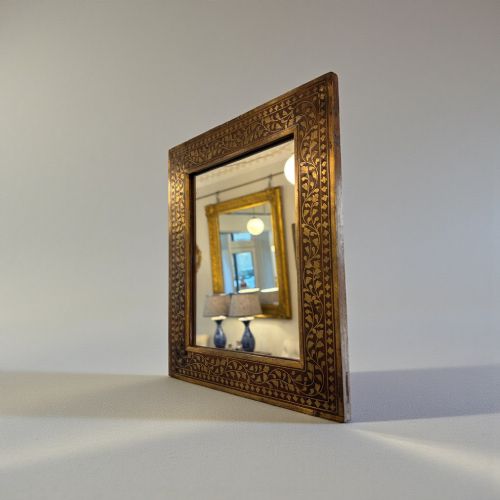
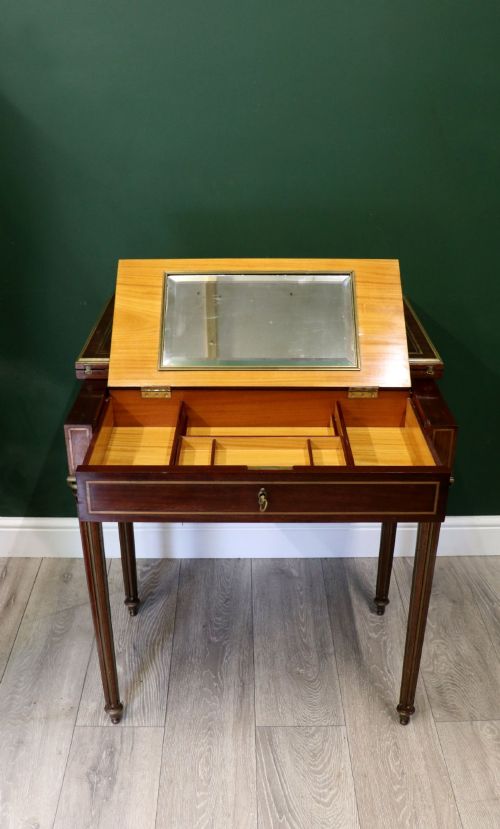
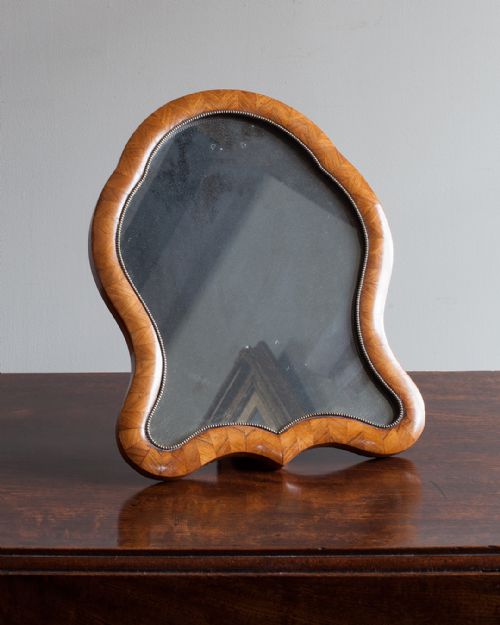
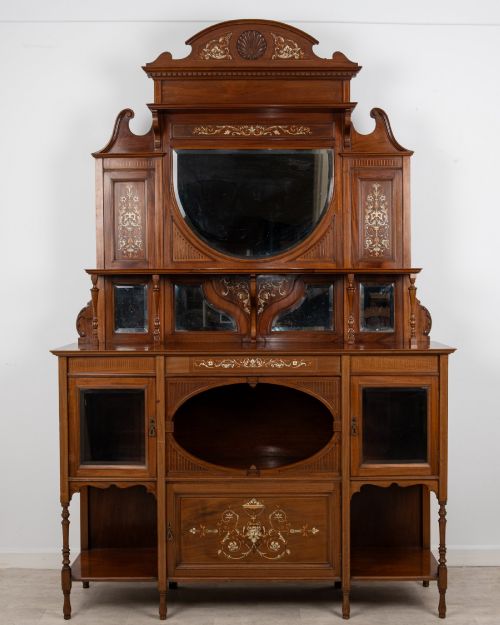
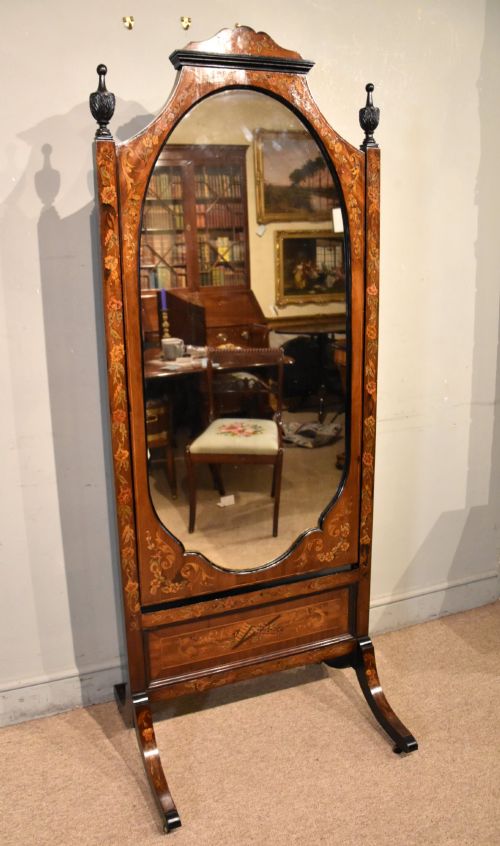
A vintage marquetry mirror primarily appears as a wall-hanging glass panel, an overmantel piece, or a dressing table toilet mirror framed by contrasting timber veneers. These decorative objects span various eras from the Georgian period through the Victorian, Edwardian, and Art Deco epochs, showcasing diverse regional woodworking traditions. Buyers encounter everything from compact swing mirrors intended for vanity tables to large scale architectural wall mirrors designed to anchor a room.
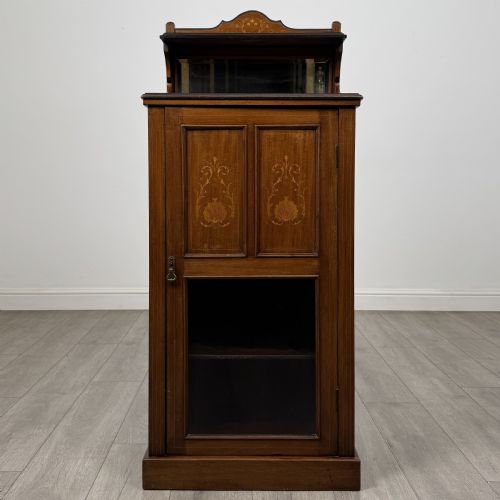
The decorative surfaces rely on precise pictorial or geometric inlays rather than simple painted finishes. Many examples emerge from Edwardian rosewood or mahogany workshops, whilst others represent Dutch craftsmanship utilising walnut and floral motifs. The integration of mirror glass within these finely figured frames creates a functional object that doubles as a piece of wall art.
Materials and technique
Cabinetmakers constructed these frames using solid secondary timbers as a foundation, applying fine veneers of mahogany, satinwood, rosewood, walnut, or kingwood to the visible exterior surfaces. The characteristic patterns rely on marquetry techniques, where thin slices of different coloured woods, boxwood, and brass are meticulously cut and fitted together to form pictorial scenes or symmetrical designs before being glued to the carcase.
The glass elements are traditionally silvered mirror plates held securely within wooden rabbets behind retaining slips. Makers often enhanced the natural grain of the timber using shellac-based polishes such as French polish, which highlights the subtle tonal variations between the contrasting inlay woods.
Vintage Marquetry Mirror Retail Price Guide 2026
Typical asking prices for vintage marquetry mirror among the pieces listed under this phrase on Sellingantiques today, from the lower quarter to the upper quarter. They describe what is for sale here now, not the wider market.
Regional influences range from British Edwardian cabinet work and Dutch floral marquetry to specialised travel mirrors originating in Italy and India.
Assessing quality and execution
The distinction between standard examples and exceptional pieces rests upon the complexity and precision of the wood inlay work. Superior items display tight, seamless joints between the contrasting veneer segments with no visible filler, creating crisp lines in floral or geometric motifs. The selection of timber also dictates standing, with finely figured satinwood, burr walnut, and rich rosewood commanding greater visual depth.
Structural integrity of the frame and the originality of the mirror plate heavily influence overall merit. High grade pieces retain their original bevelled or flat mirror glass, backboards, and mounting hardware, whilst inferior or heavily restored specimens may exhibit mismatched replacement components and loose veneer sections.
Edwards & Roberts·Gillows·A.J Rowley·B Cohen & Sons
The Vintage Marquetry Mirror Glossary
- Marquetry
- A decorative technique of applying thin veneers of wood, metal, or shell onto a structural base to form intricate pictures or patterns. This differs from simpler inlay by covering the entire surface with a fitted veneer mosaic.
- Satinwood
- A durable tropical timber known for its distinctive golden yellow sheen and lustrous grain. Cabinetmakers frequently utilised it during the Georgian and Edwardian periods for fine stringing and panel veneers.
- Overmantel mirror
- A large decorative mirror specifically designed to hang above a fireplace mantelpiece. These pieces often feature extended wooden frames that match the architectural style of the surrounding room.
- Toilet mirror
- A smaller swing mirror mounted on a miniature chest or frame, historically placed upon a dressing table for grooming. They typically include small drawers or adjustable pivot pins.
Vintage Marquetry Mirror: Frequently Asked Questions
How do I hang a heavy wooden mirror safely?
Heavy framed mirrors require robust wall fixings secured directly into studs or masonry rather than relying solely on standard plasterboard plugs. Using a heavy duty mirror plate or a French cleat system distributes the weight evenly across the structure.
Ensure the hanging wire or integrated D-rings on the reverse are rated for the specific weight of the timber and glass. Professional installation is advisable for large scale Edwardian or Victorian pieces.
Can I polish the wooden frame with modern sprays?
Modern silicone-based aerosols leave a persistent film that attracts dust and gradually degrades traditional shellac finishes. Avoid commercial cleaning sprays entirely when maintaining antique frames.
Instead, apply a thin coat of quality microcrystalline wax sparingly with a soft cloth to nourish the timber. Buff gently after a few minutes to restore the natural lustre without harming the delicate marquetry.
How do I distinguish Edwardian marquetry from Victorian pieces?
Victorian examples tend to employ heavier proportions, darker mahoganies, and robust walnut structures with deep mouldings. The decorative motifs often lean towards ornate floral sprays or architectural revival styles.
Edwardian pieces generally showcase lighter satinwood and rosewood surfaces with refined, delicate stringing and symmetrical neo-classical details. The overall aesthetic during the Edwardian era prioritised brightness and airiness in interior spaces.
What causes dark spots on antique mirror glass?
Dark spots and silver loss occur when moisture penetrates behind the glass plate and oxidises the reflective backing over decades. This natural ageing process is often referred to as foxing by collectors.
Original mirror plates frequently display some degree of foxing, which serves as an indicator of age. Many buyers appreciate this authentic patina as part of the historical character.