

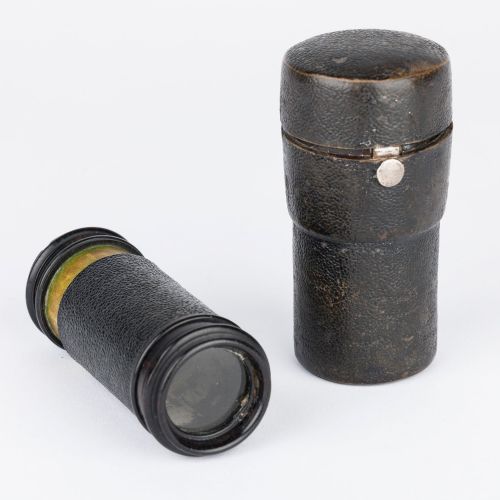


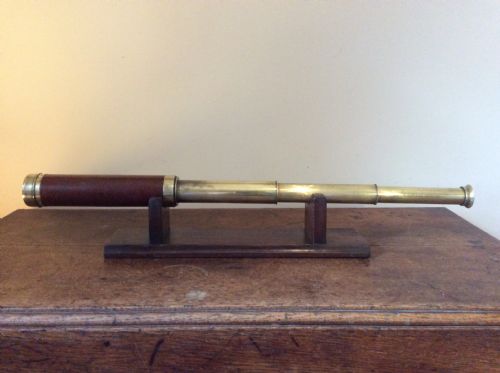


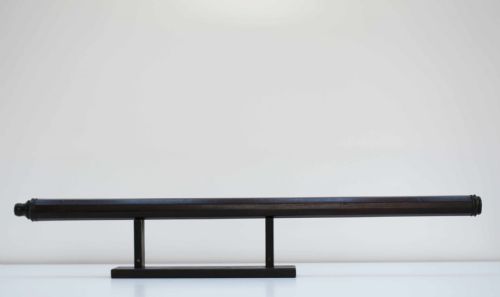


Vintage Maritime Spyglass
These vintage maritime spyglass items are brass and leather instruments designed for navigation and watchkeeping.
Vintage Maritime Spyglass
A vintage maritime spyglass comprises extending telescopic tubes utilised at sea for navigation and observation. The selection on this page centres on marine telescopes and pocket spyglasses originating from Georgian, Regency, Victorian, and Edwardian periods.
Most examples take the form of multi-draw instruments housed in brass, sometimes wrapped in leather, mahogany, or walnut. Makers ranged from workshop opticians to military suppliers producing officer of the watch telescopes.
What varies in quality
Quality depends upon the clarity of the optical glass and the precision of the brass draw tubes fitting together. Finer examples retain signed maker details engraved on the brass draw plates alongside robust leather or timber outer casings.
Simpler pocket versions contrast with substantial multi-draw deck telescopes designed for naval officers. The crispness of the mechanical action during extension marks the distinction between standard production and workshop craftsmanship.
Vintage Maritime Spyglass Retail Price Guide 2026
Typical asking prices for vintage maritime spyglass among the pieces listed under this phrase on Sellingantiques today, from the lower quarter to the upper quarter. They describe what is for sale here now, not the wider market.
The listings span from the eighteenth century through to the First World War, incorporating brass, leather, mahogany, and glass materials.
Ross of London·Voigtländer & Sohn AG·W. & T. Gilbert·Clarkson·Richardson·Newton & Co·Broadhurst Clarkson & Co·Cary London·L. Casella·Dollond·John Gilbert
The Vintage Maritime Spyglass Glossary
- Draw
- A sliding section of a telescope tube that extends to alter the focal length. Multi-draw instruments collapse into shorter lengths for portability.
- Achromatic
- An optical lens designed to reduce colour distortion and chromatic aberration. This improvement allowed clearer long-distance viewing.
- Single draw
- A telescope design featuring only one extending tube section inside the main barrel. These offer simpler optics compared to later multi-draw configurations.
- Non achromatic
- An early optical configuration lacking corrected lenses. These specimens belong predominantly to mid eighteenth century production.
- Officer of the watch
- A maritime telescope specified for naval personnel on deck duty. These instruments typically prioritise robust construction and reliable day or night capability.
Vintage Maritime Spyglass: Frequently Asked Questions
How do I use a vintage spyglass?
Extend all the brass draw tubes fully until the instrument locks into position. Adjust the final eyepiece section slowly while sighting a distant object until the image focuses sharply.
Keep the lenses clean using dry optical cloth and avoid forcing jammed metal draws if temperature changes cause expansion.
Can I use these telescopes outside?
These historical instruments remain functional for daytime viewing and casual outdoor observation. Their optics reflect the technology of their manufacturing period rather than modern standards.
Protect leather-bound barrels and brass surfaces from rain and moisture during outdoor use to preserve the finish.
How do I date a brass telescope?
Examine the number of draw sections, the engraving style of the maker signature, and the materials used on the barrel. Georgian and Regency pieces often feature simpler single or two-draw configurations with hand-engraved signatures.
Victorian and Edwardian examples frequently incorporate three or four draws, machine engraving, and standardised leather coverings.
How should I store my spyglass?
Collapse all draw tubes completely and store the instrument in a dry room away from direct sunlight and humidity. Leather and wood components benefit from stable indoor temperatures.
Display the telescope fully closed on a shelf or mounted securely in a dedicated wooden display case.