



Vintage Marble Lion
These vintage marble lion pieces bring sculptural presence and historic character to a room, ranging from grand garden statuary to heavy desk bookends.
Vintage Marble Lion
A vintage marble lion search brings together carved stone sculptures, bookends, and garden statuary spanning the nineteenth century through the Art Deco era. Buyers encounter everything from heavy Italian garden figures to small desk accessories utilising stone, marble, and alabaster bases.
The nineteenth-century examples often lean toward classical Italian or Victorian forms, while pieces from the 1920s and 1930s frequently adopt Art Deco styling. These items include sculptural groups like Androcles and the lion, alongside companion bookends and plant stands.
While marble dominates the description, the material palette extends to alabaster, jade marble, and soapstone, often paired with bronze or wood elements. The scale varies dramatically from large conservatory items down to small desk seals and timepiece housings.
How they were made
Carving and masonry techniques shape the primary stone bodies, utilising marbles, alabaster, and soapstone to achieve both smooth contours and textured manes. Craftsmen worked natural blocks by hand or utilised early twentieth-century mechanical saws to rough out the basic proportions before detailing.
Many sculptures incorporate mixed media, mounting stone figures onto carved wooden bases or combining them with cast bronze and brass components. The integration of metal elements requires precise fitting and pinning to secure heavy stone components safely.
Vintage Marble Lion Retail Price Guide 2026
Typical asking prices for vintage marble lion among the pieces listed under this phrase on Sellingantiques today, from the lower quarter to the upper quarter. They describe what is for sale here now, not the wider market.
Listings feature items from the 1860s through the 1930s, encompassing Victorian, Art Deco, and nineteenth-century Italian aesthetics.
What varies in quality
Material selection and the integrity of the stone determine the visual depth of the object, with uniform veining and free-from-fissure surfaces commanding greater appreciation. The quality of the mounting, particularly where stone meets bronze or wood bases, reveals the original maker's standard of construction.
Eugene Emile Borga
The Vintage Marble Lion Glossary
- Cellaret
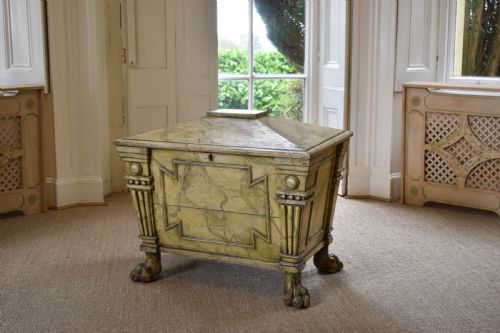
- A lockable container used for holding bottles of wine or spirits, often styled with faux marble finishes during the nineteenth century. These items sat beneath sideboards or on the floor in dining rooms.
- Alabaster
- A fine-grained, translucent stone utilised for carving sculptures and decorative objects, softer and more easily worked than standard marble. It takes a smooth polish that diffuses light.
- Shi Shi
- A traditional Chinese guardian lion figure, frequently carved from soapstone or jade marble as desk seals or decorative bookends. They represent protective temple imagery.
- Regency
- A British architectural and decorative style period spanning the early nineteenth century, known for classical restraint and faux finishes. Pieces from this era often emulate heavier ancient Roman or Greek prototypes.
Vintage Marble Lion: Frequently Asked Questions
Are these figures suitable for outdoor display?
Certain large-scale items, such as garden statuary and conservatory stands, are built from durable stone meant to withstand exterior conditions. Lighter indoor sculptures and alabaster pieces require sheltered environments to prevent weather damage.
Buyers should verify the specific stone density and sealant condition before placing any historic piece outside. Porous stones absorb moisture during freezing temperatures if left unprotected.
How do I date a marble lion sculpture?
Stylistic indicators provide the primary clues, shifting from nineteenth-century classical academic realism to streamlined Art Deco forms around 1920 to 1930. Tool marks, base construction, and associated materials like chrome or wrought iron also help narrow down the era.
Examining the underside and mounting hardware often reveals period-specific manufacturing techniques. Patina and natural wear patterns further confirm the age of the stone.
What is the difference between marble and alabaster?
Marble is a metamorphic rock formed from recrystallised carbonate minerals, offering high hardness and varied veining. Alabaster is a softer mineral aggregate, typically gypsum or calcite, known for a waxy translucence.
Alabaster scratches more easily than marble and allows light to pass slightly beneath the surface. Sculptors chose alabaster specifically for items requiring softer, glowing contours.
How should I clean a vintage stone carving?
Dusting with a dry, soft microfiber cloth prevents particle buildup without risking the polished surface of the stone. Avoid chemical cleaners and excess water, particularly on softer materials like alabaster and soapstone.
Stubborn grime requires gentle wiping with a barely damp cloth followed immediately by dry buffing. Professional conservators should handle valuable or heavily soiled historic sculptures.