




Vintage Mahogany Writing Slope
A vintage mahogany writing slope offers a portable desk surface, bringing period timber craftsmanship and fitted compartments directly to your home.
Vintage Mahogany Writing Slope
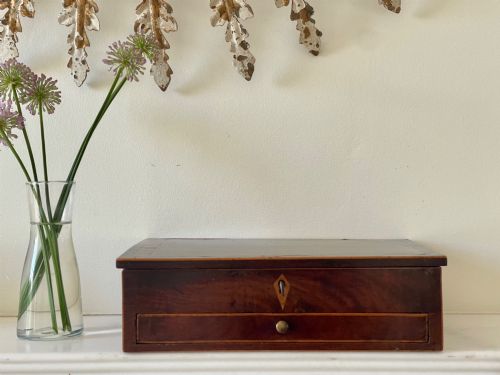
A vintage mahogany writing slope is a portable box designed for correspondence, opening down to form an angled writing surface lined with leather. Buyers seeking this phrase encounter a range of forms, from compact Victorian brass-bound campaign boxes to larger Georgian bureaux and Davenport desks.
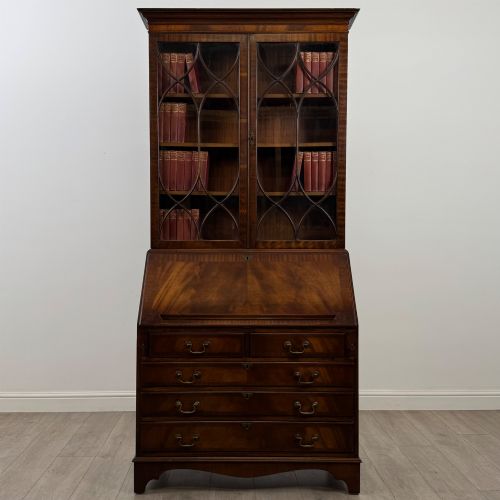
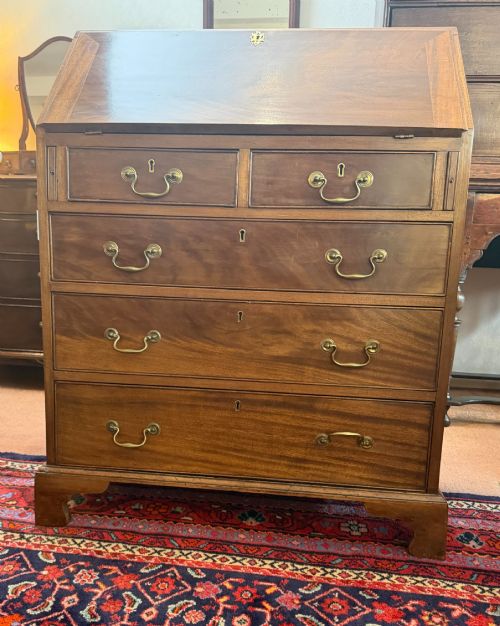
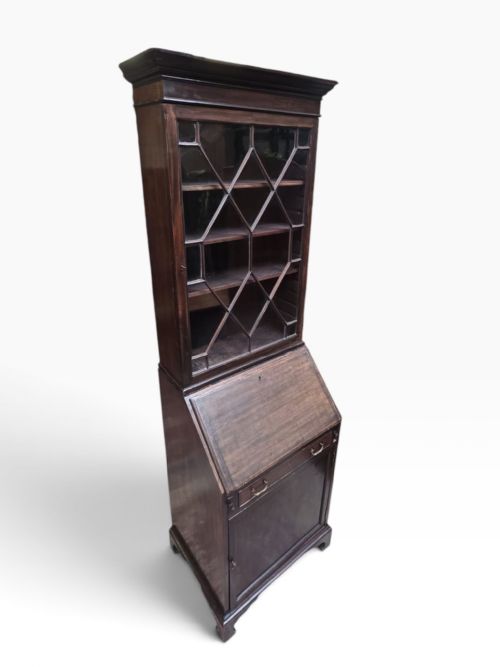
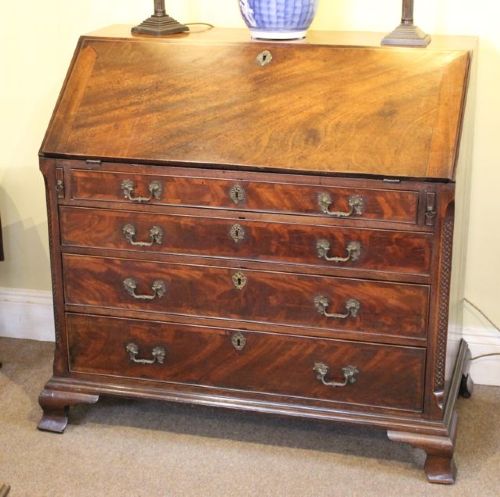
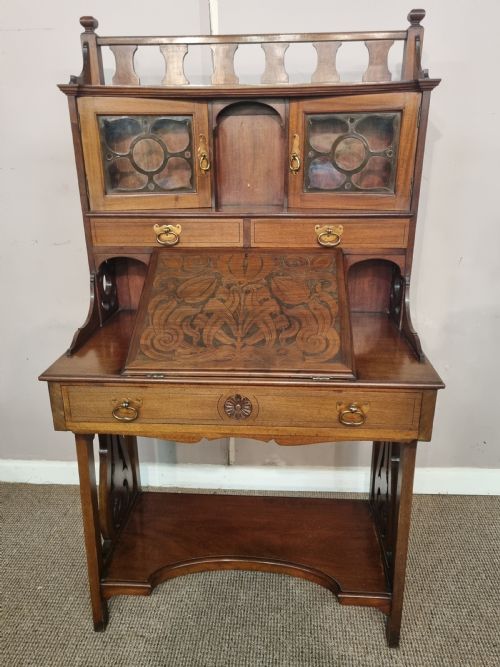
The pieces on this page span the eighteenth, nineteenth and early twentieth centuries, encompassing Georgian, Victorian, Edwardian and Regency periods. While many items are dedicated writing slopes and boxes, the selection also includes related forms such as bureau bookcases, reading tables and stationery cabinets.
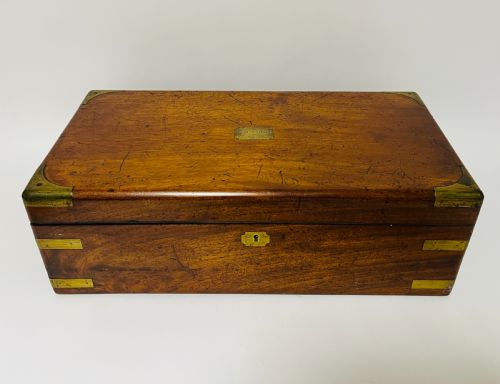
Origins vary across British and continental workshops, with traditional cabinet-making traditions shaping each piece. Buyers most frequently meet nineteenth-century campaign models featuring brass corners and flush handles designed for travel.
How they were made
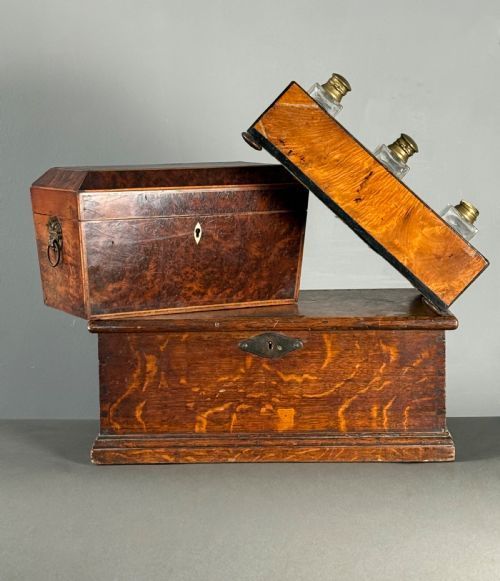
Cabinet-makers constructed these slopes primarily using solid mahogany and figured veneers, often selecting flame mahogany for decorative lids and drawer fronts. Secondary timbers such as oak and walnut appear internally for drawer linings and dividers.
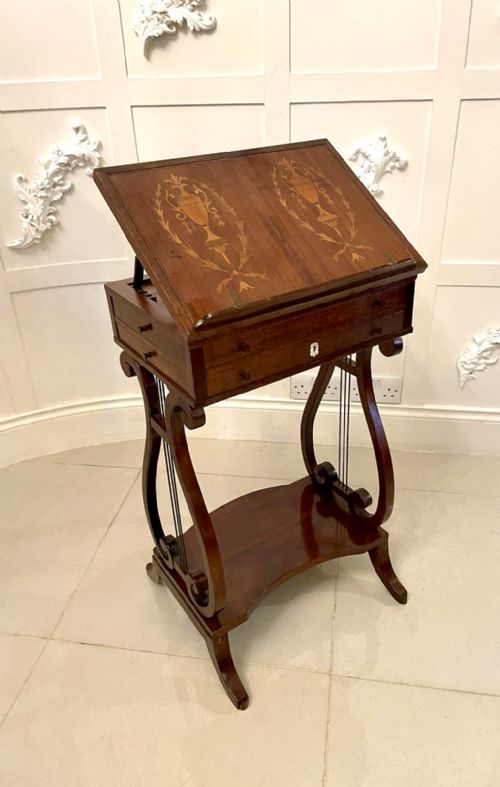
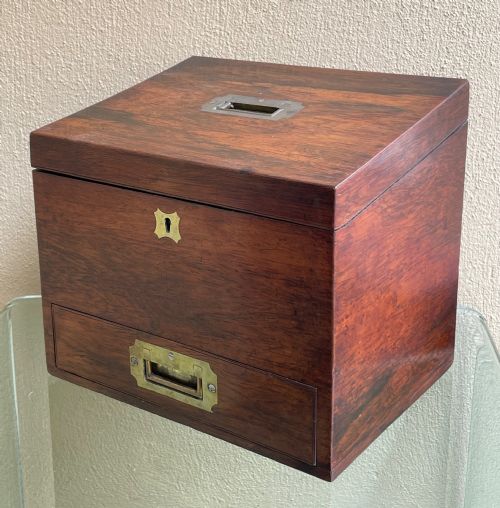
Brass fittings play a structural and decorative role, reinforcing corners and edges on campaign boxes while securing fitted interiors. Inlaid details utilise satinwood and boxwood to create contrasting borders and geometric motifs across Edwardian and Georgian surfaces.
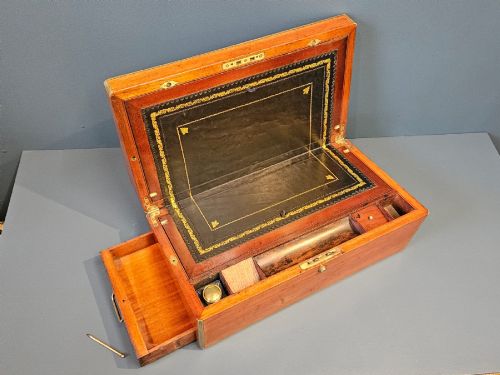
Leather inserts provide the writing surface within the folding slope, frequently finished with blind stamping or gilt tooling. Secret compartments and hidden drawers demonstrate complex interior joinery concealed behind sliding panels.
Object forms span traditional writing slopes and campaign boxes alongside larger bureau bookcases and Davenport desks.
What varies in quality
The calibre of a writing slope rests on the selection of the timber, particularly the depth of figure in the mahogany grain and the precision of the veneer matching. Superior examples display carefully chosen boards that wrap continuously around the box exterior.
Interior complexity and the retention of original fittings dictate the standing of a piece within its type. Slopes featuring intact inkwells, pen trays, secret drawers and well-fitted leather writing surfaces represent higher standards of period craftsmanship.
The execution of brass hardware, from flush lifting rings to corner mounts, separates standard production from superior workshop output. Finely fitted joints and smooth mechanical action when the slope opens reflect the skill invested by the original maker.
Gillows
The Vintage Mahogany Writing Slope Glossary
- Writing slope
- A portable box with a hinged lid that opens to form an angled surface for writing. Inside, fitted compartments hold ink, pens and stationery.
- Campaign box
- A piece of furniture made for military travel, distinguished by brass corner brackets, recessed carrying handles and robust construction. These items were built to withstand the rigours of transit.
- Davenport
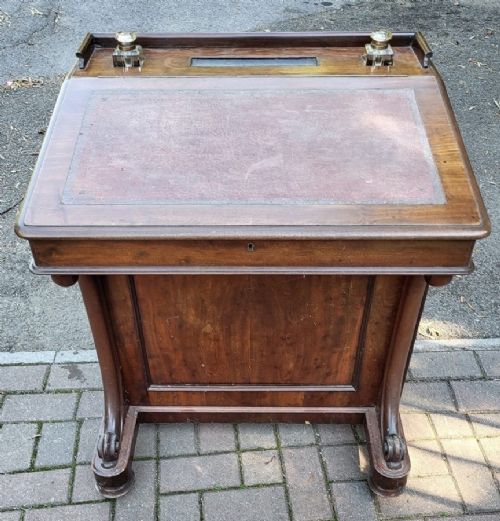
- A compact pedestal desk featuring a sloped writing surface above a set of drawers. The design became popular during the nineteenth century for domestic study use.
- Bureau bookcase
- A tall two-part furniture piece combining a sloping desk compartment with upper shelving enclosed by doors. They provide both storage and a fold-down writing area.
- Satinwood inlay
- Decorative wood ornamentation inserted into the mahogany surface in contrasting pale tones. Cabinet-makers utilised this technique to define borders and geometric patterns.
Vintage Mahogany Writing Slope: Frequently Asked Questions
What is a vintage mahogany writing slope?
A vintage mahogany writing slope is a portable box designed to hold writing materials and provide an angled desk surface when opened. These pieces typically date from the Georgian, Victorian and Edwardian eras.
Inside, users find fitted compartments for inkwells, pens and paper, alongside secret drawers designed for valuables. The exterior is constructed from mahogany, frequently enhanced with brass banding or inlay work.
How do you use a writing slope?
To use a writing slope, you release the interior catches and fold down the hinged lid to create a slanted writing platform. The leather-lined surface provides grip for paper while writing by hand.
When correspondence is complete, the sloping leaves fold back together and lock securely to contain all writing instruments inside. This portability allowed writers to work across different rooms or during travel.
How do I tell Victorian from Georgian slopes?
Georgian writing slopes often feature clean lines, understated brass escutcheons and finely figured flame mahogany veneers. Their internal compartments tend to showcase traditional cabinet-making joinery with subtle proportions.
Victorian examples, particularly campaign styles from the mid-nineteenth century, frequently incorporate robust brass binding, flush handles and more complex fitted interiors. Edwardian pieces often display lighter satinwood inlay and refined decorative details.
Where were writing slopes placed?
Writing slopes were placed on top of existing tables, desks or chests of drawers during use, rather than standing independently on the floor. Their portable nature meant owners could move them between the library, parlour and bedroom.
Campaign versions travelled with officers on military service or long voyages, functioning as desk and storage trunk combined. In modern settings, they sit well on sturdy side tables or desks as working display pieces.