

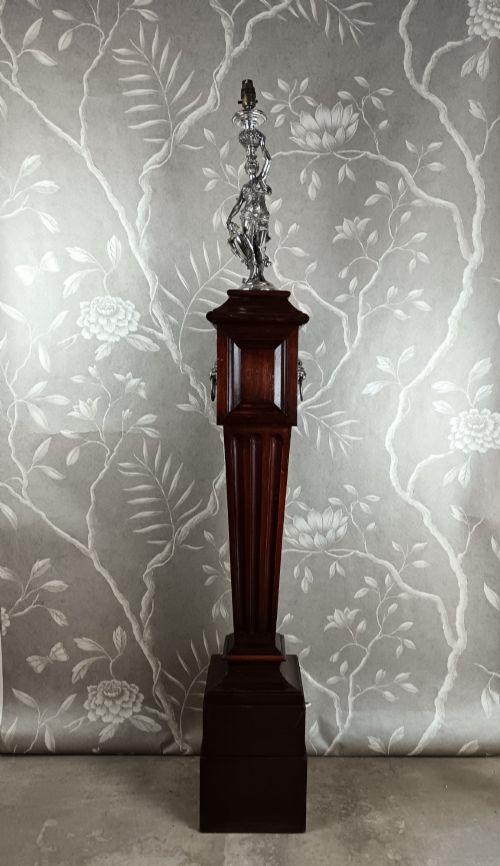


Vintage Mahogany Floor Light
A vintage mahogany floor light brings height and warmth to a room, drawing on periods from the nineteenth century to the mid twentieth century.
Vintage Mahogany Floor Light
When you search for a vintage mahogany floor light, you encounter tall vertical lighting fixtures designed to stand on the floor rather than sit on a table. These pieces span multiple decades and design revivals, taking the form of standard lamps, torchere pedestals, and converted pole screens or bouillotte lamps.
The versions you are most likely to meet on this page date from the late nineteenth century through to the 1930s and 1950s. They often incorporate revival styles such as William IV, Regency, and Chippendale, reflecting the enduring popularity of dark timber in domestic interiors.
Makers and craftsmen utilised the rich grain of mahogany to anchor corners of a room or illuminate reading spaces. Alongside straightforward timber uprights, listings feature hybrid forms like lamp tables and Canterbury stands that combine illumination with functional furniture surfaces.
How they were made
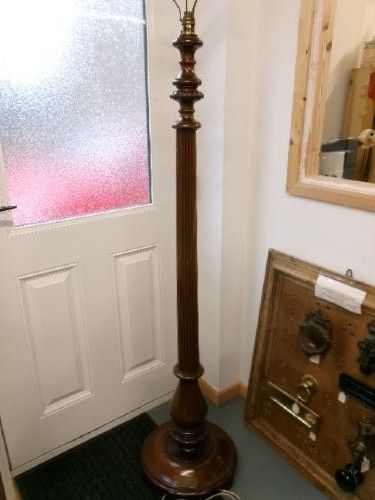
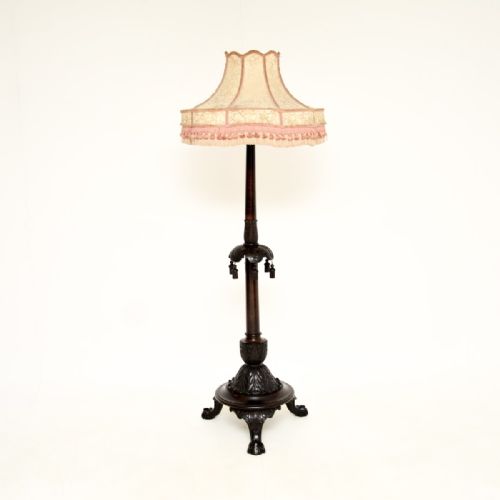
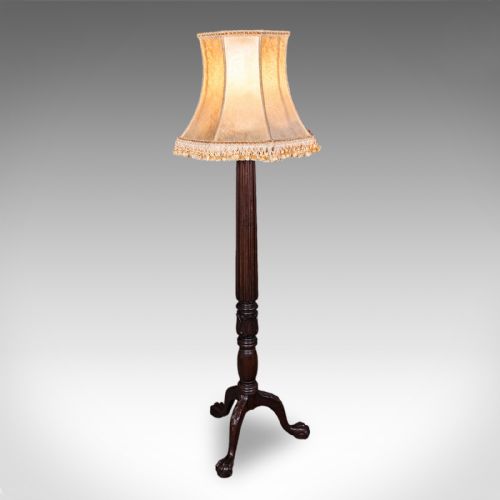
Makers constructed these standards primarily from solid or veneered mahogany, shaping the timber into turned columns, reeded shafts, or intricately carved pedestals. Many examples integrate brass fittings, gilt accents, and silver-plated figural elements that contrast with the dark wood.
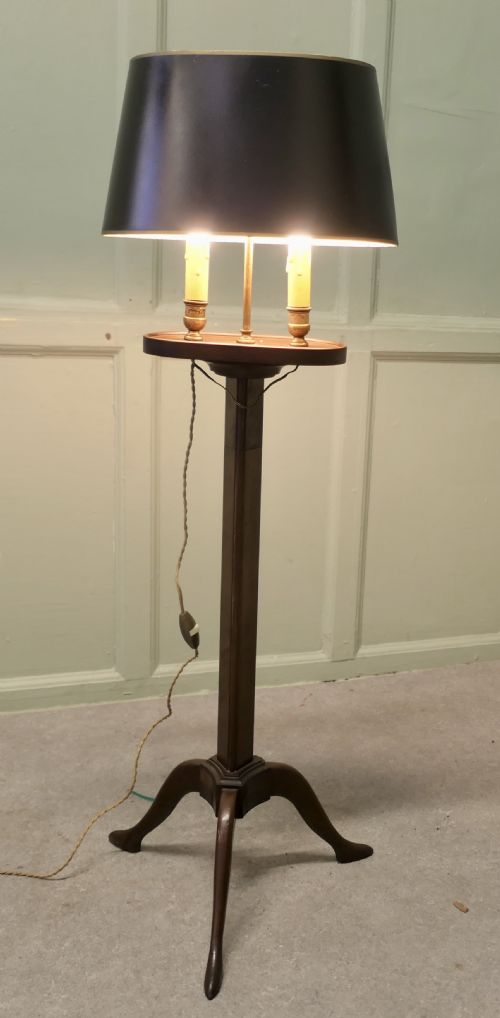
Shading and diffusion materials varied widely according to the decade of production, pairing timber frames with fabric, glass, or painted metal shades. Conversions also occurred where older items like pole screens or bouillotte lamps were adapted to hold electrical fittings.
Vintage Mahogany Floor Light Retail Price Guide 2026
Typical asking prices for vintage mahogany floor light among the pieces listed under this phrase on Sellingantiques today, from the lower quarter to the upper quarter. They describe what is for sale here now, not the wider market.
One clever piece doubles as a dressing room mirror and a lighting stand.
What varies in quality
The distinction between ordinary and superior pieces rests on the crispness of the timber carving and the weight of the base. Hand-carved columns and substantial brass mounts demonstrate a higher level of workshop attention than plain turned posts.
Integration of secondary functions, such as tiered shelving or combined table surfaces, dictates the sophistication of the design. Original surface patination on the mahogany also separates well-preserved examples from heavily refinished ones.
WMF
The Vintage Mahogany Floor Light Glossary
- Standard lamp
- A tall floor-standing lamp designed to illuminate a room from a standing position rather than a tabletop. These fixtures became popular with the rise of domestic electricity.
- Torchere
- A tall ornamental stand originally designed to hold a torch or candle, later adapted for electric lighting. They feature slender columns and elevated platforms.
- Pole screen
- An adjustable vertical screen designed to shield a person's face from the heat of a fireplace. Surviving examples are frequently converted into floor lamps.
- Bouillotte lamp
- A traditional French lighting form featuring a central shaft and adjustable candles or bulbs. Floor versions adapt this multi-light arrangement for standing use.
Vintage Mahogany Floor Light: Frequently Asked Questions
How do I date a floor lamp?
Dating relies on stylistic clues such as carving motifs, brass hardware, and overall form. Revival styles often mimic earlier periods like the Regency or William IV.
Materials like fabric shades and wiring methods further help place a piece within decades like the 1920s or 1930s.
Where were these lamps placed?
Owners typically positioned these lamps in corners of reception rooms or beside seating areas to provide ambient or reading light.
Combination pieces like Canterbury stands also served dual purposes near desks or reading chairs.
What is a converted lamp?
A converted lamp is an antique object, such as a pole screen or bouillotte fitting, adapted to hold electrical components.
These conversions repurpose decorative household items into functional floor lighting.