
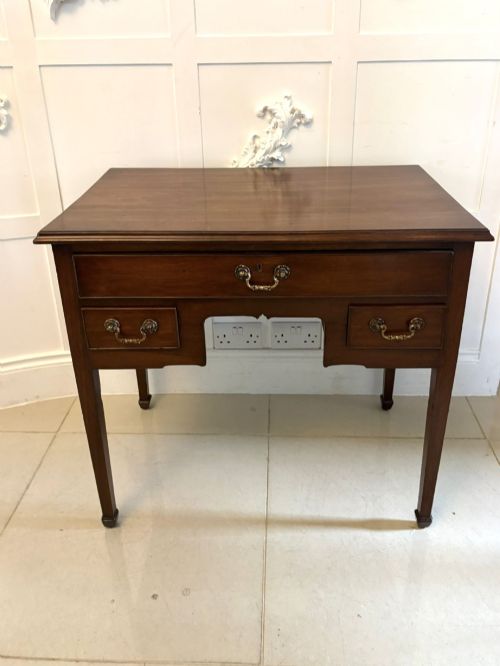
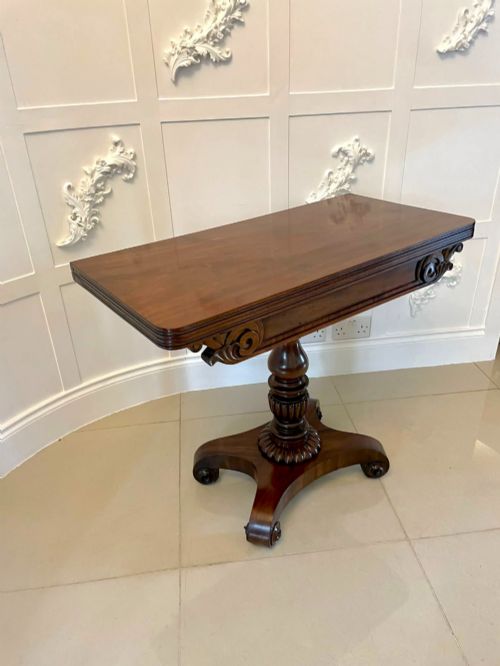
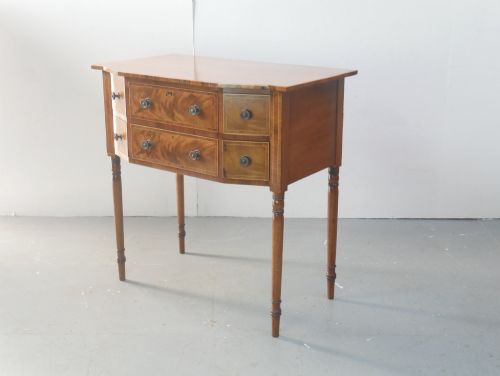
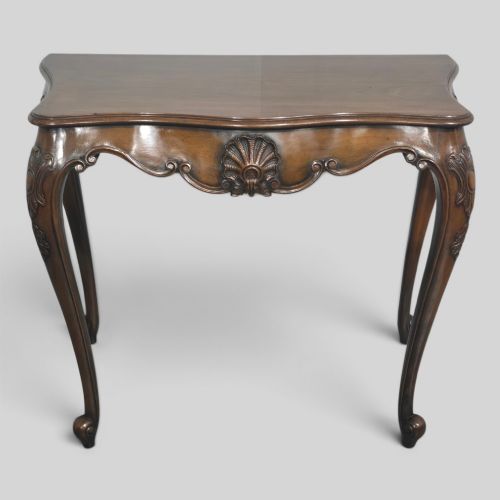
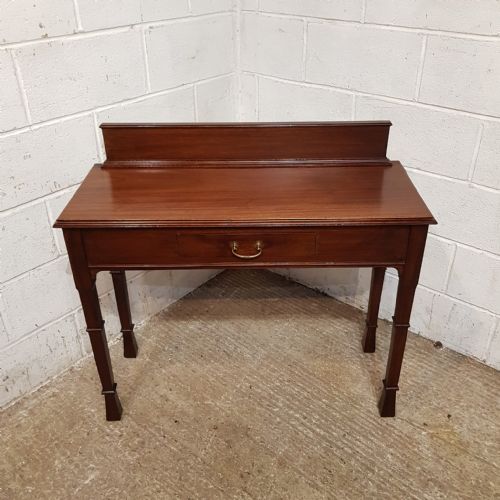
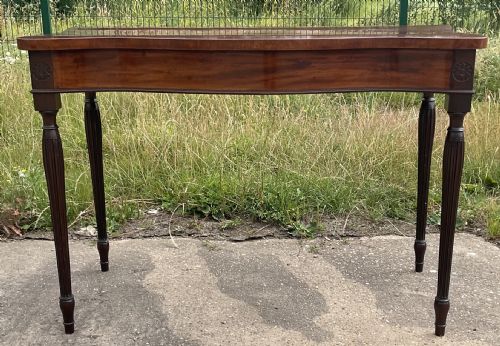
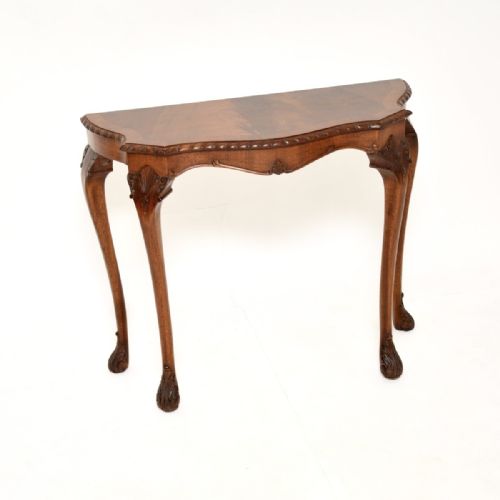
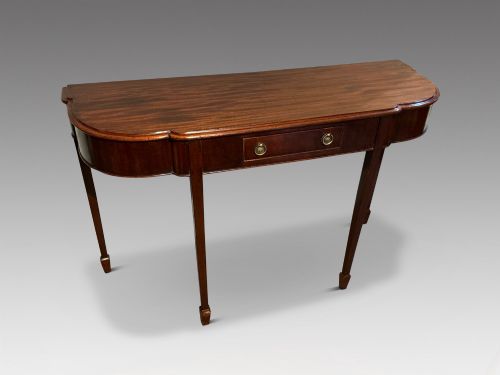
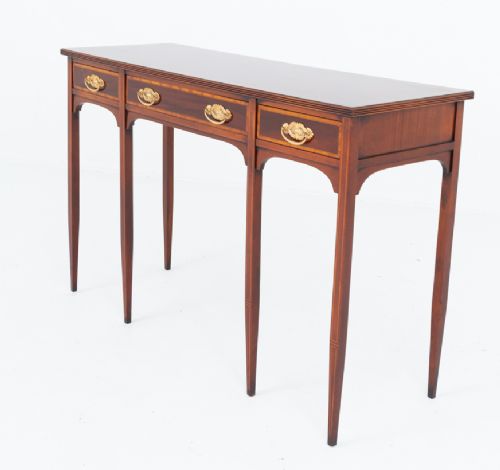


Vintage Mahogany Entry Table
These vintage mahogany entry table pieces bring warmth and presence to a hallway, offering practical surface space rooted in historic craft.
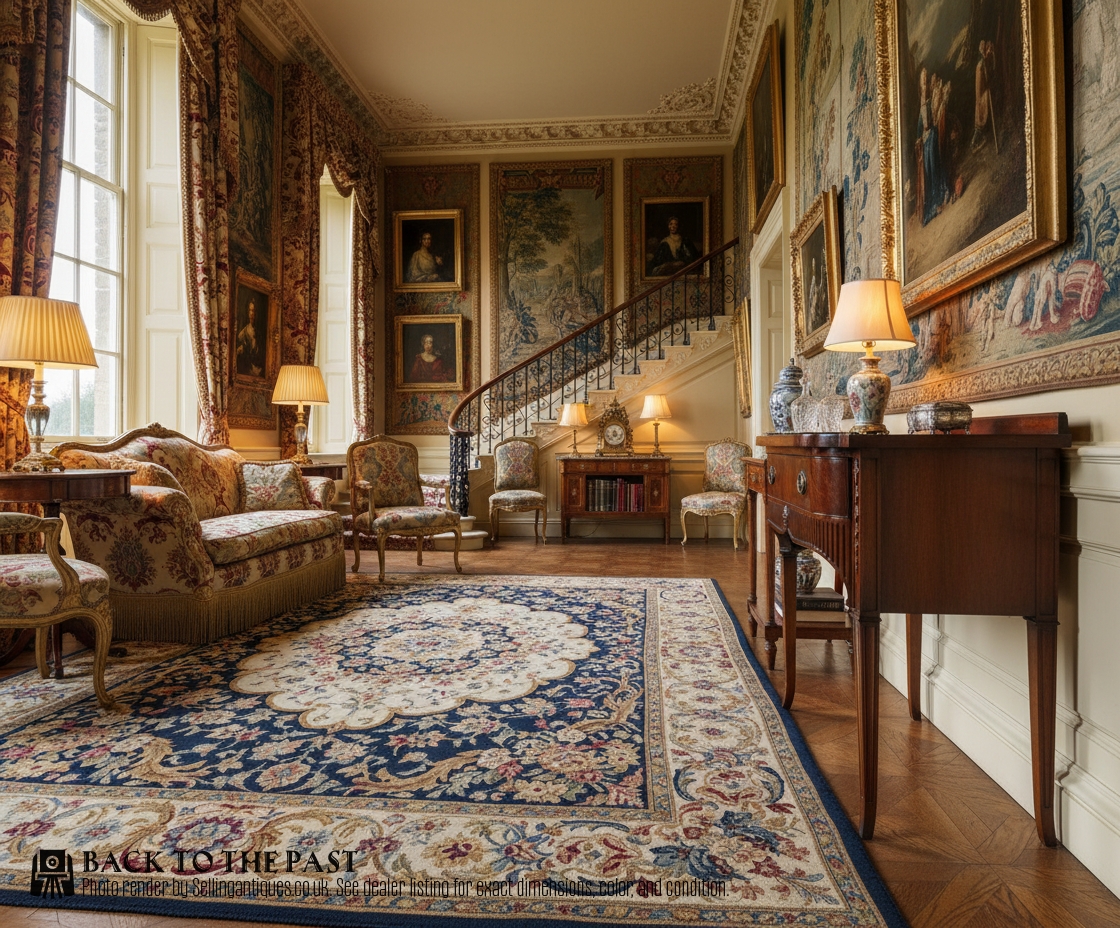
Vintage Mahogany Entry Table
A vintage mahogany entry table serves as a functional anchor in a hallway or reception space, often appearing as a console, demi-lune, or side table. These pieces emerge from periods spanning the nineteenth century through the Edwardian era and the nineteen-thirties.
The forms range from simple Georgian and Regency models to later revival interpretations like Sheraton Revival and Chippendale Revival styles. Sideboards and small cabinets also populate this category, providing alternative proportions for narrow spaces.
Makers and cabinetmakers utilised rich timber and specific silhouettes, creating half-moon shapes or serpentine fronts designed to sit flush against a wall. Buyers will encounter both authentic period items and later twentieth-century interpretations sharing the same foundational vocabulary.
Assessing quality in mahogany tables
Quality rests upon the selection of the timber and the depth of the figured grain visible across the surface. Finer examples display meticulous matching of wood veneers and crisp, hand-cut inlay rather than printed or superficial decoration.
Structural integrity and the subtlety of carved details differentiate standard production from superior craftsmanship. The crispness of edges on console legs and the weight of added materials like marble or brass fittings signal higher workshop standards.
Materials appearing across these tables include solid mahogany, figured veneers, satinwood, boxwood inlay, marble, and brass.
McKeon’s of Liverpool·Freeman’s
The Vintage Mahogany Entry Table Glossary
- Demi-Lune
- A half-moon shape popular for console and side tables designed to stand flat against a wall. This silhouette conserves floor space in narrow hallways.
- Serpentine Front
- A curved furniture front featuring a convex centre flanked by concave ends. This contour requires advanced woodworking skill to execute cleanly in mahogany.
- Satinwood
- A pale, lustrous hardwood utilised for contrasting inlay work and stringing on mahogany furniture. It creates sharp visual borders along table edges.
- Console Table
- A table fixed to a wall or designed to stand against one, often supported by decorative legs. They serve primarily for display and entryway storage.
- Boxwood Inlay
- Narrow strips or motifs of pale boxwood embedded into mahogany surfaces. This technique highlights the geometric outlines of tabletops.
Vintage Mahogany Entry Table: Frequently Asked Questions
What is a vintage mahogany entry table?
A vintage mahogany entry table is a narrow surface piece designed for hallways, foyers, and reception areas. These items include console tables, demi-lune shapes, and small side tables made from mahogany.
They provide a practical place for keys, correspondence, and decorative objects while establishing a formal tone near the entrance of a home.
How do I place an entry table in a small hallway?
Selecting a demi-lune or console table with a shallow depth allows the furniture to sit flat against the wall without blocking passage. Many period pieces were specifically built with narrow proportions for tight spaces.
Pairing the table with a matching wall mirror, as seen in certain sets, helps reflect light and creates an illusion of greater space in compact entryways.
How do I distinguish Regency styles from later revivals?
Regency pieces date from the early nineteenth century and typically exhibit restrained classical lines, sometimes with brass mounts or bold mahogany grains. Revival pieces from the Edwardian period or the nineteen-thirties imitate these earlier forms.
Revival furniture often incorporates lighter inlay work, such as satinwood or boxwood, and reflects the manufacturing standards of its actual production era rather than the Regency period.
Did these tables come with marble tops?
Certain nineteenth-century console tables feature heavy marble slabs fitted to the top of the wooden frame. These examples often originate from French workshops or high-end British commissions.
The stone provides a durable, cool surface that contrasts sharply with the warm red tones of the supporting mahogany base.