




Vintage Mahogany Desk Tidy
These vintage mahogany desk tidy pieces organise correspondence and desk accessories with traditional craftsmanship.
Vintage Mahogany Desk Tidy
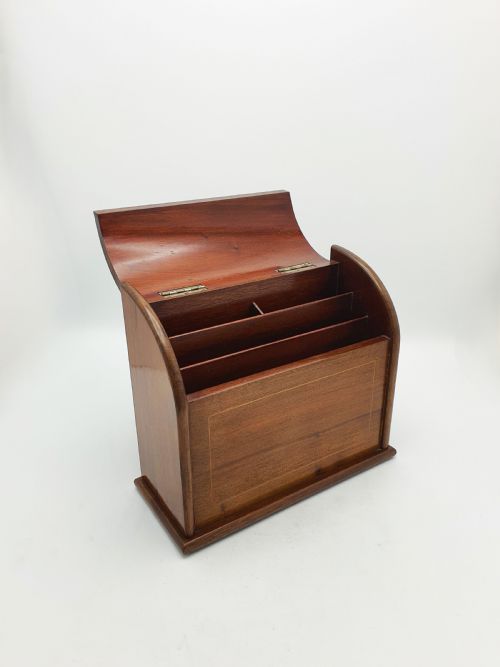
A vintage mahogany desk tidy brings order to papers, letters, and small office accessories through dedicated compartments. The pieces seen here range from Georgian and Victorian periods up to the early twentieth century, encompassing utilitarian office organisers and decorative stationery cabinets.
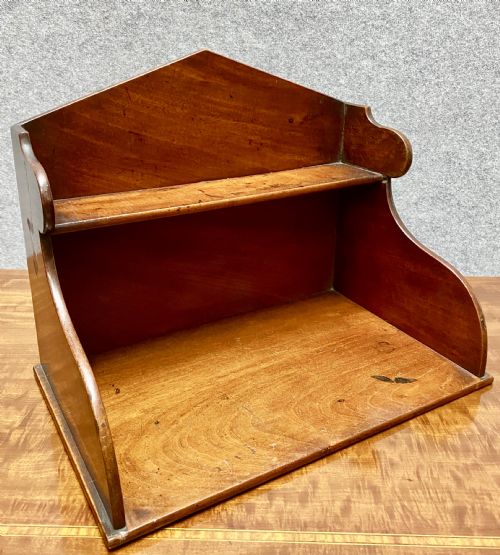
Forms span hinged-lid boxes, letter holders, stationery boxes, and desktop pigeon holes constructed from rich timber. Many items incorporate brass mounts or delicate satinwood inlay, reflecting the practical and decorative demands of historical writing spaces.
Materials and construction methods
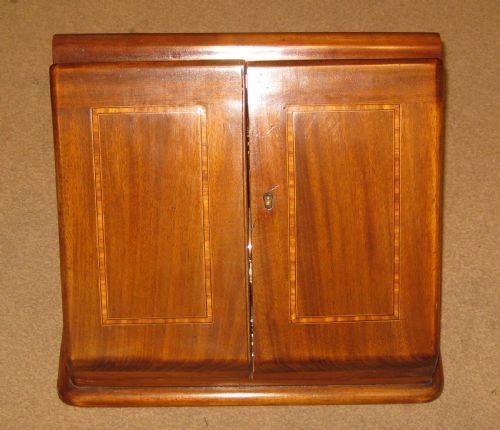
Makers relied on solid mahogany and selected hardwoods, often pairing the timber with brass for hinges, handles, and decorative mounts. Inlaid details in boxwood and satinwood provide linear contrast on cabinet doors and lid surfaces.
Interior fittings frequently include baize linings to protect writing implements and delicate surfaces. Construction techniques range from simple pegged box joints to dovetailed stationery compartments and carved structural elements.
Listings feature items spanning the Georgian, Victorian, and Edwardian periods, constructed primarily from mahogany with brass and satinwood inlay.
Distinguishing quality across examples
Quality rests in the selection of the mahogany grain and the precision of decorative inlays such as satinwood and boxwood. Superior examples exhibit refined joinery, substantial brass hardware, and well-thought-out internal layouts that serve specific organisational needs.
The presence of specialised compartments, such as double inkwells or dedicated writing drawers, elevates utilitarian items into accomplished pieces of desk furniture. Plain utility versions prioritise straightforward storage over decorative flourish.
The Vintage Mahogany Desk Tidy Glossary
- Mahogany
- A durable tropical hardwood prized for its deep reddish-brown colour and stable grain. It forms the primary structural material for the majority of these desk accessories.
- Satinwood inlay
- A contrasting light-coloured timber technique used to create decorative borders and geometric motifs on cabinet surfaces. This decorative addition highlights the craftsmanship of the period.
- Stationery cabinet
- An enclosed desktop piece featuring internal shelves or vertical dividers designed to hold writing paper and envelopes upright. These cabinets often include hinged doors and secure locks.
- Pigeon holes
- Open vertical compartments arranged in tiers to sort incoming mail and current correspondence. They provide immediate visual access to working papers.
- Inkstand
- A desktop tray or stand specifically designed to hold one or more inkwells alongside pens and blotting sand. They anchor the writing instruments on a traditional desk.
Vintage Mahogany Desk Tidy: Frequently Asked Questions
What is a desk tidy used for?
These accessories keep letters, envelopes, and writing implements organised on a working surface. They provide dedicated slots for daily correspondence and small office tools.
Historically, they cleared clutter from writing tables in domestic studies and professional offices alike. Today, they serve a similar practical function while adding traditional character to modern workspaces.
How do I date a mahogany tidy?
Dating relies on observing construction methods, hardware styles, and prevailing design trends from periods like the Georgian and Victorian eras. Dovetailing techniques and brass fitting designs often indicate the approximate decade of manufacture.
Inlaid details and specific cabinet forms also point towards particular decades, such as the Edwardian period or the turn of the twentieth century.
Are all these items English in origin?
Many items reflect English workshop traditions, particularly those associated with specific professions like insurance agents or naval architects. However, international influences appear in styles such as Anglo Indian brass-mounted pieces.
Continental designs, including French Empire examples, also contribute to the variety of desk accessories found within this category.
How should I care for mahogany wood?
Mahogany benefits from occasional light dusting with a soft, dry cloth to protect the polished surface. Avoiding direct sunlight and extreme temperature fluctuations preserves the natural colour of the timber.
Applying specialised furniture wax sparingly maintains the lustre of the wood without building up heavy residues over time.