

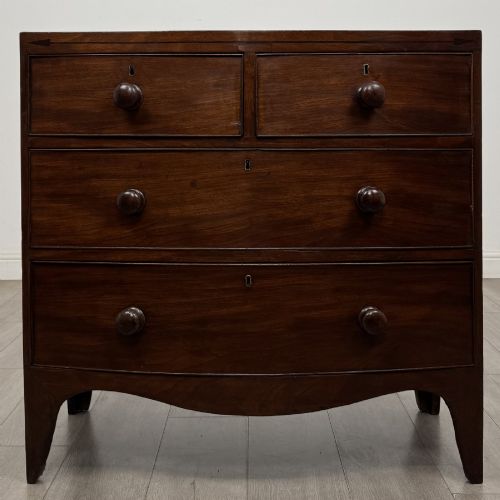
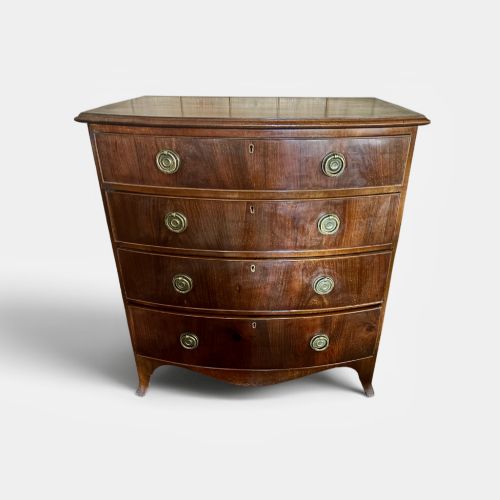
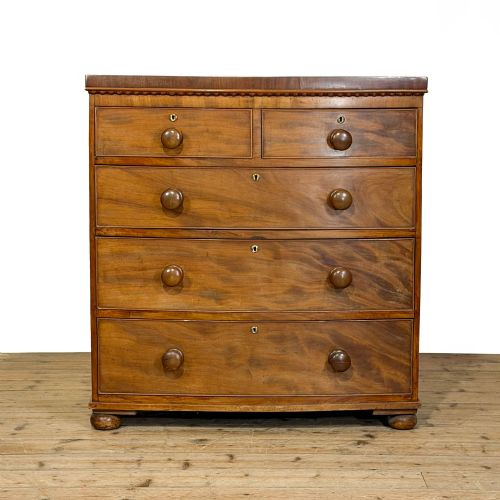
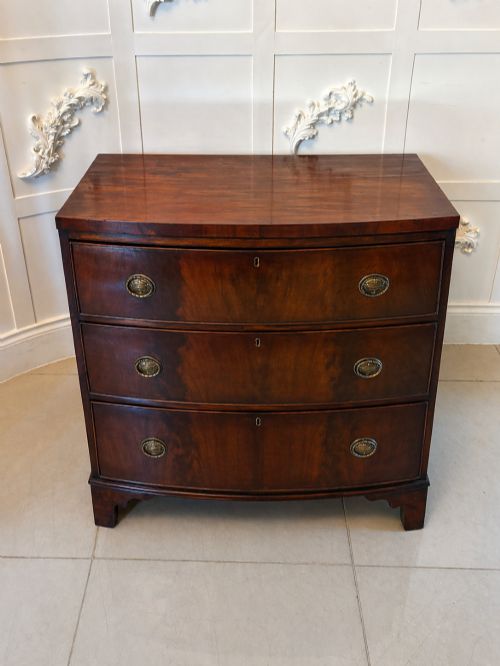
Vintage Mahogany Bow Chest
A vintage mahogany bow chest brings together curved fronts and rich timber to anchor a bedroom with architectural presence.
Vintage Mahogany Bow Chest
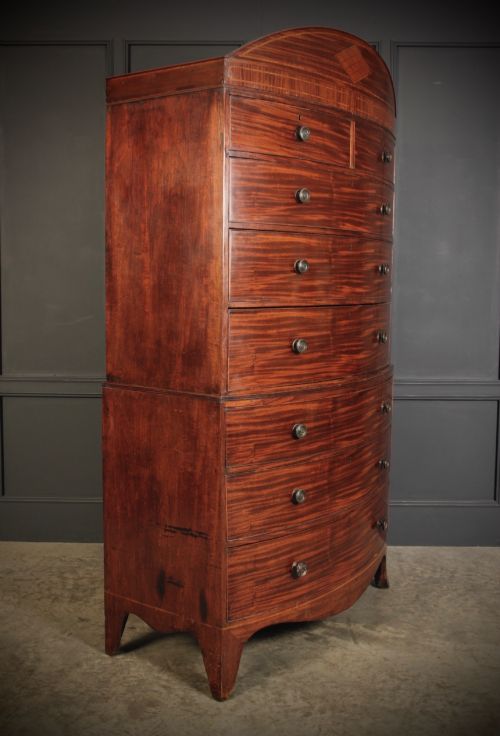
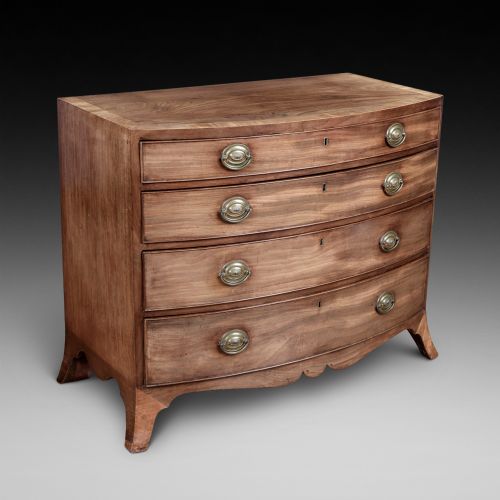
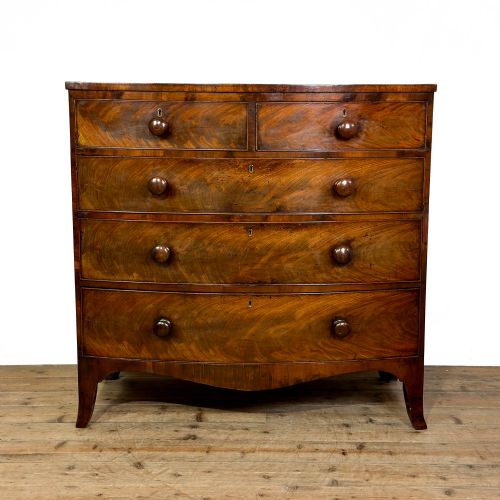
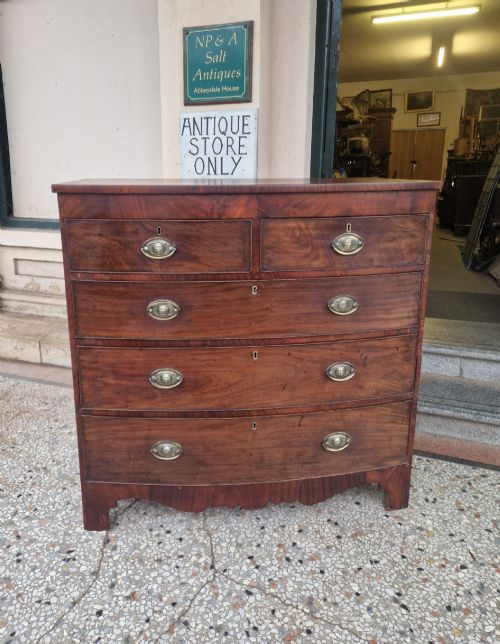
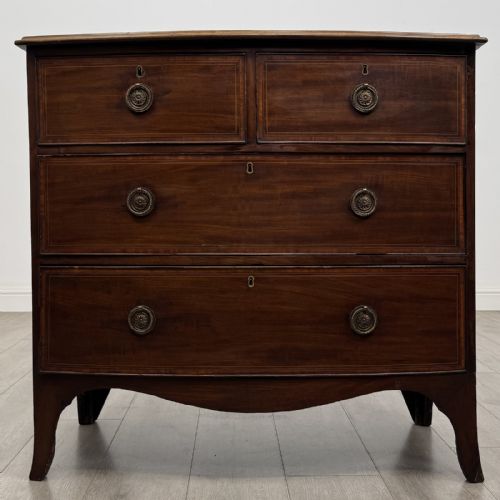
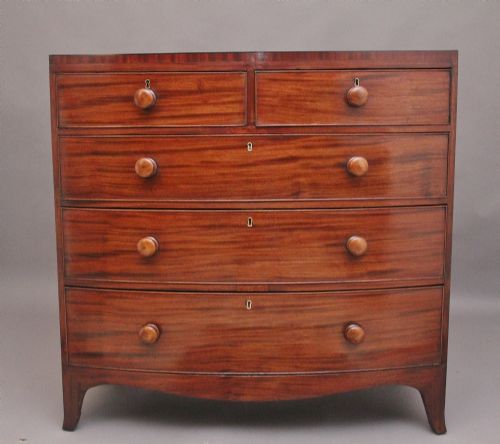
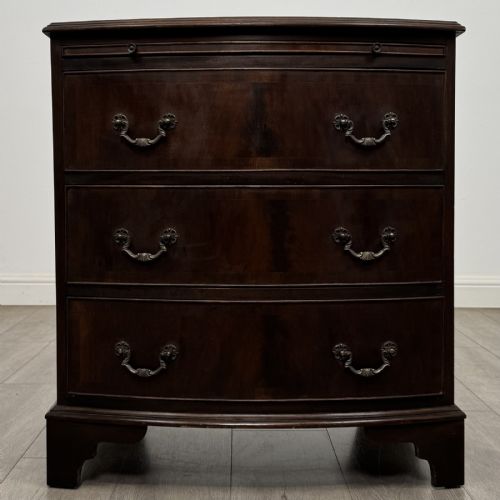
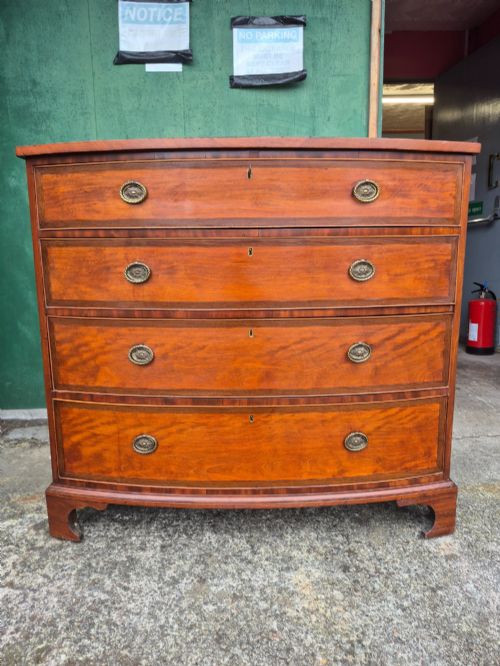
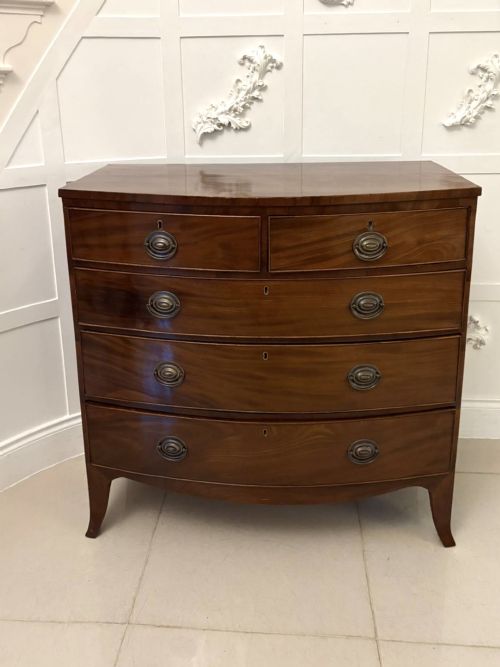
A vintage mahogany bow chest presents a convex curved front that softens the corners of a traditional case piece. Buyers searching this phrase encounter examples ranging from eighteenth-century Georgian and Regency periods through to Victorian and Edwardian revivals.
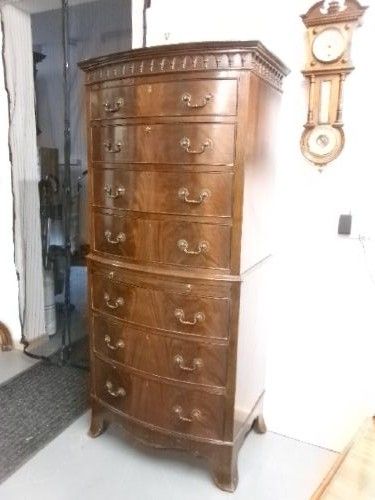
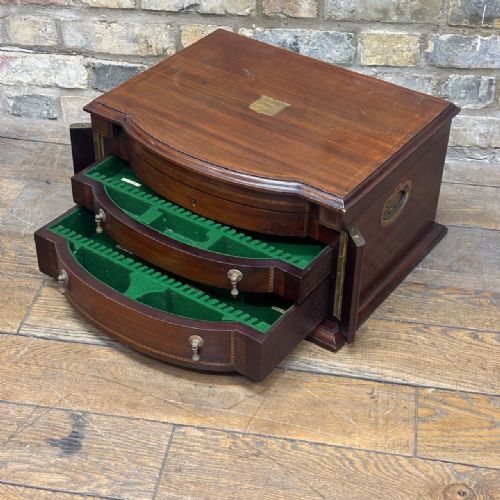
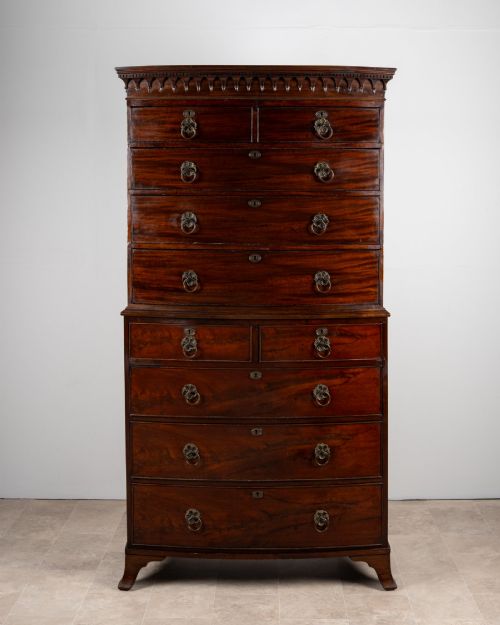
The primary form is the chest of drawers, though related variations include tallboys, linen presses, and smaller bedside cabinets. Pieces emerge from Georgian origins up to early twentieth-century interpretations, showing sustained preference for the bowed profile across multiple eras.
Proportions vary from compact chambers to large case furniture with four or five graduated drawers. Construction spans centuries of cabinet-making, maintaining the characteristic curved silhouette that defines the type.
Materials and construction methods
Cabinet-makers built these pieces primarily from solid mahogany and pine, frequently applying flame mahogany veneer to create deep visual movement on the drawer fronts. Selected pieces incorporate contrasting timbers such as satinwood and boxwood inlay to define the borders and edges.
Structural integrity relied on secondary woods like pine for interior drawer linings and carcase backs. Brass handles and drawer pulls completed the construction, paired with turned wooden knobs on later nineteenth-century examples.
Vintage Mahogany Bow Chest Retail Price Guide 2026
Typical asking prices for vintage mahogany bow chest among the pieces listed under this phrase on Sellingantiques today, from the lower quarter to the upper quarter. They describe what is for sale here now, not the wider market.
Listings span Georgian, Regency, Victorian, and Edwardian periods, utilising mahogany, flame mahogany veneer, satinwood, and boxwood inlay.
Distinctions in construction and design
Quality rests in the handling of the curved front and the selection of the timber grain. Finer examples display symmetrical flame mahogany veneers that wrap smoothly across the radius of each drawer.
The execution of secondary details, such as precise boxwood stringing and original brass hardware, separates standard production from superior cabinet-making. Grain continuity down the stacked drawer fronts indicates deliberate planning by the maker.
The Vintage Mahogany Bow Chest Glossary
- Bow front
- A convex curved cabinet front that projects outward in an arc. This shape requires specialised joinery to bend or shape the timber and drawers.
- Flame mahogany
- A veneer cut from timber where the branch meets the trunk, producing a rippled, flame-like pattern. It provides strong visual texture on drawer faces.
- Tallboy
- A tall chest of drawers, often built in two sections with a smaller chest stacked upon a larger base. These pieces maximise storage capacity whilst maintaining a small floor footprint.
- Satinwood
- A pale, durable exotic hardwood used for contrasting inlay and banding. It highlights the edges of drawer fronts and top boards.
Vintage Mahogany Bow Chest: Frequently Asked Questions
How do I date a bow front chest?
Dating relies on construction methods, timber choice, and hardware styles. Earlier Georgian pieces often feature hand-cut dovetails and oak or pine secondary woods, whilst Victorian examples introduce machine-sawn elements and turned wooden knobs.
Secondary woods and drawer linings offer further clues. Eighteenth-century pieces display different interior construction compared to Edwardian revivals or 1920s interpretations.
What is flame mahogany?
Flame mahogany is a highly figured wood veneer derived from specific sections of the mahogany tree. The grain creates a distinctive pattern that resembles flickering flames.
Cabinet-makers prized this veneer for principal display surfaces like drawer fronts. It creates rich visual depth under polished finishes.
Where should I place a bow chest?
These chests suit bedrooms, hallways, or living spaces where the curved front softens linear room layouts. Their projecting profile requires adequate clearance from walking paths.
Smaller bedside cabinets and compact drawers fit tighter spaces while retaining the signature bowed design. Larger tallboys provide substantial vertical storage without occupying extra floor area.
What is the difference between a chest and a tallboy?
A standard chest provides low or mid-level drawer storage beneath a flat top board. A tallboy rises higher, historically combining two separate chest sections to accommodate more drawers.
Tallboys offer increased storage capacity within a vertical format. Both share the characteristic curved bow front seen across various periods.