

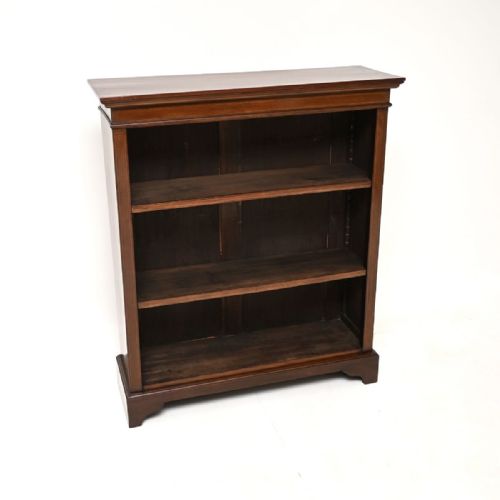
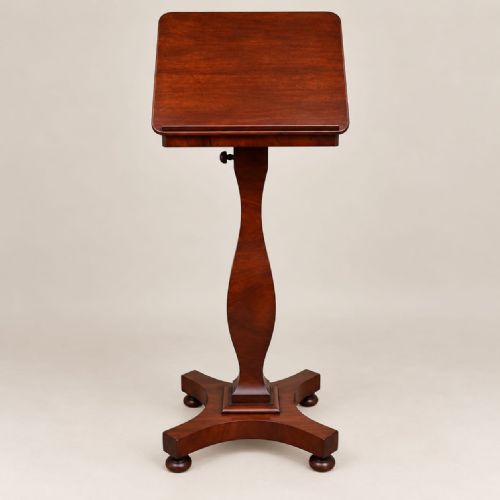
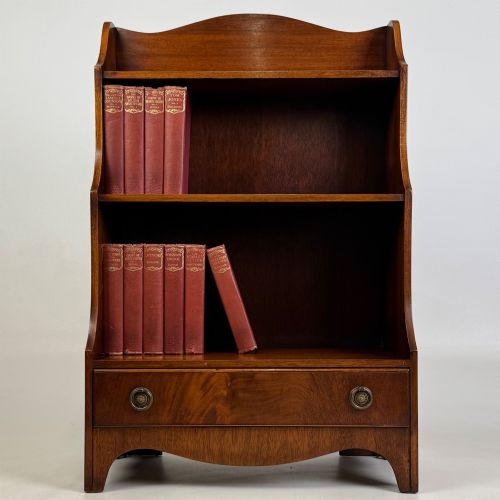
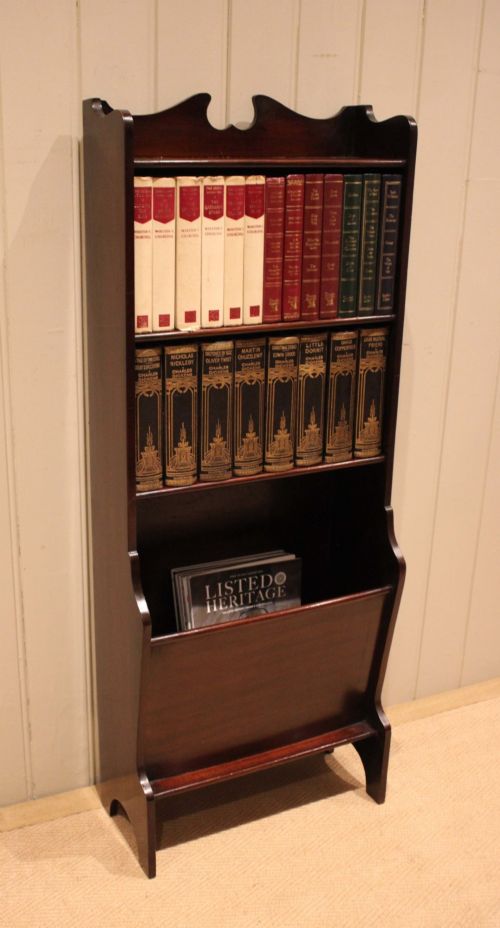


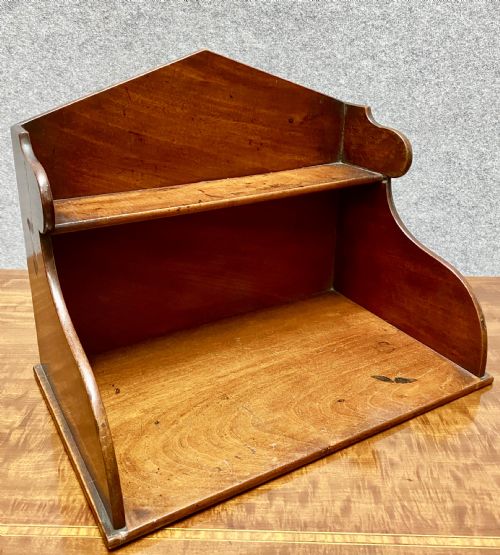


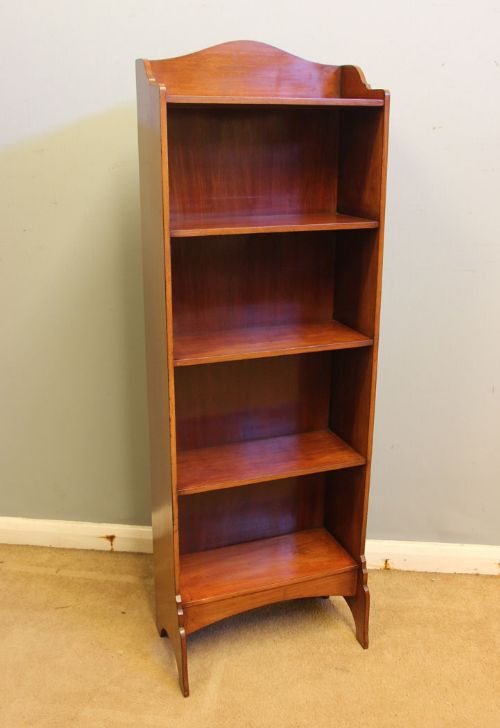

Vintage Mahogany Book Rack
A vintage mahogany book rack organises volumes neatly upon desks and tables while bringing rich timber grain into a room.
Vintage Mahogany Book Rack
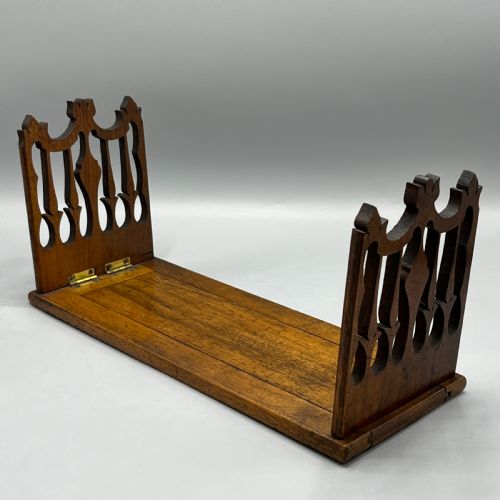
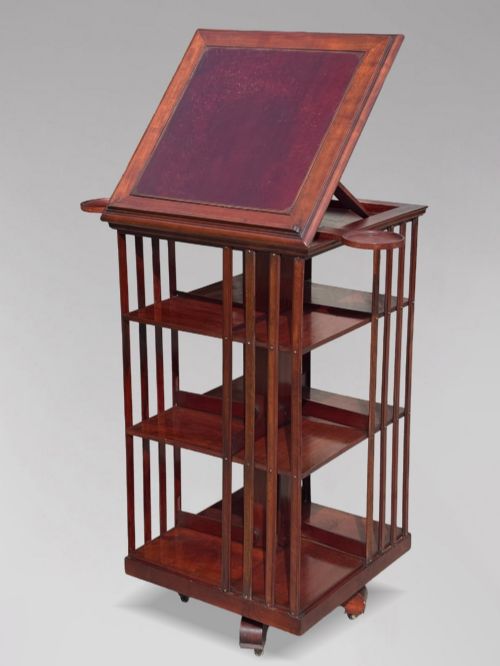
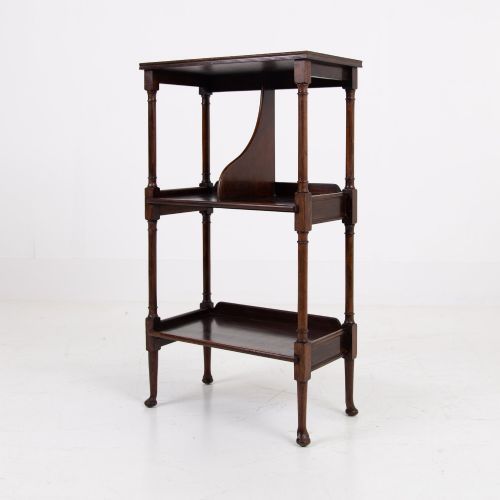
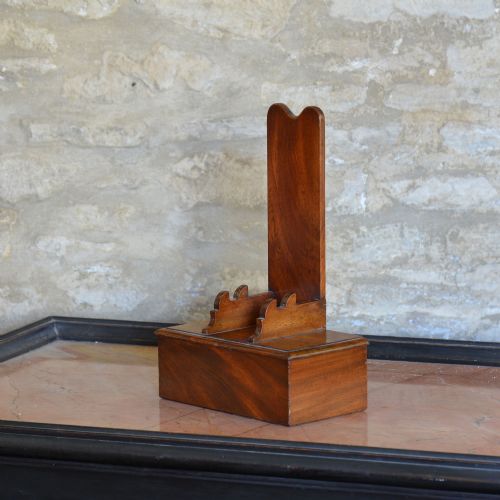
A vintage mahogany book rack provides compact shelving and desktop storage for favourite volumes, emerging across periods from the Georgian era through to the 1930s. Buyers searching for a vintage mahogany book rack will encounter diverse portable forms including table troughs, revolving stands, wall shelves, and tiered whatnots.
How they were made
Cabinet makers utilised solid mahogany and flame mahogany veneers over secondary timbers such as pine or oak, selecting boards for rich figuring and deep natural warmth. Construction methods involved traditional joinery to build sturdy troughs, revolving mechanisms, and tiered shelving units designed for daily use.
Metal components such as brass brackets, handles, and cast iron supports were integrated to reinforce portable book carriers and heavy revolving bookstands. Inlaid details in satinwood added fine decorative contrast to Edwardian and Regency surfaces.
Vintage Mahogany Book Rack Retail Price Guide 2026
Typical asking prices for vintage mahogany book rack among the pieces listed under this phrase on Sellingantiques today, from the lower quarter to the upper quarter. They describe what is for sale here now, not the wider market.
Listings feature mahogany, satinwood, and flame mahogany alongside brass and cast iron hardware across Edwardian, Regency, and Art Deco periods.
What varies in quality
Quality rests in the selection of timber, where striking flame mahogany figuring and precise satinwood stringing elevate a piece above plain construction. The smoothness of revolving actions and the integrity of brass fittings distinguish superior tabletop book troughs and stands.
Proportion and execution define the hierarchy among these pieces, separating simple utilitarian shelves from finely detailed Edwardian bookstands and Regency library carriers. Superior examples exhibit crisp joinery and well-preserved finishes that showcase the natural grain.
Harrods
The Vintage Mahogany Book Rack Glossary
- Flame mahogany
- A veneer cut from timber where the branch meets the trunk, producing a distinctive fire-like grain pattern. This highly decorative surface appears frequently on finer book troughs and display stands.
- Whatnot
- An open shelving unit with multiple tiers designed for displaying books and ornaments. These pieces range from compact tabletop versions to tall freestanding etageres.
- Book trough
- A V-shaped desktop or tabletop holder designed to keep volumes upright and accessible. They often feature panelled ends and inlaid decoration.
- Revolving bookcase
- A freestanding or table-top stand engineered to turn smoothly on a central pivot base. This allows easy selection from multiple sides of shelving.
- Satinwood
- A pale, lustrous timber utilised for contrasting inlay and stringing on mahogany furniture. Cabinet makers employed it to highlight edges and panels on Edwardian pieces.
Vintage Mahogany Book Rack: Frequently Asked Questions
What is a mahogany book trough?
A book trough is a small open holder designed to sit upon a desk or table, keeping a selection of active reading volumes close at hand. These compact pieces appeared in various forms throughout the Edwardian period and the 1930s.
They usually feature canted wooden sides to support books without the need for traditional heavy bookends. Many examples incorporate carrying handles or fine satinwood inlay.
How do revolving bookstands work?
Revolving bookstands utilise an internal mechanism of wooden or metal pivots that allows the upper tiers to turn freely in a circle. This engineering enables users to access multiple compartments of books from a stationary seating position.
Such stands became particularly popular during the Edwardian era for desktop and floor-standing library use. They combine practical storage with smooth rotational movement.
Where were portable book shelves used?
Portable book shelves and carriers were designed to be easily moved between rooms, allowing readers to transport working volumes around the home. Smaller 19th-century and Regency examples provided flexible storage before fixed built-in shelving became standard.
Their lightweight construction and convenient handles made them practical accessories for studies, sitting rooms, and libraries. They kept current reading material organised without requiring wall attachment.
How do I identify an Edwardian book rack?
Edwardian book racks often display lighter framing, delicate satinwood stringing, and inlaid mahogany panels produced around 1900. These pieces frequently take the form of revolving table stands, wall-hanging shelves, or open desktop troughs.
They reflect the domestic interior styles of the early 20th century, balancing functional storage with decorative aesthetic touches. The timber finish tends to be bright and warm.