


Vintage Mahogany Bench Seat
These vintage mahogany bench seat options encompass Edwardian and Victorian seating forms, offering practical length and rich timber tones for hallways or bedroom ends.
Vintage Mahogany Bench Seat
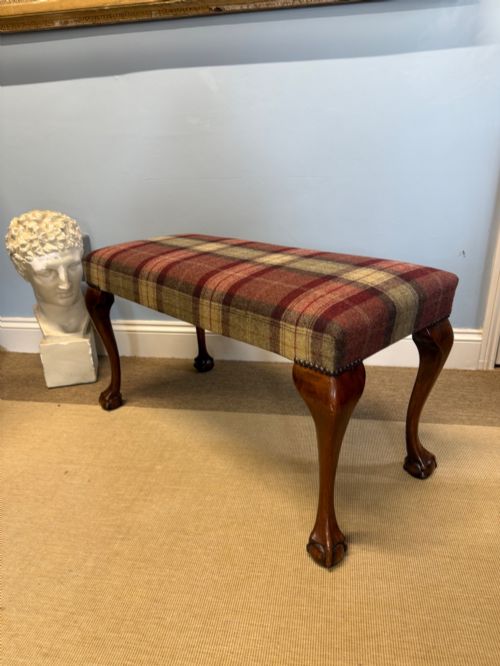
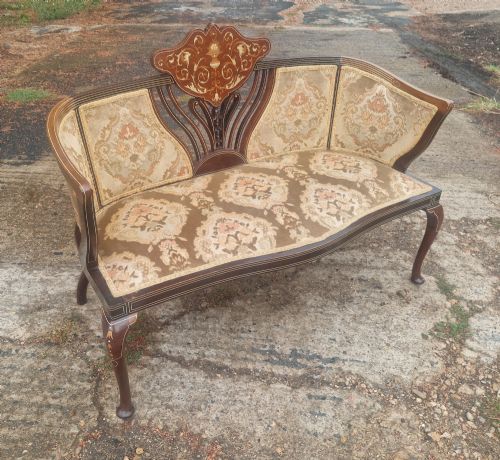
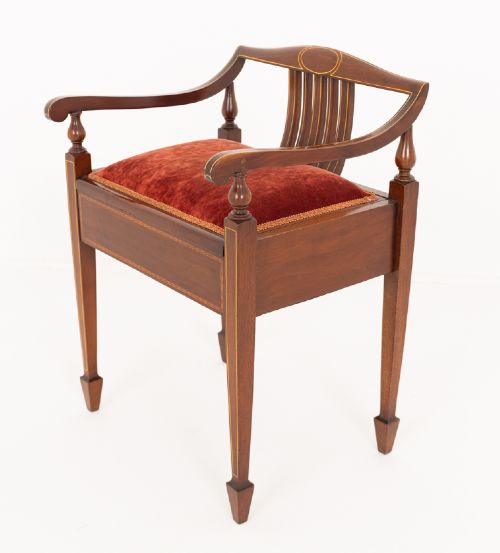
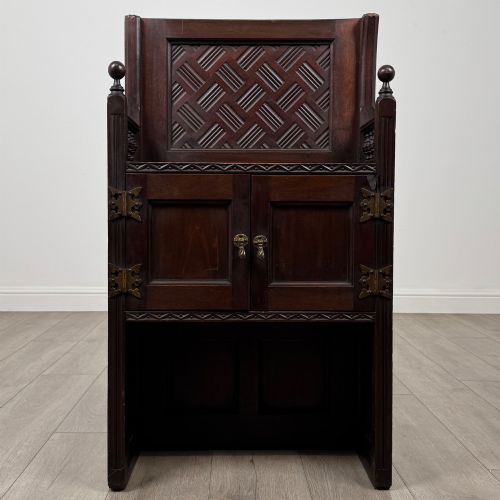
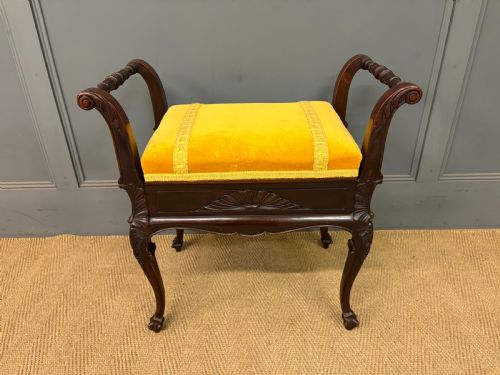
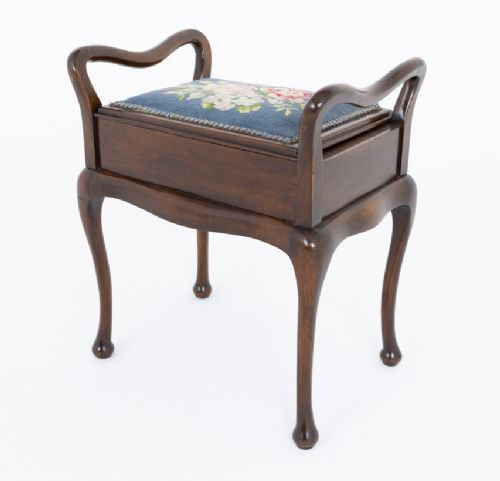
A vintage mahogany bench seat covers a variety of long seating forms found in domestic spaces, most frequently appearing as Edwardian piano stools, window seats, and end of bed sofas. These pieces draw on revival styles like Chippendale, Sheraton, and Queen Anne, adapting historical timber frames for early twentieth century and late nineteenth century interiors.
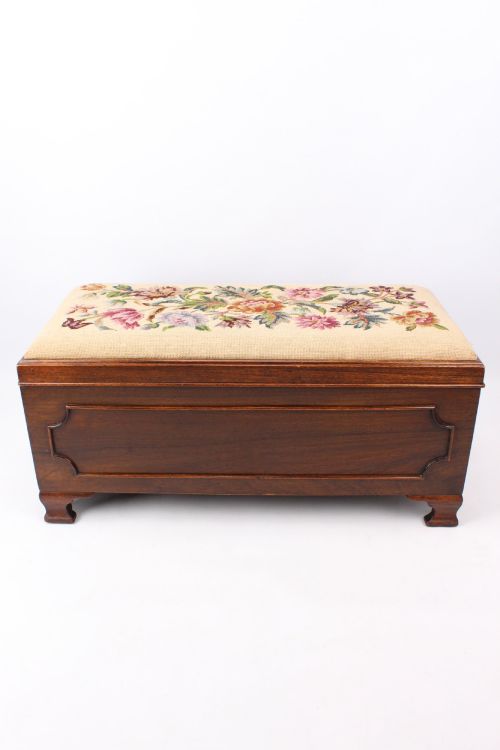
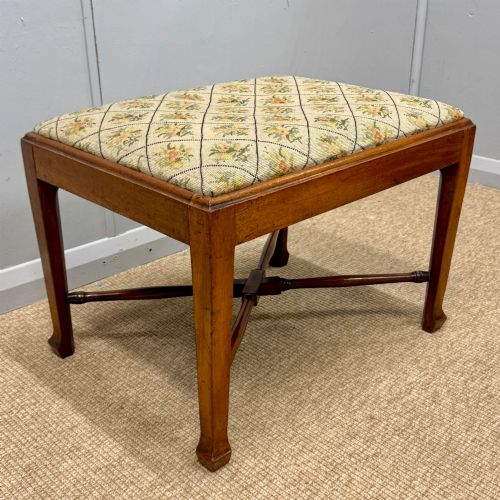
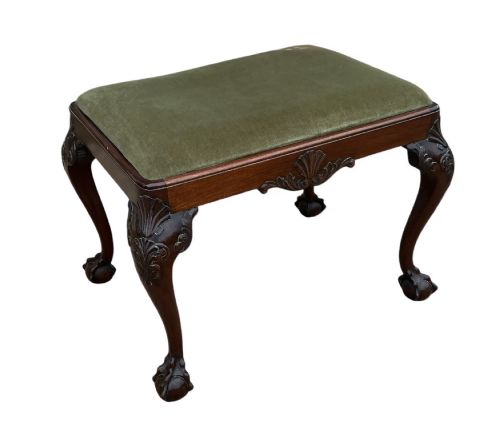
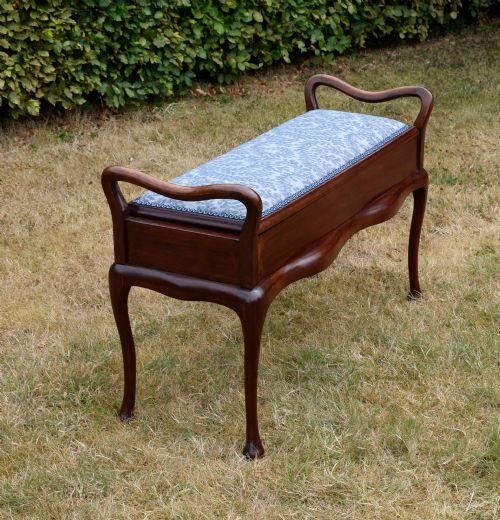
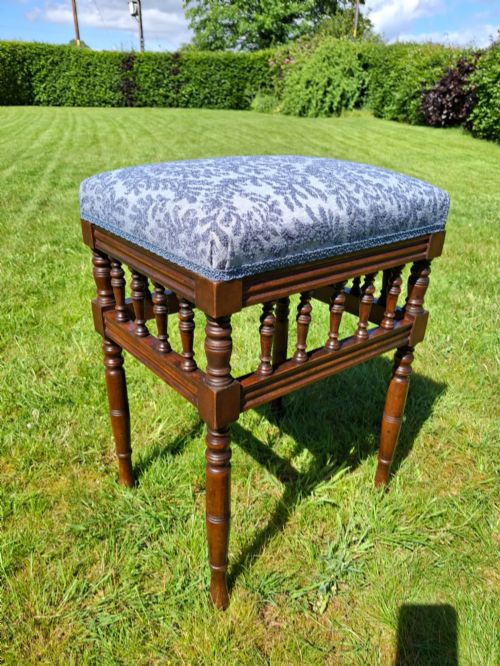
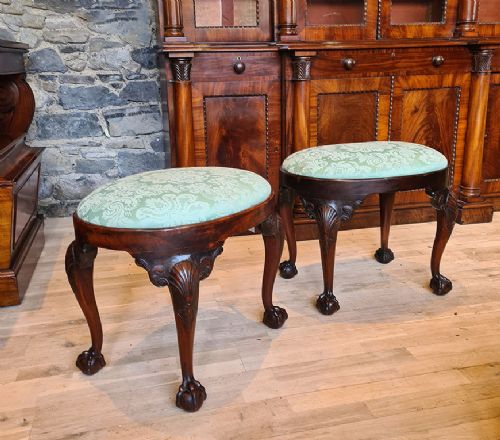
The selection ranges from compact dressing table stools and duet piano seats to substantial ottomans and settees upholstered in fabric, leather, or tapestry. Buyers encounter numerous Edwardian examples featuring satinwood inlay and cross stretchers, alongside nineteenth century cabriole leg designs suited for hallways and reception rooms.
Materials and construction methods
Makers utilised solid and veneered mahogany for the structural frames, frequently embellishing surfaces with delicate satinwood inlay work or carved ball and claw details. These timber supports carry various upholstered elements secured by traditional methods, utilising wool, velvet, textile, and needlework coverings.
Internal stuffing and webbing support the seated user, while subsidiary metals such as brass appear on hinges, handles, or decorative castors. Frame stability relies on sturdy joinery, including cross stretchers placed between the legs on dressing and piano stools.
Listings demonstrate a strong prevalence of Edwardian piano stools alongside Victorian mahogany ottomans and window seats featuring fabric and wool upholstery.
Assessing quality in mahogany seating
The distinction between standard commercial production and finer workshops lies in the crispness of the mahogany carving and the precision of the satinwood inlay. Superior examples display thoughtful proportions, robust joinery without excessive movement, and carefully selected timber grain that has aged with a deep lustre.
Hallett & Sons·Jas Shoolbred
The Vintage Mahogany Bench Seat Glossary
- Cabriole leg
- A furniture leg that curves outward at the knee and tapers inward toward the ankle, ending in a pad or ball and claw foot. This form was popularised during the eighteenth century and revived in later Victorian and Edwardian periods.
- Cross stretcher
- An intersecting wooden brace connecting the legs beneath a stool or table to provide additional structural rigidity. They are commonly seen on dressing table stools and piano seats.
- Satinwood inlay
- A decorative technique where contrasting light-coloured satinwood is inserted into recesses cut into the darker mahogany surface. This ornamentation defines many Sheraton Revival and Edwardian pieces.
- Duet piano stool
- An extended seating form designed to accommodate two musicians side by side while playing a keyboard instrument. Many examples feature hinged lids opening to reveal sheet music storage compartments.
- Window seat
- A long, narrow bench constructed to fit the architectural recess of a domestic window. These pieces frequently feature upholstered seats and low arms or raised ends.
Vintage Mahogany Bench Seat: Frequently Asked Questions
What is a vintage mahogany bench seat used for?
These versatile pieces serve multiple domestic functions beyond traditional piano seating, operating effectively at the foot of a bed, beside a hallway table, or beneath a window. Their elongated proportions and occasional internal storage compartments make them practical for organising household items while providing casual seating.
Buyers often place them in entrance halls for putting on shoes or utilise dressing table stools for bedroom vanity areas. The combination of sturdy timber frames and comfortable upholstered tops ensures they handle daily use while maintaining decorative appeal.
How do I date a mahogany window seat?
Dating relies heavily on stylistic markers, timber characteristics, and upholstery evidence found across the piece. Edwardian examples often display satinwood stringing and lighter mahogany tones, whereas Victorian versions tend to feature heavier timbers, leather upholstery, or robust cabriole legs.
Examining the construction methods underneath, such as screw types, secondary woods, and hardware like brass castors, helps narrow the decade of manufacture. Comparing the decorative motifs against known revival styles, such as Sheraton or Chippendale revivals, provides further chronological context.
Are piano stools comfortable for daily seating?
Piano stools offer firm support due to their original design purpose, which required a stable, flat surface for proper posture during keyboard practice. Many duet and solo variants include padded tops upholstered in wool, velvet, or tapestry that soften the seat considerably.
While they lack the deep squab cushions of a traditional sofa, their compact height and sturdy proportions make them ideal for short periods of sitting. Adjusting to their firmness is straightforward when placed in hallways or dressing rooms where prolonged lounging is uncommon.
How do I care for mahogany and upholstered seats?
Maintaining mahogany surfaces requires simple dusting with a soft cloth and occasional treatment with appropriate beeswax to preserve the timber's natural lustre. Avoiding direct sunlight and intense heat sources prevents the wood from drying out or splitting over time.
Upholstered components benefit from gentle vacuuming using a brush attachment to remove dust from fabrics, tapestries, or leathers. Keeping antique textiles protected from moisture ensures the delicate fibres and needlework remain intact for years to come.