

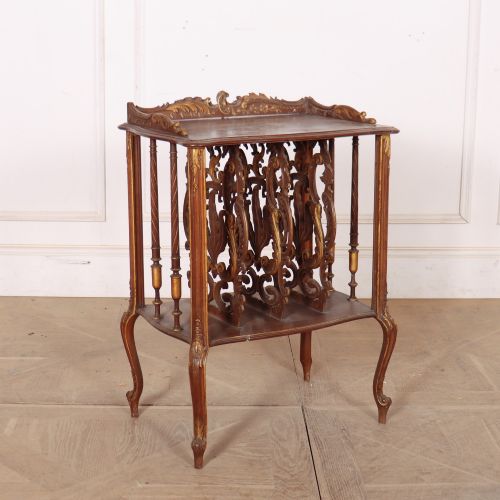


Vintage Magazine Holder Table
A vintage magazine holder table combines a dedicated compartment for periodicals with the surface utility of an occasional table.
Vintage Magazine Holder Table
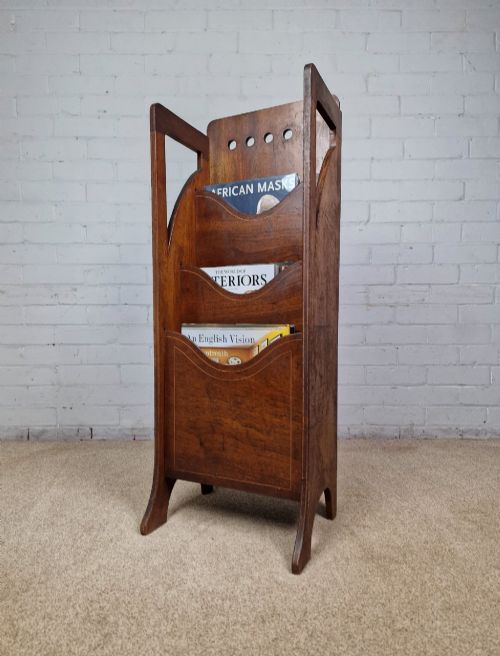
A vintage magazine holder table unites small-scale furniture utility with compartmented storage for periodicals, newspapers, and sheet music. These pieces frequently take the form of traditional canterburys or rack stands designed to sit beside seating arrangements.
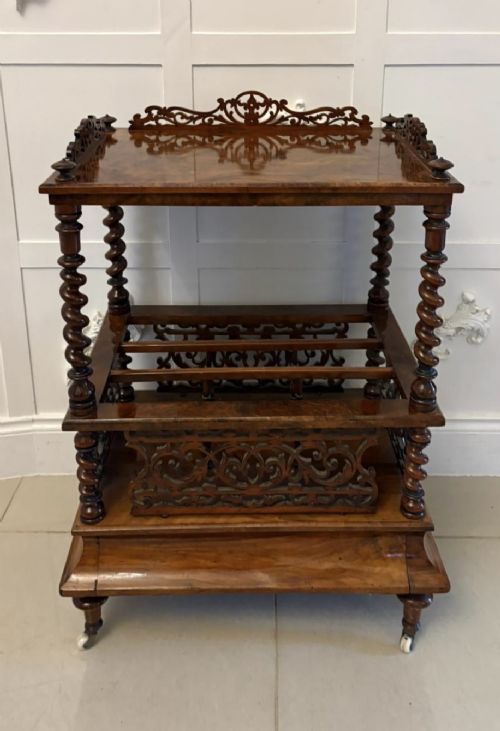
The versions most commonly met on this page span the Regency, Victorian, and early twentieth-century periods. They include English mahogany and burr walnut designs alongside French rosewood pieces and bamboo-style structures.
Makers and manufacturers produced these items using object types such as music stands, newspaper tidies, and kidney-shaped racks. Each variant provides a surface for small objects alongside vertical dividers for paper storage.
Construction and materials
Makers utilised timber veneers and solid hardwoods, selecting burr walnut, mahogany, and rosewood for their rich grain patterns and durability. These woods formed the upright frames, shelves, and slatted dividers of the stands.
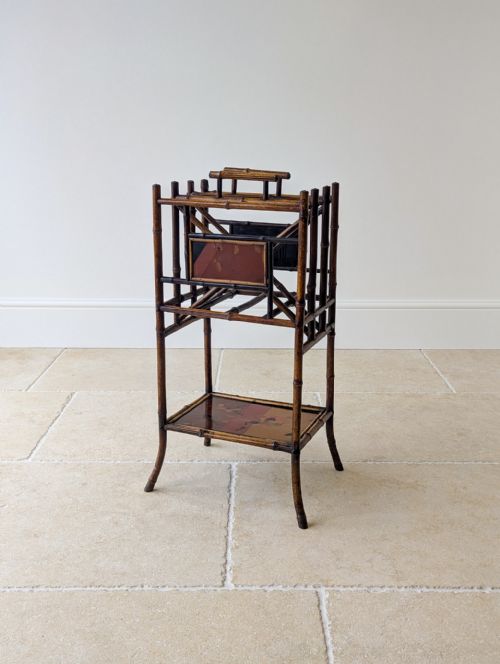
Alternative materials include brass and bamboo, which appear in specific late nineteenth and early twentieth-century designs. Carved detailing and subtle turnings shape the structural supports and legs across various periods.
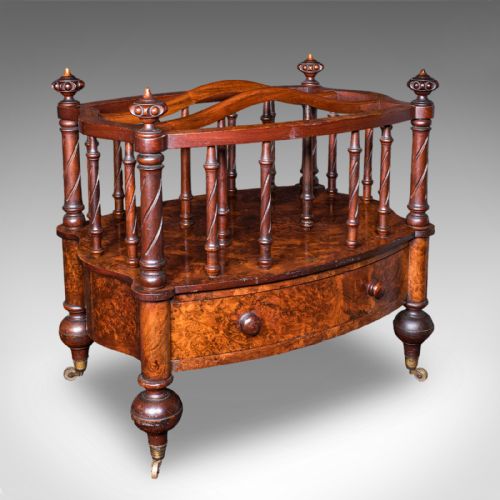
Construction techniques incorporated dovetailed drawers in specific variants alongside pegged joints and turned spindles. These methods ensured the upright partitions remained stable under the weight of stored papers.
Vintage Magazine Holder Table Retail Price Guide 2026
Typical asking prices for vintage magazine holder table among the pieces listed under this phrase on Sellingantiques today, from the lower quarter to the upper quarter. They describe what is for sale here now, not the wider market.
Assessing quality and craftsmanship
The hierarchy of quality rests on the selection of timber veneers and the crispness of any carved or turned elements. Pieces featuring figured burr walnut or dense rosewood stand apart from plainer constructions.
Structural integrity depends on the joinery connecting the upright partitions to the base and the stability of any integrated drawer or shelf. Finer examples maintain rigid vertical dividers without looseness in the slatted framework.
The Vintage Magazine Holder Table Glossary
- Canterbury
- A low, open-partitioned stand used for holding newspapers, magazines, or sheet music, often incorporating a single drawer at the base. This form evolved during the late eighteenth century and remained popular through the Victorian era.
- Regency
- An English design style spanning the early nineteenth century defined by classical restraint and refined proportions. Pieces from this period frequently employ dark hardwoods and understated brass accents.
- Aesthetic Movement
- A late nineteenth-century design approach that favoured unconventional materials like bamboo and non-European motifs. This style rejected heavy Victorian industrial ornamentation in favour of lighter, nature-inspired forms.
- Rosewood
- A dense, heavily figured timber valued for its deep reddish-brown colour and dark grain markings. It appears frequently in fine nineteenth-century English and French occasional furniture.
- Burr Walnut
- A decorative wood veneer harvested from walnut tree growths, producing swirling, intricate grain patterns. Cabinetmakers utilised this material on primary display surfaces to create highly figured finishes.
Vintage Magazine Holder Table: Frequently Asked Questions
What is a vintage magazine holder table used for?
These pieces serve a dual function as both an occasional table for small decorative items and a tidy storage unit for periodicals, newspapers, or sheet music. The open partitions keep reading materials upright and accessible beside a chair or sofa.
Historically, variations such as music stands were adapted specifically for sheet paper storage in drawing rooms, while later iterations accommodated magazines and daily newspapers.
How do I identify a Regency canterbury?
Regency pieces typically feature clean classical lines, refined proportions, and dark timber such as mahogany or rosewood. They often display delicate turned spindles and subtle brass details rather than heavy carving.
Examining the construction methods and the specific grain of the wood helps distinguish these early nineteenth-century examples from later Victorian revivals.
What materials are common in these tables?
The listings show a frequent use of dense hardwoods like mahogany, rosewood, and burr walnut, often polished to highlight natural grain patterns. Brass components and bamboo structures also appear in specific aesthetic and twentieth-century designs.
Makers selected these materials for both their structural strength and their decorative surface qualities.
How do I care for a wood magazine holder?
Maintain timber surfaces by keeping the furniture away from direct heat sources and strong sunlight, which can dry out delicate veneers. Regular dusting with a soft, dry cloth preserves the finish without requiring heavy polishes.
Avoid overloading the vertical partitions with excessive weight to protect the joints connecting the dividers to the base shelf.