

Vintage Long Table
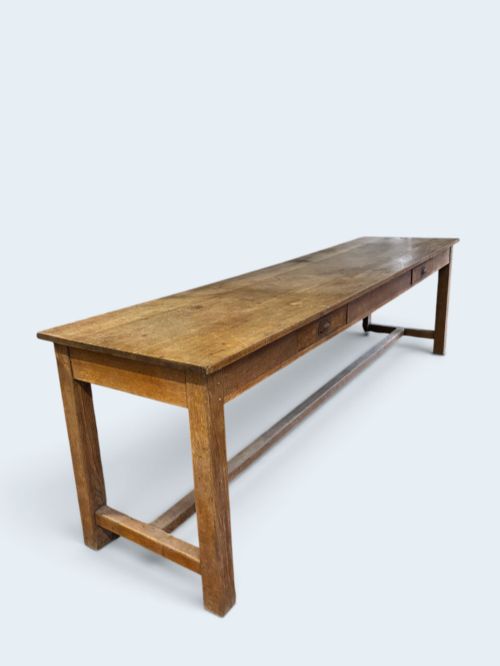
A vintage long table brings domestic scale and honest character to a room, offering generous proportions rooted in practical everyday use.
Vintage Long Table
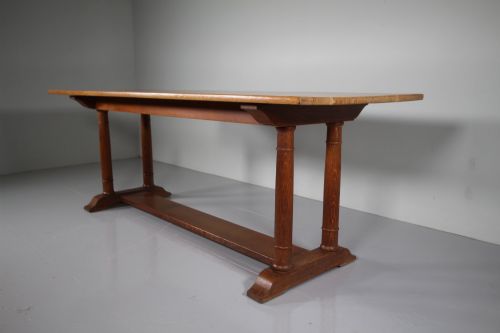
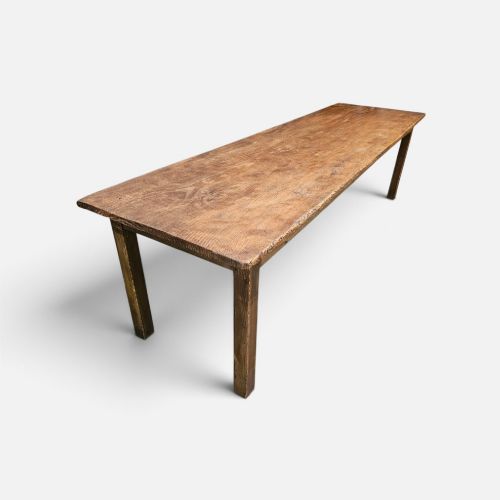
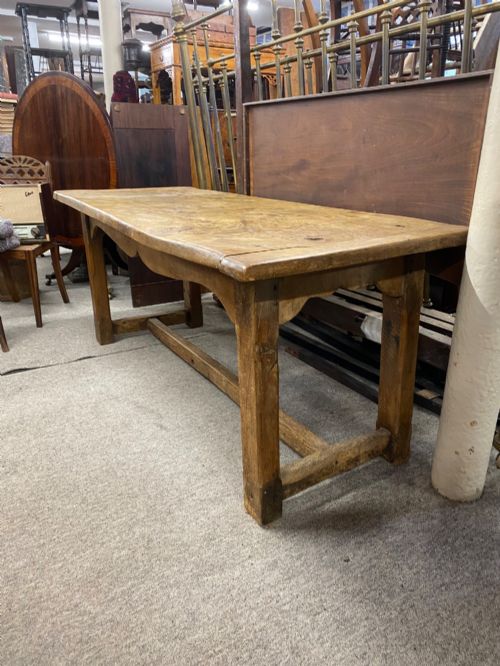
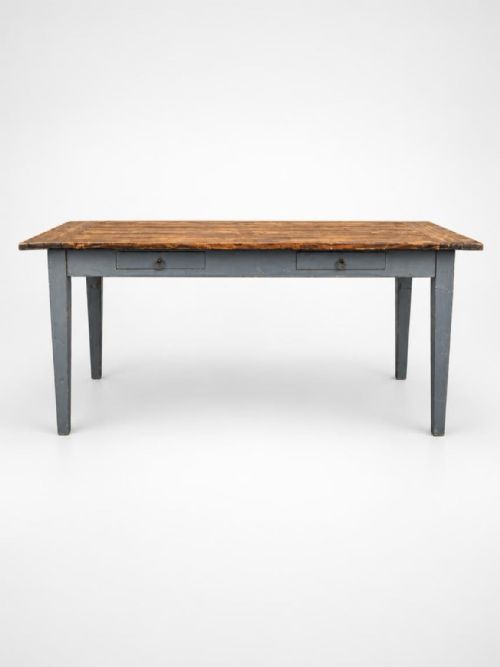
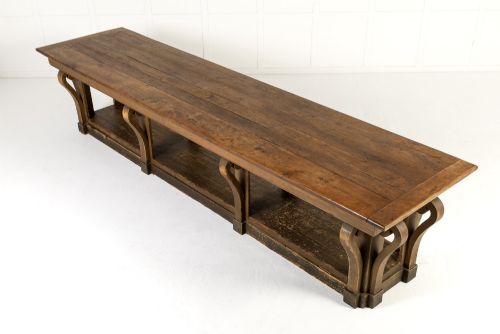
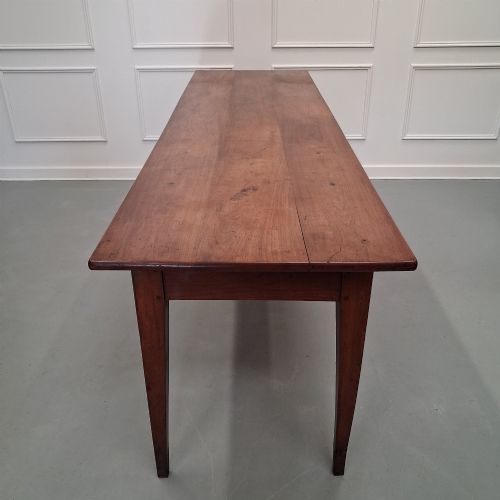
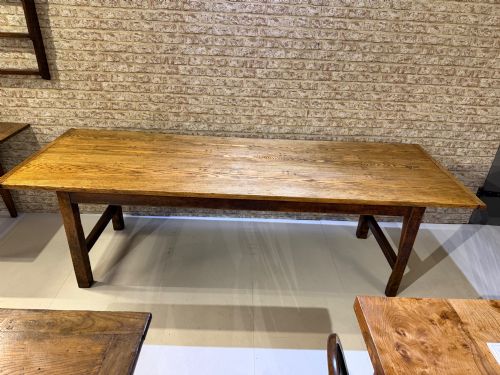
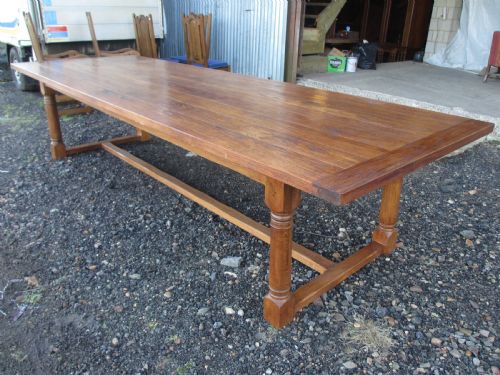
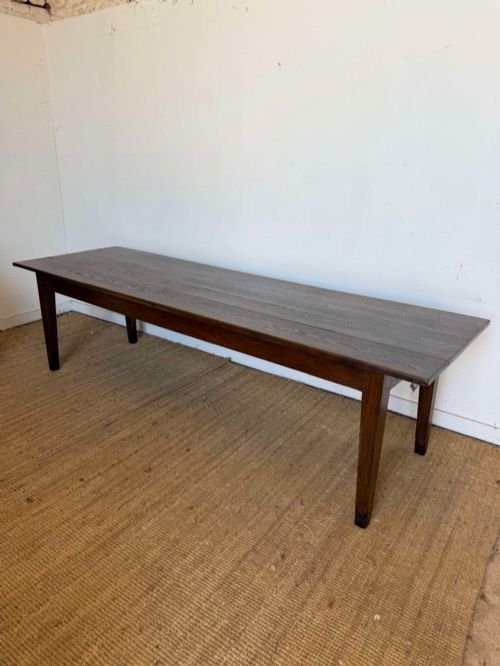
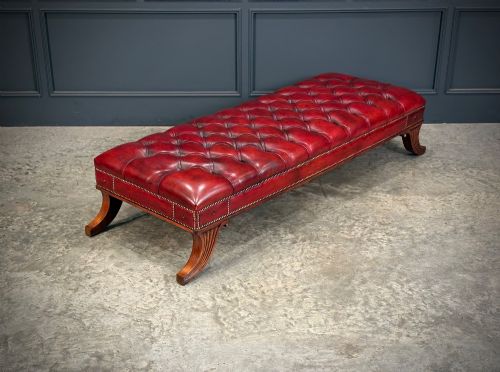
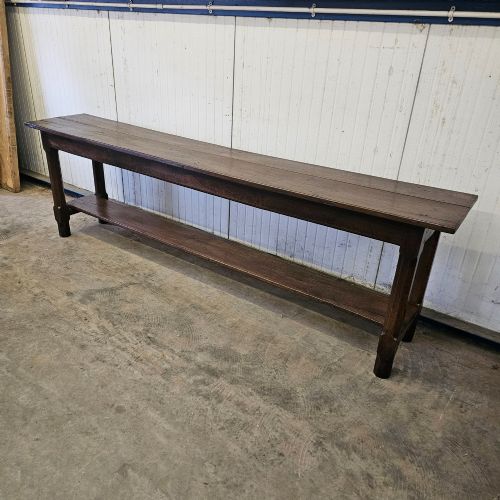
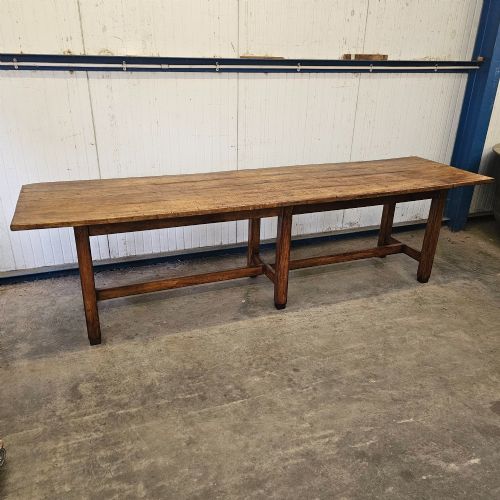
A vintage long table encompasses substantial dining, work, and serving surfaces originating from domestic and institutional settings across the nineteenth and twentieth centuries. When searching for a vintage long table, buyers frequently encounter heavy oak and pine farmhouse tables, painted country furniture, and sturdy refectory forms.
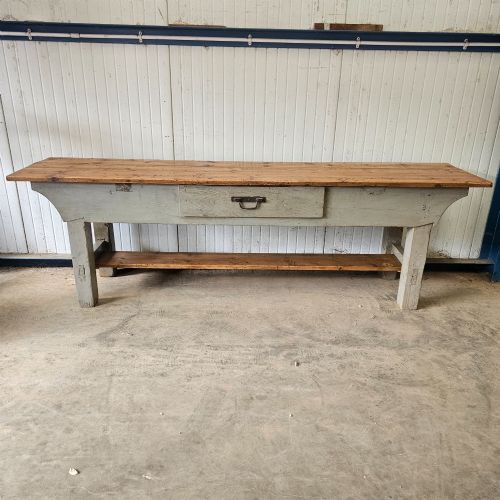
The selection ranges from French laundry and drapers tables to English dresser bases and oak refectory dining tables. These pieces reflect regional traditions from English, French, Swedish, and Chinese workshops, often maintaining their original structural integrity and utilitarian layout.
Most examples date from the nineteenth century or the early decades of the twentieth century, utilising robust timbers suited for communal dining or food preparation. Whether built as a twin plank farm table or a narrow tavern bench, each item bears the physical marks of its historical function.
Materials and Construction Techniques
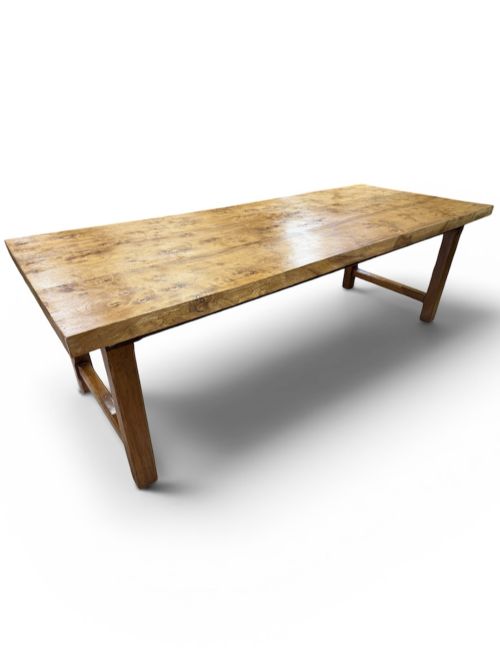
Construction relies heavily on native hardwoods and softwoods such as oak, pine, elm, cherrywood, and poplar, frequently joined by hand with traditional fixings. Tables often feature thick timber tops resting on substantial trestle bases, four-legged frames, or enclosed potboard structures.
Secondary materials like iron, brass, and applied paint appear on specific forms such as bistro tables, worktables, and console tables. Surface treatments vary from natural waxed grain and weathered patination to painted finishes that show gradual wear over decades of use.
Vintage Long Table Retail Price Guide 2026
Typical asking prices for vintage long table among the pieces listed under this phrase on Sellingantiques today, from the lower quarter to the upper quarter. They describe what is for sale here now, not the wider market.
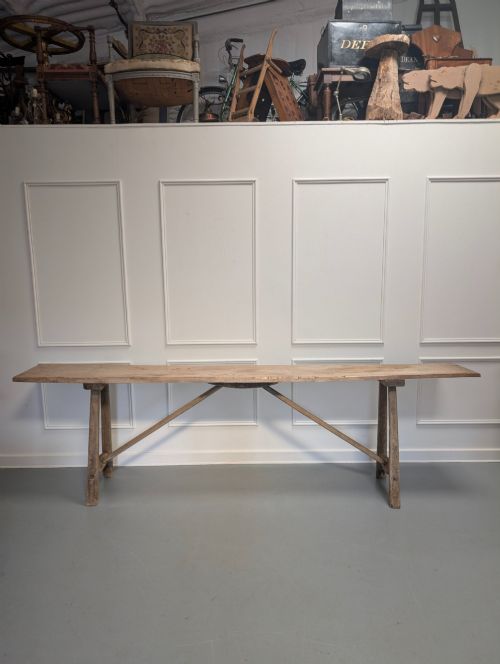
A narrow Hungarian pig bench finds new life as a low coffee table.
Evaluating Quality and Character
Quality in these pieces is dictated by the proportion of the timber, the integrity of the joinery, and the depth of surface patination accumulated through age. Tables retain more integrity when their original tops, stretcher rails, and support legs remain intact without excessive structural intervention.
Finer examples demonstrate considered timber selection, such as matching twin planks or dense fruitwood, alongside hand-planed surfaces that display distinct tool marks. The distinction between a standard utility table and a superior piece lies in the harmonious balance of scale, honest construction, and untouched historical surfaces.
The Vintage Long Table Glossary
- Refectory table
- A long, narrow dining table traditionally used in monastic or communal dining halls, characterised by substantial legs connected by a low stretcher rail.
- Dresser base
- A low, heavy sideboard or serving table fitted with drawers and occasionally an open lower shelf known as a potboard.
- Potboard
- An open slatted lower shelf fitted between the legs of a serving table or dresser base, originally designed to hold heavy kitchen pots.
- Trestle table
- A table consisting of two or more support frames connected by a long horizontal beam that bears the weight of a wide top board.
- Patina
- The surface sheen and colour depth developed on wood, paint, and metal over years of handling, polishing, and environmental exposure.
Vintage Long Table: Frequently Asked Questions
How do I choose the right length?
Consider the room dimensions and the intended seating capacity, allowing adequate clearance around all sides for movement and chairs. Long tables often measure well over two metres, so measuring doorways and stairwells beforehand is essential.
Keep in mind that refectory and trestle bases affect where chairs can be placed, particularly near corner legs or central stretchers.
Can I use a vintage worktable for dining?
Many worktables, laundry tables, and drapers tables feature comfortable heights and generous overhangs that make them suitable for daily dining. Their original utilitarian build provides sturdy support for regular family meals and gatherings.
Check the knee clearance beneath the aprons and drawers to ensure chairs fit comfortably underneath the top surface.
How do I maintain a painted pine surface?
Clean painted pine surfaces gently with a slightly damp cloth, avoiding harsh chemical cleaners that can strip or soften aged finishes. Minor scuffs and marks are part of the historical character and generally require no intervention.
Applying a neutral wax periodically helps protect exposed wood areas while preserving the matte appearance of old paint.
What indicates a nineteenth century date?
Nineteenth century tables typically display hand-cut joinery, pegged mortise and tenon joints, and timber boards sawn with early mechanical methods. Surface wear patterns, such as deep denting and natural fading on oak or pine, point to extended functional age.
Construction details like pegged frames and native hardwood cleats distinguish these older pieces from twentieth century reproductions.