
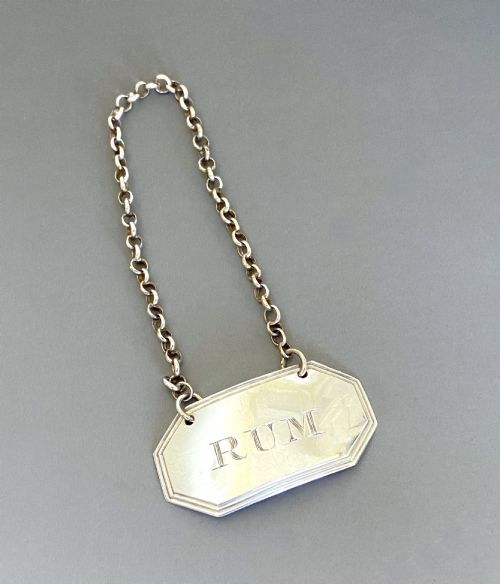
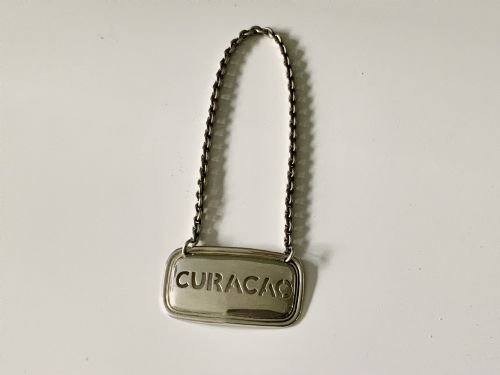


Vintage Liquor Tag
A vintage liquor tag sits on the neck of a decanter, naming the spirit within in solid silver.
Vintage Liquor Tag
A vintage liquor tag identifies the contents of a decanter, hanging from a fine silver chain around the bottle neck. When you search for a vintage liquor tag, you find small pieces of silver formed to name specific spirits like rum, madeira, sherry, gin, champagne, whisky, and brandy.
The pieces on this page span several eras, originating from the Georgian, Victorian, Edwardian, and mid-century periods. You will encounter both single items and matched sets of labels, often hallmarked in London or Birmingham.
Makers range from notable historical figures, such as the female silversmith Elizabeth Morley, to esteemed firms like Tiffany. These silver labels combine utility with distinct period styles, including Rococo Revival, William IV, and traditional British designs.
How they were made
Silversmiths fashioned these items primarily from sterling silver and solid silver, shaping the metal through cutting, piercing, and stamping techniques. Many examples feature delicate chains cast or linked to secure the tag around the decanter neck.
Some mid-century pieces incorporate coloured enamel details alongside the silverwork to highlight the lettering or ornamentation. Hallmark stamps pressed into the metal record the assay office, city of origin, and date of manufacture.
What varies in quality
Quality rests upon the crispness of the pierced or engraved lettering and the elegance of the surrounding silver frame. Hand-cut Georgian and Victorian pieces often show finer detail in their scrollwork and border design compared to later mass-produced items.
The presence of a clear hallmark and the attribution to a known maker, such as Elizabeth Morley or Tiffany, elevate a piece. Complete matching sets and intact original silver chains further distinguish superior examples from single or altered labels.
Elizabeth Morley·Tiffany
The Vintage Liquor Tag Glossary
- Decanter label
- A small silver tag hung by a chain around the neck of a wine or spirit bottle to indicate the contents. These labels were widely used from the eighteenth century onwards.
- Hallmark
- An official stamp applied to silver items to guarantee the metal purity and indicate the maker, assay office, and year of testing. British silver typically carries a series of small stamped symbols.
- Sterling silver
- An alloy consisting of pure silver and other metals, usually copper, combined to increase durability while maintaining a bright lustre. Most quality labels utilise this standard of silver.
- Rococo revival
- A decorative style popular in the nineteenth century characterised by asymmetrical scrolls, foliage, and shell motifs. Labels in this style feature ornate, curved borders.
Vintage Liquor Tag: Frequently Asked Questions
What is a liquor tag?
A liquor tag is a small piece of silver suspended from a chain around the neck of a decanter. It acts as a label to tell drinkers which spirit is inside the bottle.
Historically, these items kept dining tables orderly when decanters looked alike in the candlelight. Today, they serve a decorative purpose on vintage glassware.
How do I hang a tag?
You hang the tag by placing its attached silver chain around the narrow neck of a glass decanter. The label then rests against the shoulder or neck of the bottle.
Ensure the chain length suits the specific thickness of your decanter neck so the label hangs straight without slipping.
How do I date a silver label?
You date a silver label by examining the hallmarks stamped into the metal, which record the specific assay office and year letter. Stylistic clues such as Rococo curves or mid-century enamel also point to the era of manufacture.
Georgian and Victorian pieces often feature distinct hand-engraved lettering and heavier cast silver borders compared to later twentieth-century examples.
Can I use them on modern decanters?
You can place these vintage silver tags on any modern decanter with a standard neck size. The accompanying silver chain accommodates various bottle shapes.
They add period character to contemporary glassware while performing their original function of identifying the drink.