




Vintage Liqueur Decanters
Vintage liqueur decanters are small, portable vessels designed for serving after-dinner cordials, combining utility with decorative presence.
Vintage Liqueur Decanters
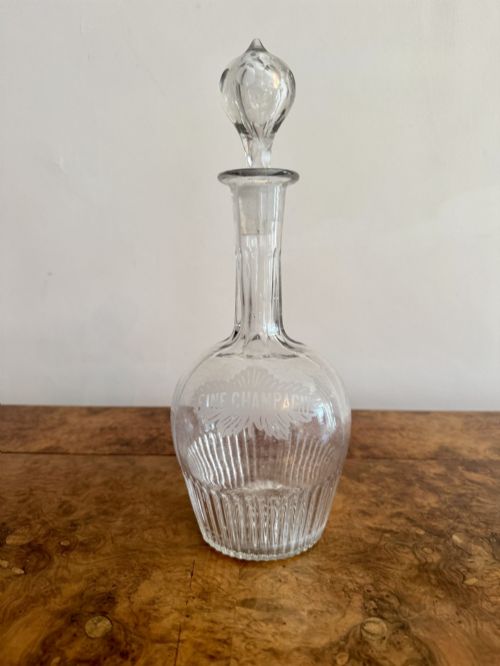
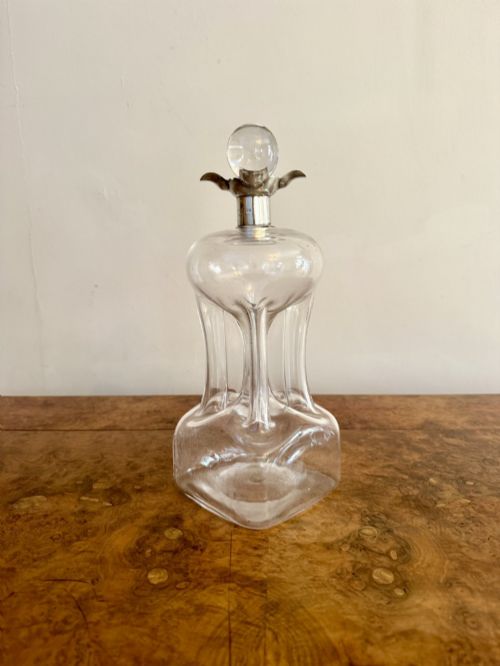
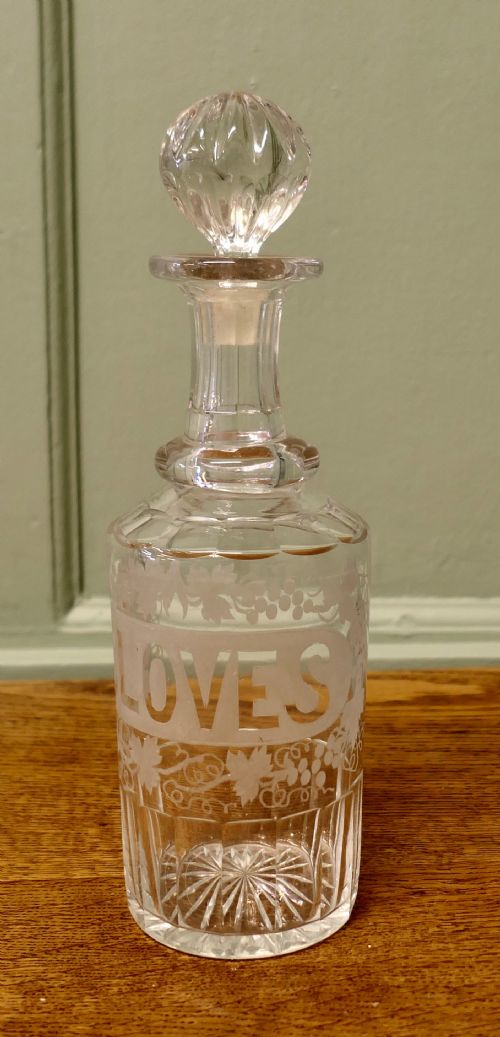
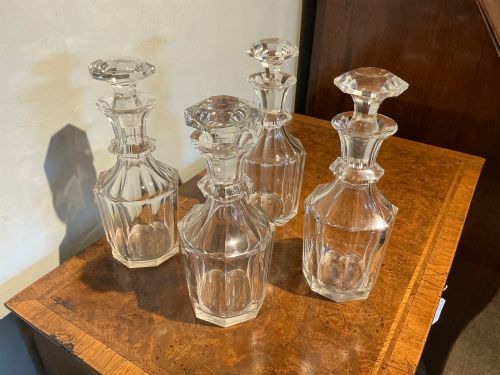
When you search for vintage liqueur decanters, you encounter a focused assortment of small vessels, matched sets, and fitted serving boxes designed for cordials. The selection spans the nineteenth century through the art deco years, bringing together items made for private drawing rooms.
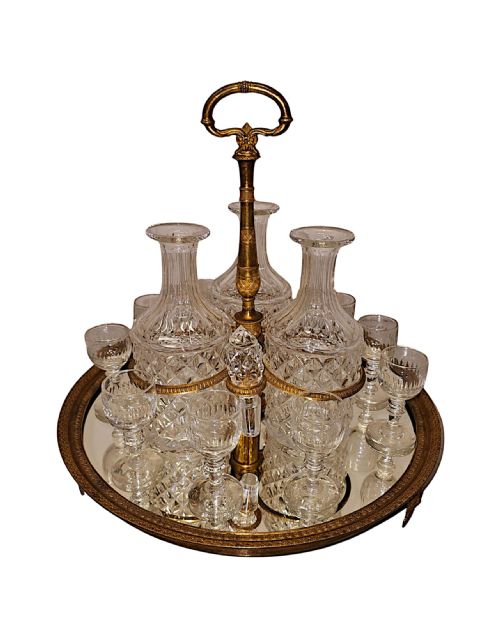
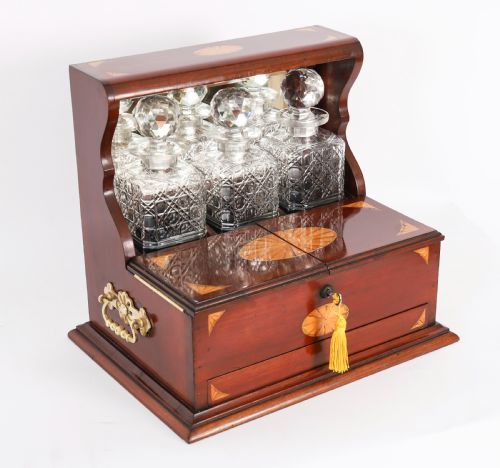
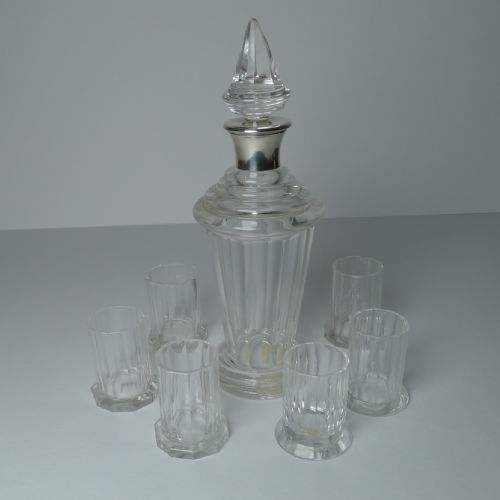
You meet standalone bottles alongside complete cordial services, portable tantalus frames, and elaborate cave a liqueur boxes lined for travel. The material spans clear crystal, black glass, and coloured glass enriched with enamel or silver mounts.
The forms reflect distinct periods of design, shifting from ornate Victorian rococo revival and black forest carved wood to geometric art deco lines from the nineteen thirties. These vessels served strong spirits in modest measures at the end of formal dining.
How they were made
Makers utilised glass and lead crystal as primary bodies, shaping pieces through blowing, moulding, and wheel-cutting to achieve deep facets and light-catching surfaces. Artisans added contrast by mounting vessels in silver, brass, or silver-plated frames, and incorporating wooden inlays such as satin wood.
Vintage Liqueur Decanters Retail Price Guide 2026
Typical asking prices for vintage liqueur decanters among the pieces listed under this phrase on Sellingantiques today, from the lower quarter to the upper quarter. They describe what is for sale here now, not the wider market.
Some nineteenth-century tantalus sets included secret spring-loaded compartments for playing cards and games alongside the locked decanters.
What varies in quality
Quality rests in the precision of the glass cutting, the clarity of the crystal, and the integrity of any fitted housing or locking mechanism. Pieces with hand-painted enamel and heavy silver or brass mounts show a higher degree of workshop attention.
Completeness dictates much of the standing within this field, separating stray bottles from intact sets with matching glasses and original trays or locking boxes. The weight of the lead crystal and the sharpness of the wheel-cut facets distinguish standard production from exceptional examples.
Baccarat·Val Saint Lambert·Salviati·Karl Palda·Moser
The Vintage Liqueur Decanters Glossary
- Cave a liqueur
- A fitted box or cabinet designed to hold a set of liqueur decanters and matching glasses securely inside lined compartments. These portable cellars often feature lockable lids and decorative wood veneers.
- Tantalus
- A locking frame that holds decanters securely by their necks, preventing removal of the contents without a key while displaying the bottles. They appeared frequently in late nineteenth-century entertaining spaces.
- Ewer
- A jug with a wide spout and scroll handle, sometimes used alongside or in place of standard decanters for serving cordials. They often display decorative metal mounts and enamel work.
- Lead crystal
- Glass containing metal oxide that increases weight, refractive index, and clarity, allowing for deep, sharp wheel-cutting. This material forms the body of many nineteenth-century and art deco vessels.
- Enamel
- Opaque vitreous composition applied to glass surfaces in patterns and colours before firing. It provides vibrant surface decoration on Czech, Moser, and art deco glass sets.
Vintage Liqueur Decanters: Frequently Asked Questions
What is a cave a liqueur?
A cave a liqueur is a portable wooden case fitted with interior partitions to hold a set of small decanters and matching cordial glasses.
These boxes often feature decorative inlays or carved details and include a working lock and key to secure the bottles during the nineteenth century.
Are liqueur decanters different from wine decanters?
Liqueur decanters are significantly smaller in capacity and scale, built to hold potent cordials and spirits served in tiny measures after a meal.
They frequently appear in matched sets accompanied by small glasses and fitted trays or boxes rather than standing alone on a dining table.
How do I date art deco decanters?
Art deco decanters from the nineteen thirties typically display geometric silhouettes, stylised motifs, and solid colours like blue or amber.
Maker signatures or distinctive Czech glass production techniques help confirm this specific interwar period.