



Vintage Linen Sampler
A vintage linen sampler brings historic needlework and personal narrative directly onto your wall, offering a tangible window into domestic life of past centuries.
Vintage Linen Sampler
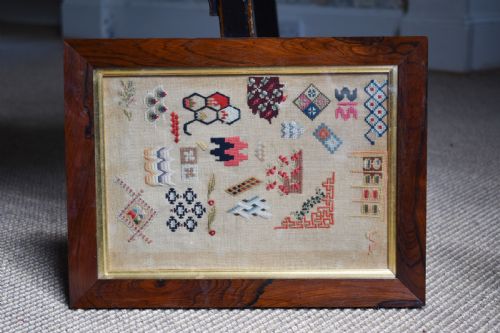
When you search for a vintage linen sampler, you encounter textile art created across the eighteenth, nineteenth, and early twentieth centuries. These works range from simple alphabets and numerals stitched by young girls to detailed map samplers and school room exercises.
The most common examples on this page date from the Victorian period and the nineteenth century, often executed in silk thread or wool upon a linen ground. Many of these survive behind glass in period wood frames, preserving the original stitchery.
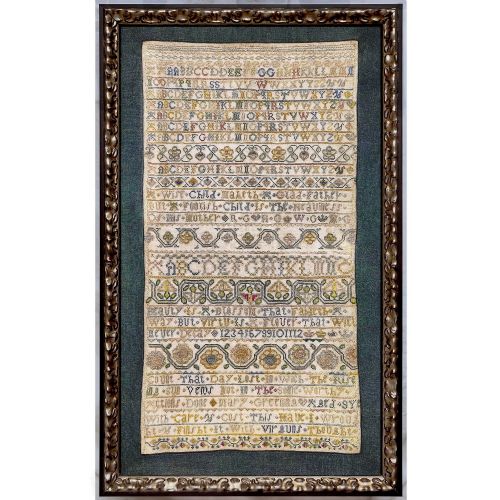
Makers recorded on these pieces include young girls such as Mary Greening, Ann Hodson, Margaret Ann Blackow, Mary Mason, Ann B Gilies, Mary Street, and Rachel from the Oswestry National School. Others, like Emma and Hannah Barnes, worked alphabet panels together.
How they were made
Makers worked primarily with thread, silk thread, and wool upon a woven linen foundation, utilising various needlework techniques to practice alphabets, numbers, and pictorial motifs. School rooms and domestic settings provided the environment where these embroidered panels took shape stitch by stitch.
Finished textiles frequently found protection behind glass within wood or gilt wood frames, securing the fragile fabrics against environmental wear. This framing tradition ensures the survival of the underlying linen and delicate thread work across generations.
Vintage Linen Sampler Retail Price Guide 2026
Typical asking prices for vintage linen sampler among the pieces listed under this phrase on Sellingantiques today, from the lower quarter to the upper quarter. They describe what is for sale here now, not the wider market.
Listings feature textiles from the 18th century, Georgian and Victorian periods, extending to 1930.
What varies in quality
Quality rests upon the precision of the stitching, the complexity of the motifs, and the clarity of the composition. Band samplers and map samplers demand greater technical skill than basic alphabet exercises, setting ambitious works apart.
Condition and presentation also define the piece, particularly the integrity of the linen ground and the preservation provided by original wood or gilt wood frames. Clear documentation of the maker, date, and place elevates historical interest.
Mary Greening·Ann Hodson·Margaret Ann Blackow·Mary Mason·Ann B Gilies·Mary Street·Rachel·Emma and Hannah Barnes
The Vintage Linen Sampler Glossary
- Sampler
- A piece of needlework produced as a demonstration or test of skill in various stitches, frequently displaying alphabets and numerals. These works served as educational exercises for young makers.
- Band sampler
- An early format featuring horizontal bands of different patterns and stitches arranged in rows down the linen. They date predominantly from the seventeenth and eighteenth centuries.
- Map sampler
- A specialised needlework panel depicting geographical regions, countries, or counties to test both embroidery and cartographic knowledge. They represent an ambitious undertaking for school-age makers.
- Linen
- A strong, durable fabric woven from the fibres of the flax plant, serving as the primary foundation ground for historic needlework. Its firm weave supported intricate thread counts.
- Needlepoint
- A type of canvas work embroidery where yarn or thread is stitched through a mesh or woven fabric ground. It creates a dense, textured surface.
Vintage Linen Sampler: Frequently Asked Questions
How old are these samplers usually?
The listings span from the late seventeenth century through the Victorian era up to the 1930s. Most examples encountered here belong to the nineteenth century.
Specific dates are often stitched directly into the linen by the young makers alongside their names and ages.
How should I hang a linen sampler?
Keep textile art away from direct sunlight to prevent the silk thread and wool from fading against the linen ground. Stable indoor humidity protects the organic fibres and the wood frames.
Ensure the piece remains securely glazed behind glass to shield the historic embroidery from dust and atmospheric moisture.
Did children make all of these pieces?
Many surviving needlework pieces were worked by school-age girls as educational exercises to master lettering, numbers, and decorative motifs. Pieces from institutions like the Oswestry National School reflect formal classroom instruction.
Some bear specific ages alongside the maker's name, such as girls aged twelve or thirteen completing their needlework tasks.
What is a band sampler?
A band sampler is an earlier format of needlework where various decorative stitches and patterns are arranged in horizontal bands down the length of the linen. This style is characteristic of late seventeenth and early eighteenth century work.
They display a rich variety of techniques before formal pictorial scenes and alphabets became standard practice.