



Vintage Lighthouse Artwork
Vintage lighthouse artwork captures coastal beacons through oil paintings and watercolours spanning the nineteenth century to the mid-twentieth century.
Vintage Lighthouse Artwork
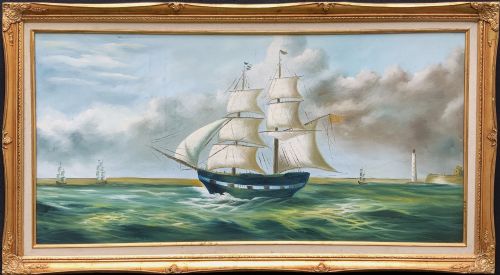
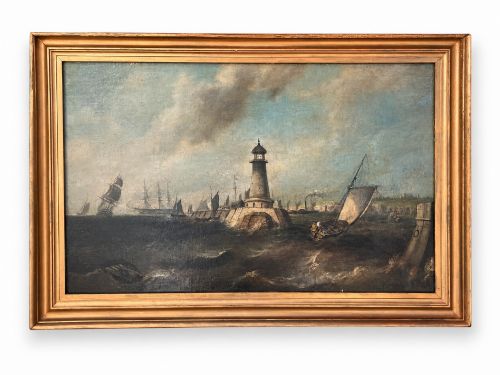
When you search for vintage lighthouse artwork, you encounter coastal scenes depicted in oil paint, watercolour, and maritime dioramas. These pieces record maritime history and coastal architecture from the nineteenth century, the Edwardian era, and the 1930s.
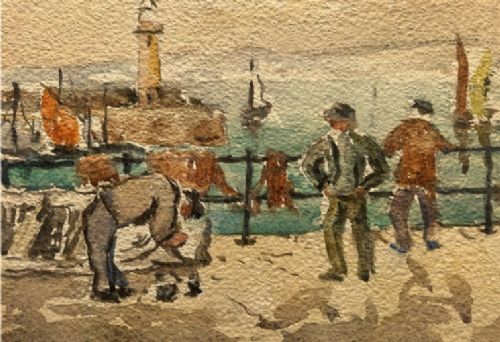
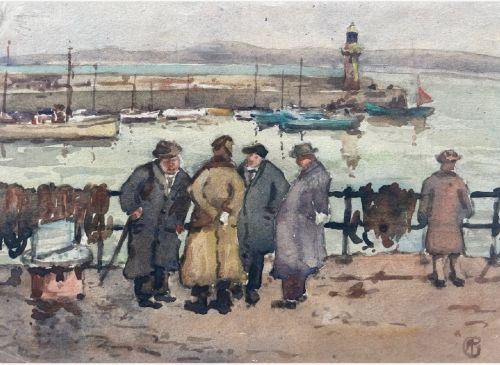
The versions you meet most frequently on this page are oil paintings on canvas and watercolours on paper, often framed in gilded wood or gold leaf. They range from Cornish harbour fishing trawlers to detailed depictions of coastal beacons and naval shipping.
Subject matter varies from specific coastal landmarks like Eddystone Lighthouse and Leasowe Lighthouse to French seascapes and traditional maritime folk art. Each work reflects the artistic styles of its period, from Victorian maritime realism to early twentieth-century impressionism.
How they were made
Artists painted these coastal subjects using oil paint on canvas or watercolour on paper, capturing the changing light on the sea and coastal structures. Oil paintings provide thick texture and deep pigment, while watercolours offer delicate washes that suit coastal atmospheres.
The techniques rely on traditional maritime painting methods developed through the nineteenth and early twentieth centuries, focusing on accurate ship portraits, coastal topography, and atmospheric marine weather.
Vintage Lighthouse Artwork Retail Price Guide 2026
Typical asking prices for vintage lighthouse artwork among the pieces listed under this phrase on Sellingantiques today, from the lower quarter to the upper quarter. They describe what is for sale here now, not the wider market.
Materials span paper, wood, watercolour, oil paint, canvas, gilded wood, and gold leaf.
What varies in quality
Quality in these maritime works rests on the artist's command of light, water, and architectural precision in rendering the lighthouse structure. Stronger pieces demonstrate confident brushwork and accurate perspective in difficult marine conditions.
The handling of the medium determines the visual impact, with superior oil paintings showing rich surface texture and watercolours maintaining clarity across delicate washes. The integration of the frame, particularly period gilded wood or gold leaf settings, adds to the physical integrity of the piece.
George F Pennington·Nicholas Condy·Ernest F Hill·Arthur Wilde Parsons·Joseph Heard
The Vintage Lighthouse Artwork Glossary
- Watercolour
- A painting method where fine pigment is suspended in water-based solution on paper. This medium provides translucent washes suitable for capturing coastal skies and sea spray.
- Oil paint
- A slow-drying paint made with pigments suspended in oil. It allows for thick impasto application and rich colour depth across marine canvases.
- Maritime diorama
- A three-dimensional model depicting ships and coastal scenes. These constructions combine painted backgrounds with physical model elements.
- Gilded wood
- Wood treated with a thin layer of gold leaf or metallic powder. It provides a decorative and protective border for traditional paintings.
- Ship portrait
- A specialised painting genre focused on accurate representation of a specific vessel. These works often place the ship near known landmarks like lighthouses or breakwaters.
Vintage Lighthouse Artwork: Frequently Asked Questions
What periods do these lighthouse artworks cover?
The selections span the nineteenth century, including Victorian and Edwardian eras, through to the 1920s, 1930s, and 1960s.
This range allows collectors to find both detailed nineteenth-century ship portraits and early twentieth-century impressionist coastal scenes.
What materials were used to create them?
Artists used paper, canvas, oil paint, and watercolour to produce these maritime works. Frames often feature wood finished with gilded wood or gold leaf.
Some items include three-dimensional dioramas constructed to represent historic vessels and coastal settings.
How do I identify a Victorian maritime painting?
Victorian maritime pieces often focus on detailed realism, capturing specific ships, naval shipping, and coastal landmarks like breakwaters and lighthouses.
They frequently employ traditional oil paint on canvas or detailed watercolours on paper.
Where were these coastal scenes painted?
Locations recorded in the artwork include Cornish harbours such as St Ives and Brixham, as well as Plymouth, Portishead, and French coastal settings.
Artists often painted en plein air or recorded specific local landmarks like Leasowe Lighthouse and Eddystone Lighthouse.