







Vintage Leather Cased Clock
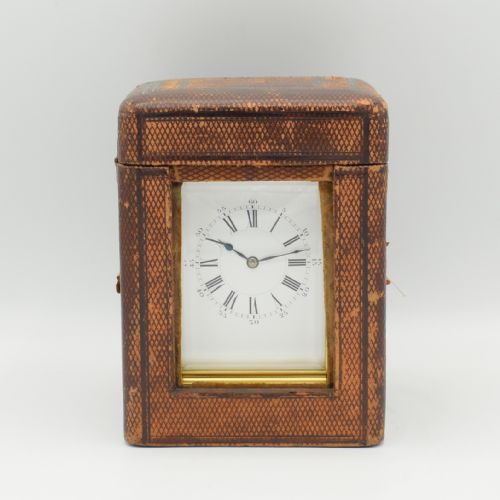
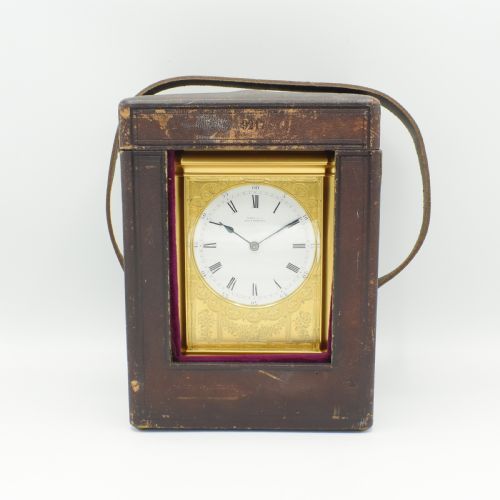
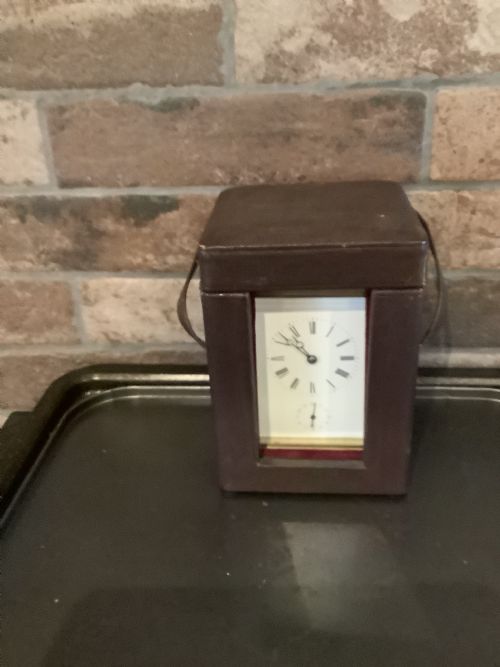
A vintage leather cased clock is a portable timepiece housed in a protective fitted sheath, designed for travel and domestic use.
Vintage Leather Cased Clock
A vintage leather cased clock brings together mechanical timekeeping and robust outer protection designed for transit. When searching for a vintage leather cased clock, buyers encounter examples ranging from late nineteenth century carriage clocks with their original travel housings to later twentieth century designs.
The selections span Victorian, Edwardian and Art Deco periods, encompassing traditional brass and gilt frameworks alongside chrome-plated metal and enamel pieces. Most variations on this page include either carriage clocks equipped with travel cases or dedicated folding travel timepieces.
Origins lean heavily toward French workshops and London retailers, reflecting the international trade in portable luxury timepieces. Buyers find everything from miniature oval formats to large striking models paired with fitted protective leather.
Materials and construction
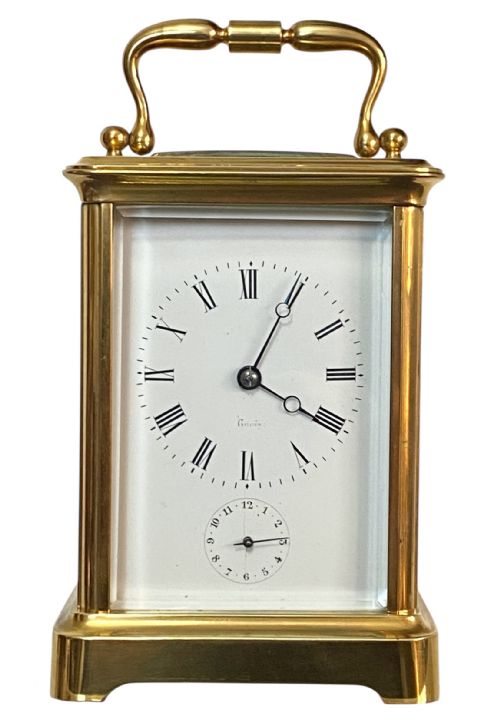
Construction relies on heavy brass, gilt bronze, and chrome-plated metal frameworks glazed with bevelled glass panels to expose the internal gear train. Outer cases are formed from stiffened leather, often pebbled or smooth, lined with velvet or silk and tailored precisely to the contours of the clock.
Dial faces utilise white enamel with Roman or Arabic numerals, driven by eight-day spring-driven movements that sometimes incorporate alarm functions, repeating mechanisms, or grand sonnerie striking capabilities. Metal components receive hand-engraving or gilt finishes, while leather outer shells feature stitched seams and brass closures.
Vintage Leather Cased Clock Retail Price Guide 2026
Typical asking prices for vintage leather cased clock among the pieces listed under this phrase on Sellingantiques today, from the lower quarter to the upper quarter. They describe what is for sale here now, not the wider market.
Object types include standard carriage clocks, miniature travel timepieces, wristwatches, and boudoir clocks housed in leather.
Distinctions in quality
Quality separates through the crispness of hand-engraving on the brass case, the weight and thickness of the bevelled glass, and the complexity of the internal movement such as repeating complications or grand sonnerie. Superior pieces retain their original matching leather travel cases with intact linings and functional closures.
Maker attribution elevates certain examples, particularly signed movements from noted Parisian and London makers. The precision of the enamel dial work and the integration between the clock frame and its protective leather housing mark the distinction between standard production and top-tier workshop output.
Henri Jacot·Harrods of London·Hunt and Roskell·Alfred Hollinge·Dent
The Vintage Leather Cased Clock Glossary
- Carriage clock
- A portable, spring-driven timepiece designed for travellers during the nineteenth and early twentieth centuries. These clocks typically feature a rectangular brass case with a glass top and sides.
- Gorge case
- A specific style of carriage clock housing characterised by a stepped, stepped-moulded top and base with an overhead swing handle. It represents a classic architectural framing for high-end movements.
- Grand sonnerie
- A complex striking mechanism that automatically sounds the hours and the quarters on every quarter hour. It requires advanced mechanical skill and multiple gear trains within the movement.
- Enamel dial
- A face created by fusing powdered glass to a metal substrate at high heat. This technique produces a durable, glossy surface for painted numerals that resists fading over centuries.
- Bevelled glass
- Glass panes with edges ground and polished at an angle. This traditional treatment adds structural strength and refracts light across the internal movement.
Vintage Leather Cased Clock: Frequently Asked Questions
How do I wind a vintage carriage clock?
Most mechanical pieces on this page require a matching winding key inserted into arbors located on the backplate. Turning the key clockwise tensions the mainspring.
Care must be taken not to overwind the movement, stopping as soon as resistance increases to protect the internal springs.
Are leather travel cases original to the clocks?
Many surviving pieces retain their fitted leather outer cases designed specifically to protect the glass and brass during transit. These cases often feature custom interior contours lined in silk or velvet.
Matching cases significantly enhance the historical integrity and completeness of the ensemble.
What is the difference between a carriage clock and a boudoir timepiece?
Carriage clocks generally feature robust, heavy brass frames with multiple glass panels and robust eight-day movements built for travel. Boudoir timepieces tend to be smaller, lighter, and decorative items intended for stationary bedside use.
Both formats appear frequently within leather protective housings.
How do I date a Victorian leather cased clock?
Dating relies on stylistic markers such as the shape of the brass case, the typography on the enamel dial, and engraved signatures on the backplate. Late nineteenth century examples often display refined gilt brass casting and heavy bevelled glass.
Documentation or retailer stamps inside the original leather case also help establish the era of production.