


Vintage Leather Carver Set
These dining chairs span multiple periods and materials, offering a vintage leather carver set solution for traditional interiors.
Vintage Leather Carver Set
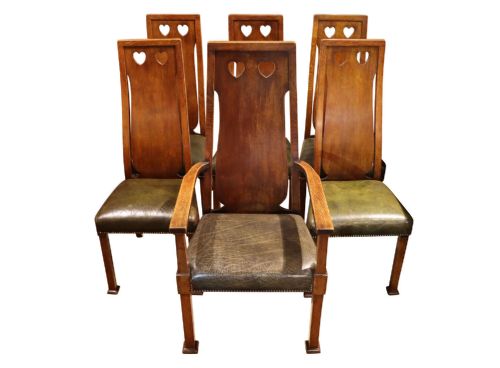
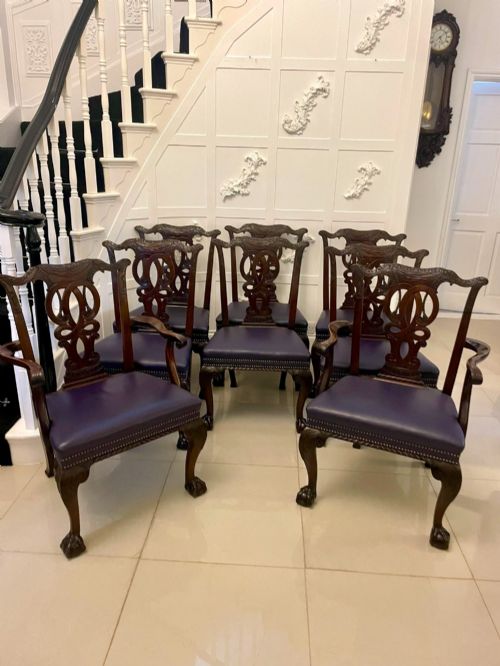
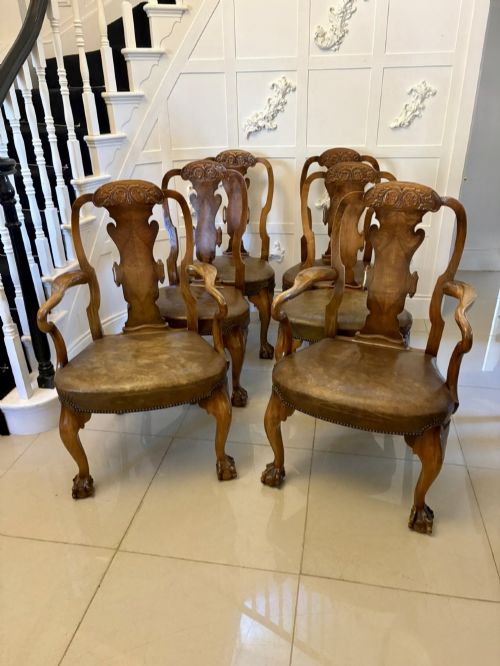
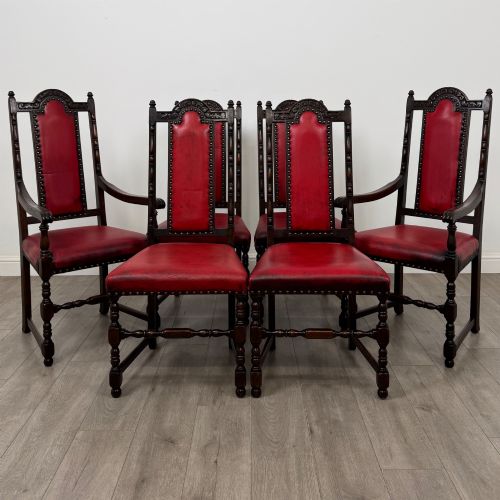
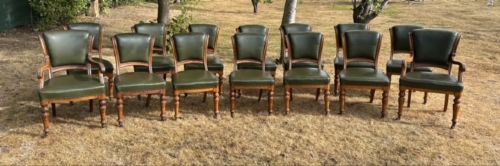
A vintage leather carver set typically comprises larger armchairs accompanied by matching side chairs designed for dining tables. These groups appear across various periods ranging from the nineteenth century through the 1930s.
The selections on this page draw from Victorian, Edwardian, and later twentieth-century eras, reflecting distinct historical revivals. Buyers frequently encounter sets finished with leather seats in configurations suited for formal dining spaces.
Materials and construction methods
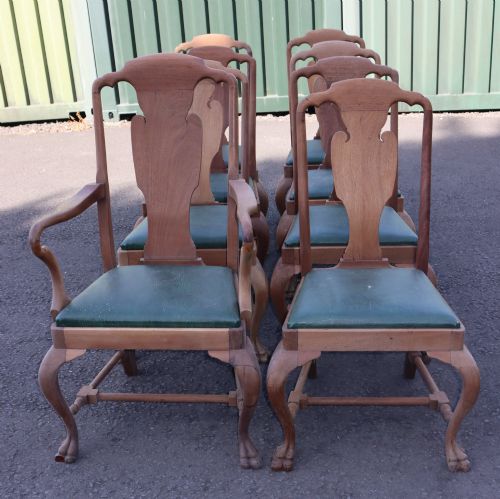
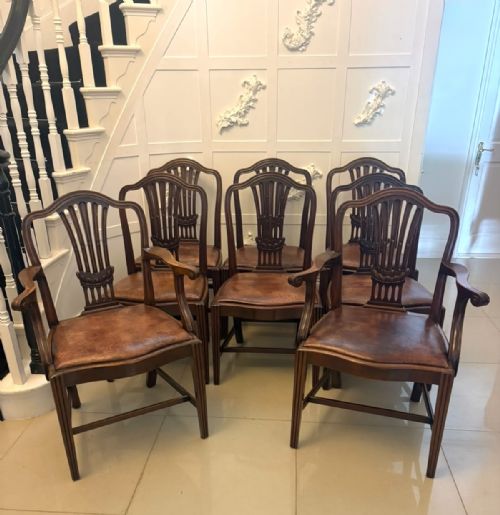
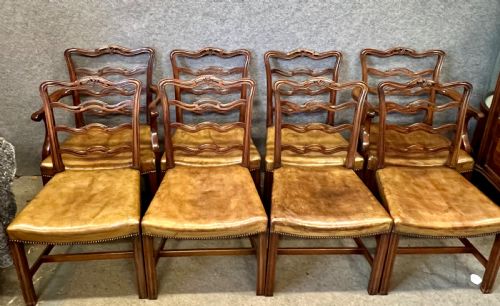
Frames rely predominantly on timber selections such as mahogany, oak, walnut, and burr walnut. Woodworkers shaped these materials through carving and turning techniques typical of revival styles like Chippendale, Hepplewhite, and Queen Anne.
Leather provides the upholstery for the seats, frequently secured to the wooden frames. Brass accents and detailed hand-dyed finishes appear across various examples from the Edwardian and Victorian periods.
Some dining sets arrive with cloud-back frames designed to make sitters feel embraced by their walnut seating.
Distinctions in quality and execution
The refinement of the timber carving and the consistency across the entire group determine the standard of the set. Matching grain patterns and uniform proportions between the carver armchairs and side chairs indicate careful workshop production.
The integration of the leather upholstery with the wooden frame demonstrates the skill involved in assembly. Finer examples maintain structural integrity alongside well-executed period stylistic details.
Epstein·Lamb Of Manchester·H. Samuel, London
The Vintage Leather Carver Set Glossary
- Carver
- An armchair with armrests designed for the head of a dining table. These pieces match the smaller side chairs in a set.
- Hepplewhite style
- A design aesthetic characterised by shield-back chair frames and slender tapered legs. This style gained popularity during the eighteenth century and subsequent revival periods.
- Chippendale style
- A decorative manner featuring pierced splats and cabriole legs ending in claw-and-ball feet. Cabinetmakers revived these motifs extensively during the Victorian and Edwardian eras.
- Burr walnut
- Timber obtained from the burl growths of walnut trees, displaying intricate grain patterns. Makers utilised this veneer for decorative surfaces on Art Deco dining furniture.
- Barley twist
- A type of woodturning shaped like a helix, resembling a twisted rope. This detail appears frequently on oak dining chairs from the early twentieth century.
Vintage Leather Carver Set: Frequently Asked Questions
How do I identify a carver chair?
Carver chairs feature armrests on either side, unlike standard dining chairs which remain armless. They typically sit at the head and foot of the table.
In larger dining sets, these armchairs match the timber and upholstery of the accompanying side chairs to create a uniform appearance.
What periods do these chairs represent?
The pieces span the nineteenth and twentieth centuries, encompassing Victorian, Edwardian, and Art Deco eras. Many examples adopt earlier stylistic influences such as Georgian, Queen Anne, and Jacobean.
Revival styles dominate the selection, showing how later makers reinterpreted historical cabinetmaking traditions.
Are the leather seats original?
Leather upholstery varies across sets, with some retaining early tan or hand-dyed surfaces while others feature later replacements. The condition and appearance of the hide reflect the age and maintenance of each chair.
Examining the attachment methods and wear patterns helps determine the history of the upholstery.
How do I care for leather dining chairs?
Leather requires regular dusting and occasional conditioning to prevent drying and cracking over time. Keeping the chairs away from direct sunlight and heat sources preserves the material.
Gentle cleaning methods maintain the finish of both the hide and the surrounding wood frame.