



Vintage Lead Ornament
A vintage lead ornament brings weight and quiet character to a garden, holding its ground through the seasons as the metal softens and darkens.

Vintage Lead Ornament
When you search for a vintage lead ornament, you are looking at heavy garden statuary, planters, bird baths and fountains made from durable cast metal. These pieces sit on lawns, terraces and stone steps, designed to weather out-of-doors and gather moss and patina over time.
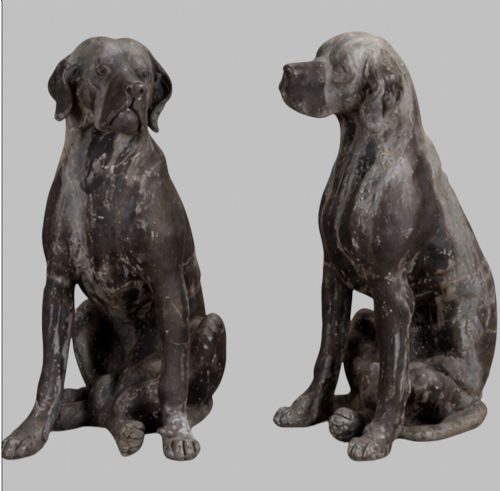
The selection on this page centres on Victorian, Regency and twentieth-century examples, ranging from small figures to life-size hounds. You will frequently encounter classical figures, animals and decorative containers cast in the British tradition.
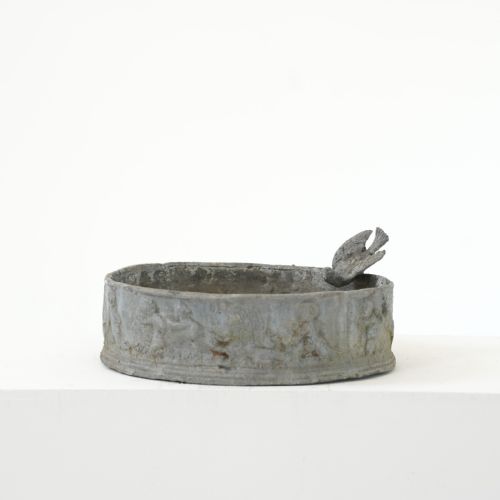
Forms vary from practical planters on claw feet to whimsical garden sculptures like thinking monkeys and satyr musicians. Each object was cast to furnish the grand and modest gardens of the nineteenth and twentieth centuries alike.
How they were made
Makers produced these pieces primarily through sand casting or metal moulding, pouring molten lead into beds or flasks to capture intricate detail. This technique allowed workshops to repeat classical and naturalistic motifs reliably across garden statues and planters.
Cast lead forms were sometimes paired with other media, incorporating paint as seen in cold-painted bird figures, or combined with terracotta, iron and wood elements in hybrid garden vessels. The inherent softness of the lead alloy meant sculptors could refine surfaces by hand after casting.
Over decades of exposure, the metal develops a characteristic dull grey oxidation that protects the underlying material. This natural weathering process is an integral part of the manufacturing legacy of these heavy garden ornaments.
Vintage Lead Ornament Retail Price Guide 2026
Typical asking prices for vintage lead ornament among the pieces listed under this phrase on Sellingantiques today, from the lower quarter to the upper quarter. They describe what is for sale here now, not the wider market.
One particularly thoughtful monkey has spent over a century pondering the universe from its permanent seat in the grass.
What varies in quality
Quality in a vintage lead ornament rests largely on the crispness of the original cast and the thickness of the metal used. Finer pieces retain sharp facial expressions on figures and clean, deep relief on planters, whereas poorer examples suffer from blurred lines and shallow detailing.
The scale and ambition of the design separate standard garden items from exceptional architectural commissions. Life-size animal figures and substantial jardinieres demand greater technical skill in casting and structural support than small decorative ornaments.
The integrity of the construction and the naturalness of the patina dictate the visual success of the piece. Well-balanced proportions and harmonious ageing lift a lead sculpture far above a mass-produced garden ornament.
The Vintage Lead Ornament Glossary
- Cast lead
- Molten metal poured into a mould to form solid figures or vessels. This heavy material resists rust and develops a desirable matte grey patina.
- Jardiniere
- An ornamental pot or stand for plants and flowers. These heavy lead vessels are typically designed for terrace or garden display.
- Putto
- A plump, naked child figure, often winged, derived from classical art. You frequently find these playful motifs on fountains and garden statues.
- Cold-painted
- Pigment applied to metal without subsequent firing or heat baking. This delicate finish requires sheltered placement to survive outdoors.
- Regency
- An architectural and decorative style spanning the early nineteenth century. Pieces from this period favour clean classical lines and restrained ornament.
Vintage Lead Ornament: Frequently Asked Questions
Can I leave lead garden ornaments outside in winter?
Cast lead is exceptionally hardy and withstands frost and snow without structural harm. The metal naturally adapts to cold temperatures and wet weather.
However, if your lead piece functions as a bird bath or planter filled with soil and water, ensure ice does not expand and crack internal cavities or decorative edges.
How do I clean an old lead ornament?
Leave the natural dark grey oxidation and accumulated moss alone, as this weathered skin protects the metal and defines its age. Scrubbing or polishing ruins the authentic character.
If dirt obscures fine details, wash the surface gently with plain water and a soft brush, avoiding chemical cleaners or abrasive pads.
How do I tell Victorian lead from later pieces?
Victorian garden ornaments often display heavier casting walls and deep, classical motifs influenced by the Gothic and Neoclassical revivals. Stylistic cues like heavy claw feet or draped garments point to nineteenth-century manufacture.
Twentieth-century pieces tend toward simpler modernist forms or specific historical revivals, though exact dating often relies on provenance and construction depth.