




Vintage Large Sofa
A vintage large sofa brings scale and substance to a room, offering deep seating across 19th-century and 20th-century forms.
Vintage Large Sofa
A vintage large sofa provides substantial seating through generous proportions, ranging from nineteenth-century settees to twentieth-century country house designs. These pieces often measure over two metres in length, accommodating multiple sitters with ease.
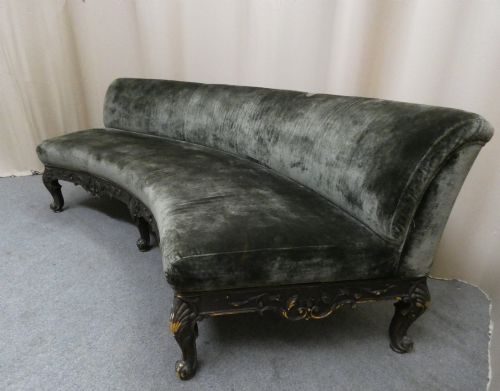
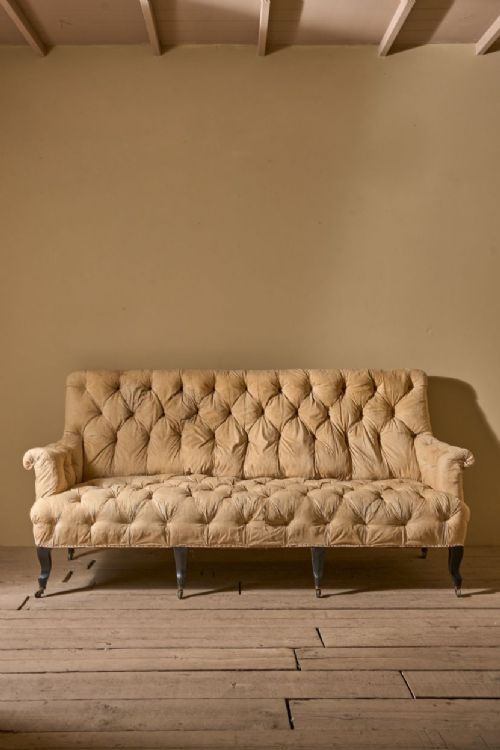
The selections span distinct periods, notably Victorian, Edwardian, and mid-century eras, reflecting shifts in domestic comfort. Formats include traditional buttoned chesterfields, show-frame settees, and deep-seated country house seating.
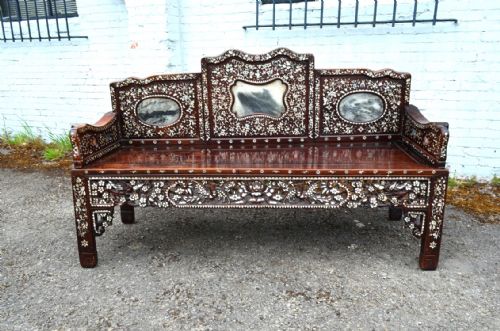
Origins vary between English workshops and French salons, bringing different structural approaches to the market. Walnut, mahogany, and giltwood frames appear alongside heavy leather and fabric upholsteries.
Materials and construction
Timber frames utilise mahogany, walnut, and timber, often shaped with hand-carved details or giltwood finishes. Joinery methods reflect traditional cabinet-making standards appropriate to each period.
Upholstery relies on traditional stuffing techniques, sometimes retaining original ticking or supporting deep leather hides. Buttoned backs and drop arms require complex internal webbing and spring placement.
Vintage Large Sofa Retail Price Guide 2026
Typical asking prices for vintage large sofa among the pieces listed under this phrase on Sellingantiques today, from the lower quarter to the upper quarter. They describe what is for sale here now, not the wider market.
Listings feature 19th-century, Edwardian, and 1930s periods, utilising mahogany, walnut, brass, and leather across various settee and sofa forms.
Judging construction and finish
Quality rests in the integrity of the timber frame and the depth of the seating support. Original surface patination on leather and giltwood elevates a piece above later interventions.
Proportion and decorative restraint distinguish fine cabinet work from standard production. The retention of original upholstery elements provides authentic historical context for the collector.
The Vintage Large Sofa Glossary
- Chesterfield
- A deep-buttoned upholstered sofa traditionally finished in leather with rolled arms of equal height to the back. This form is a staple of nineteenth-century seating.
- Giltwood
- Timber coated with gold leaf or a gold-coloured metallic preparation. This finish is frequently found on formal French and English salon settees.
- Show frame
- A wooden structural frame left visible around the upholstered portions of a settee. These frames often display intricate carving from the Victorian or Edwardian periods.
- Drop arm
- An adjustable arm mechanism that lowers to extend the sleeping or lounging surface of a sofa. This feature appears on specific nineteenth-century and Victorian designs.
- Ticking
- A tightly woven heavy cotton or linen fabric used traditionally as a durable inner cover for upholstery stuffing.
Vintage Large Sofa: Frequently Asked Questions
How do I measure for a large vintage sofa?
Check both the overall floor footprint and the diagonal depth to ensure clearance through doorways. Large frames require careful consideration of ceiling height and turning space in stairwells.
Account for protruding elements like rolled arms or show frames when planning furniture placement in a room.
Are these sofas comfortable for daily use?
Many period pieces offer deep seating designed for relaxation, particularly Edwardian and country house models. Support levels depend on the internal suspension and padding condition.
Some antique frames benefit from professional reupholstering to balance historical preservation with modern comfort.
How do I care for antique leather upholstery?
Maintain leather surfaces by avoiding direct sunlight and excessive heat sources that dry the hide. Apply specialised conditioners sparingly to preserve suppleness.
Protect raw or hand-dyed leathers from moisture to maintain the integrity of the finish over time.
What is the difference between a settee and a sofa?
Historically, settees often featured lighter wooden frames and exposed woodwork, while sofas offered fully upholstered structures. The terms frequently overlap in nineteenth-century and twentieth-century descriptions.
Both forms provide multi-seat capacity but vary in decorative emphasis and padding thickness.