



Vintage Lake Artwork
Vintage lake artwork captures quiet stretches of water and mountain shores through the eyes of painters working from the nineteenth century into the mid twentieth.
Vintage Lake Artwork
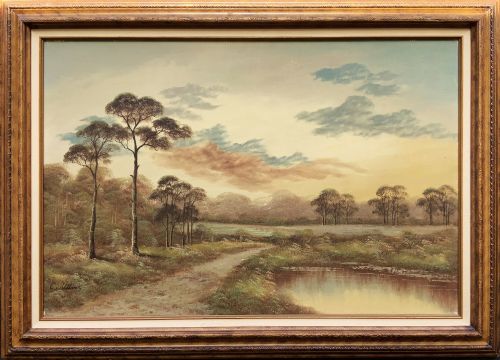
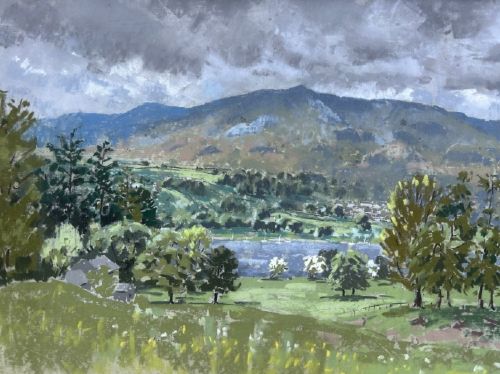
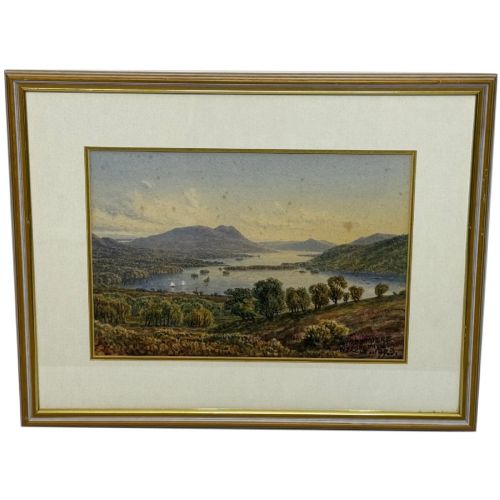
Vintage lake artwork brings together paintings, watercolours and drawings that record shorelines, mountain tarns and boating scenes across Britain and continental Europe. The selection spans the nineteenth century through to the mid twentieth century, with a strong representation of English Lake District views.
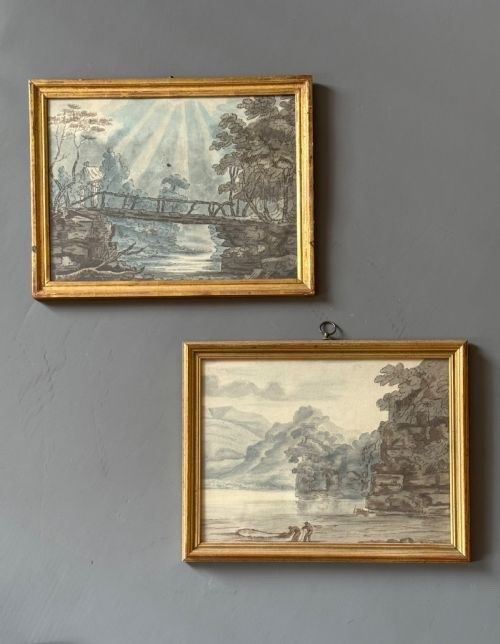
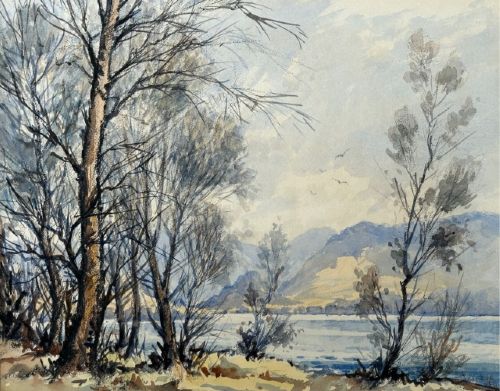
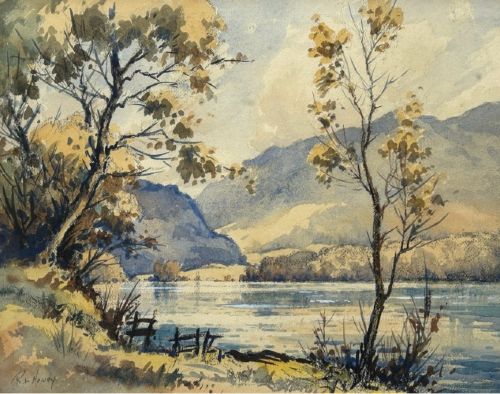
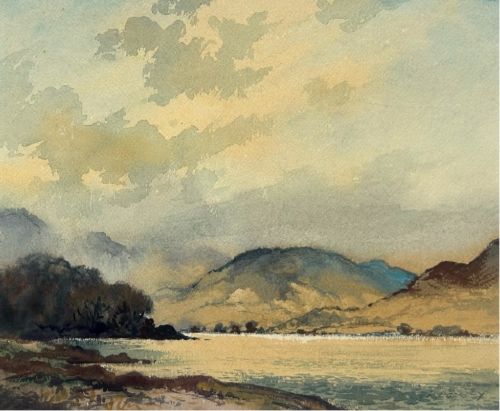
Most pieces you encounter take the form of watercolours on paper or oil paintings on canvas, framed behind glass or mounted in wood. These works range from topographical records of specific places like Grasmere and Windermere to broader Impressionist interpretations of water and light.
How they were made
Artists worked primarily with oil paint on canvas or watercolour and gouache on paper, often applying gesso to wooden panels or stretcher frames to prepare the ground. Ink and charcoal appear in preliminary sketches and linear studies of mountain terrain.
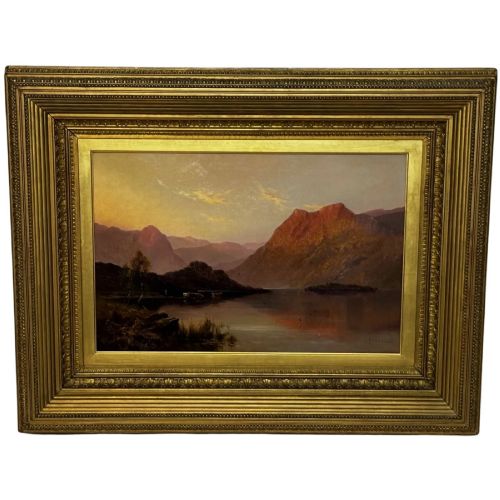
Framing typically involves moulded wood, sometimes gilded, enclosing either glass for works on paper or open canvas for oil paintings. Pigments were applied with brushes or palette knives to build up impasto textures on mid-century canvases.
Vintage Lake Artwork Retail Price Guide 2026
Typical asking prices for vintage lake artwork among the pieces listed under this phrase on Sellingantiques today, from the lower quarter to the upper quarter. They describe what is for sale here now, not the wider market.
Geese frequently populate the foregrounds of Edwardian lake scenes, offering a steadfast measure of calm.
What varies in quality
Quality rests on the sureness of the hand and the accuracy with which light and atmosphere are rendered across the water. A strong composition captures the specific geography of a shore, whereas weaker examples rely on formulaic mountain backdrops.
The handling of medium distinguishes the work, from the delicate washes of nineteenth-century watercolours to the confident impasto of later Impressionist canvases. Preservation of the paper or canvas surface also marks out better-kept examples.
Alfred Fontville de Breanski Jr·Robert Leslie Howey·Robert George Talbot Kelly·Helen Layfield Bradley·Gabriel Dauchot·Edward Dayes·Frank Hider·Giulio Cecchini·John Douglas Perrett·Edward Horace Thompson·James Bell Anderson·Claude Muncaster·Frederick Tucker·Milton Drinkwater·Louis Smets·Antoine Bouvard
The Vintage Lake Artwork Glossary
- Impasto
- Paint applied thickly to a canvas or panel so that it stands out from the surface. This technique lets the artist retain the distinct marks of the brush or palette knife.
- Gouache
- An opaque water-based paint that dries to a matte finish. It is frequently combined with transparent watercolour to add highlights to landscape studies.
- Gesso
- A white paint mixture consisting of a binder mixed with chalk, gypsum or pigment. It was brushed onto wood or canvas to prepare a smooth surface for oil painting.
- Provenance
- The chronological history of the ownership of a piece. Documented origin helps establish authenticity and historical context for signed works.
Vintage Lake Artwork: Frequently Asked Questions
How do I date a lake painting?
Dating relies on signatures, framing styles, and the written records left by the artist or previous owners. Period markers often appear in the clothing of figures depicted along the shore or in the stretcher construction behind the canvas.
Paint composition and paper types also offer clues. Nineteenth-century works typically use heavier rag paper and gilt frames, while mid-century pieces often reflect Impressionist or modernist trends.
Where were these lake scenes painted?
The majority focus on the English Lake District, including Windermere, Grasmere, and Derwentwater, captured by artists drawn to the rugged topography. Other pieces record Scottish highlands, Alpine ranges, and continental lakes in France and Italy.
Topographical works aimed to record actual locations with precision, while Impressionist pieces prioritised the play of light over the water's surface.
How should I frame and display them?
Works on paper require glass protection and acid-free mounts to prevent humidity and light damage over time. Oil paintings on canvas are best displayed away from direct sunlight and dramatic temperature shifts.
Matching the period of the frame to the era of the artwork helps preserve its character. Simple wooden mouldings often suit mid-century canvases, while ornate frames complement Victorian oils.
What is the difference between oil and watercolour lake art?
Oil paintings use pigments suspended in drying oils on canvas or panel, offering rich textures and deep colour blending. Watercolours use water-soluble pigments on paper, producing lighter, translucent effects that capture morning mist and open skies.
Watercolours are more sensitive to light and require glass for preservation. Oils allow for thick impasto marks that reveal the physical movement of the artist's hand.