


Vintage Lakai Tribal Textile
Vintage lakai tribal textile pieces are Central Asian embroideries from Uzbekistan that bring tactile warmth and rich geometric expression to contemporary interiors.
Vintage Lakai Tribal Textile
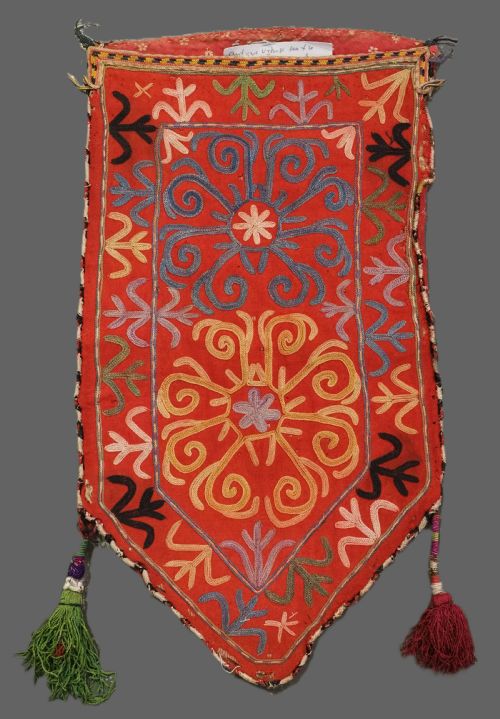
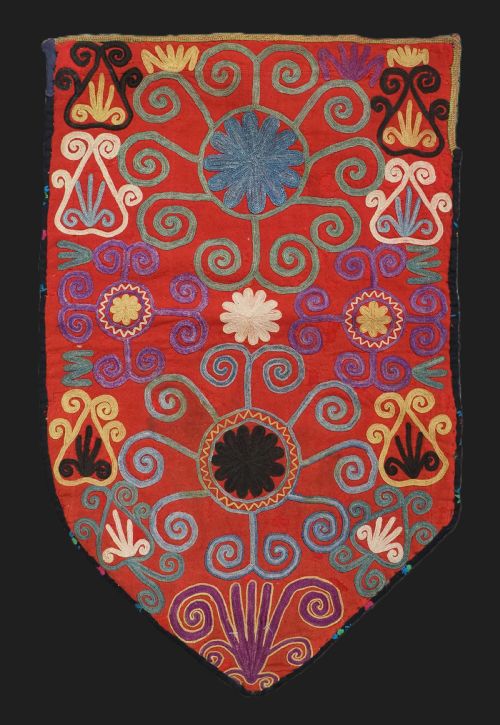
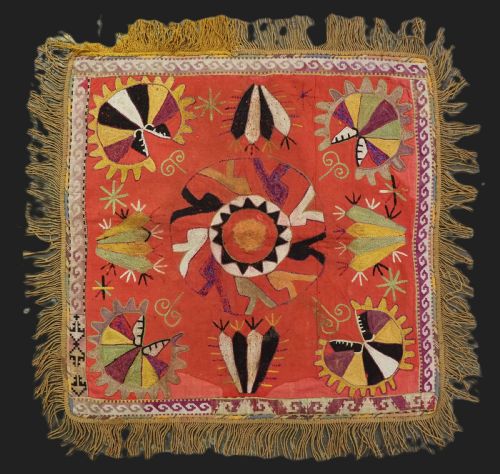
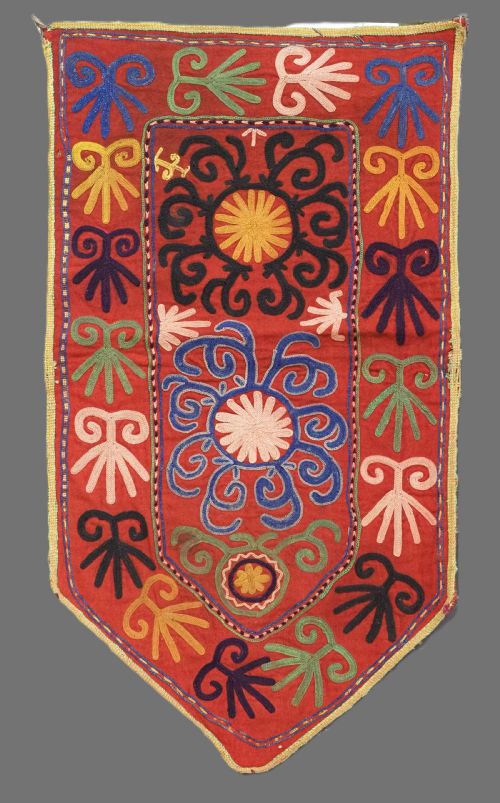
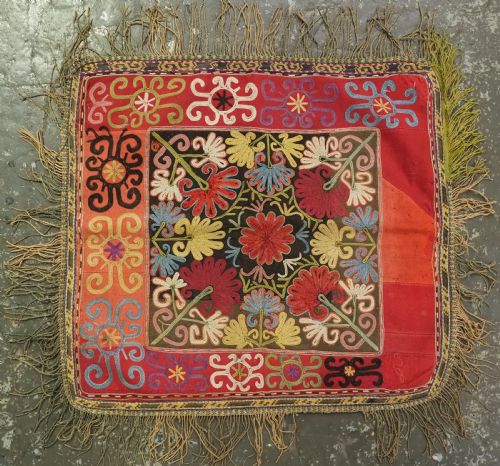
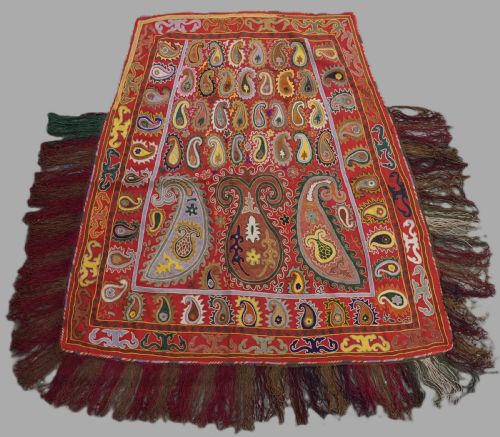
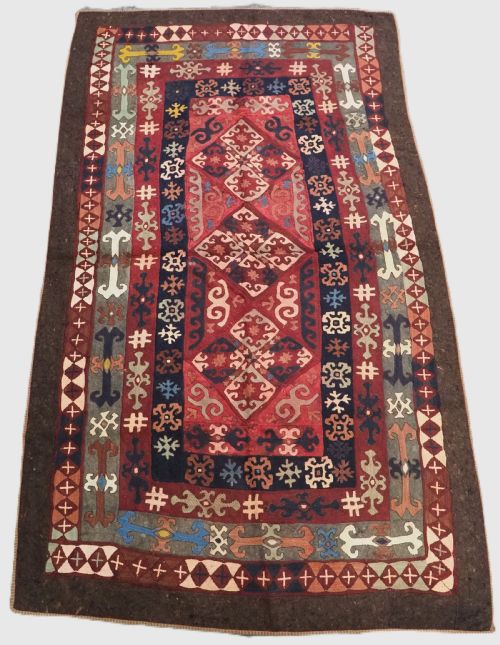
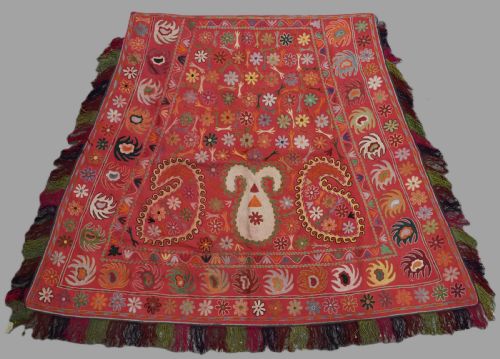
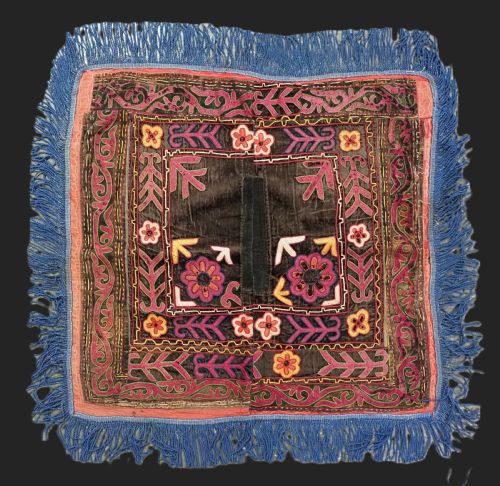
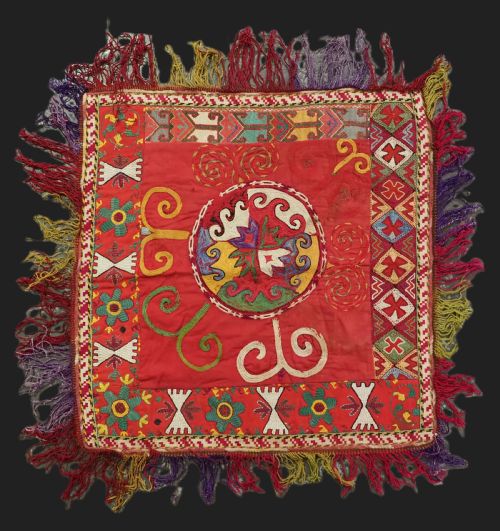
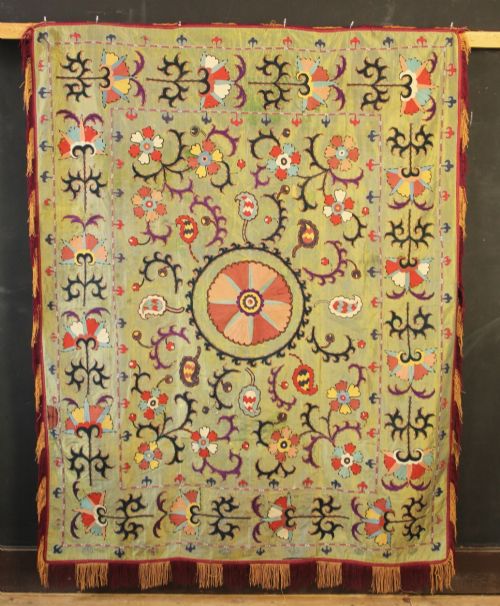
A vintage lakai tribal textile typically originates from the nomadic Lakai tribes of Uzbekistan, encompassing distinct forms such as wall hangings, dowry embroideries, and horse covers. These pieces frequently manifest as ilgich, uut kap ilgich, or nim suzani panels produced across the late nineteenth and early twentieth centuries. Collectors encounter these works in formats ranging from small amulet textiles to larger wall displays and felt rugs.
The aesthetic is dominated by Central Asian tribal and folk art motifs, reflecting regional traditions from centres such as Shakrisabz. Surviving examples include ceremonial saddle covers, bed decorations known as saye gosha, and torba ilgich panels. These formats provide insight into the domestic and ceremonial life of the Uzbek Lakai tribes during the period.
Materials and construction methods
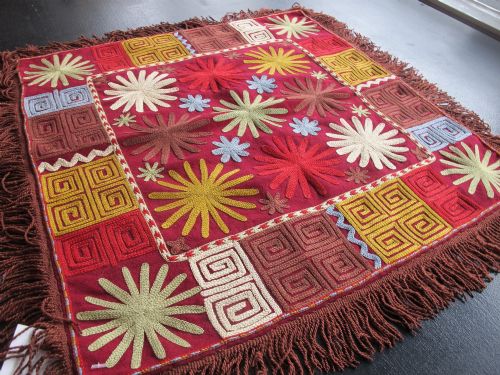
Makers utilised a combination of silk, cotton, wool, felt, and velvet as the structural foundation for their embroideries. Silk thread provides the vibrant surface ornamentation seen on red wool grounds, cotton backings, and embroidered felt rugs. Wool fringe often finishes the edges of these textile panels, adding texture and weight to the composition.
Needlework techniques involve dense embroidery applied to various fabric grounds, sometimes incorporating double-faced stitching. The interaction between silk thread and wool or cotton substrates creates a tactile surface relief characteristic of Central Asian folk art. Artisans combined these natural textiles to produce durable domestic furnishings and ceremonial trappings.
Listings feature items spanning the late nineteenth and early twentieth centuries, incorporating materials such as silk, cotton, wool, felt, and velvet.
Evaluating quality in lakai textiles
Quality in a vintage lakai tribal textile rests upon the precision of the needlework and the complexity of the embroidered motifs. Finer examples display meticulous control of silk thread across wool or cotton grounds, resulting in crisp geometric and figurative patterns. The density and execution of the stitchery directly influence the visual depth of the panel.
The preservation of the original materials, including silk thread, wool fringe, and felt backing, dictates the condition grade. Pieces that retain their original scale, colour saturation, and structural integrity without excessive restoration represent the higher tier of surviving examples. The harmony between the textile ground and the overlaid embroidery defines the overall success of the piece.
The Vintage Lakai Tribal Textile Glossary
- Ilgich
- A Central Asian embroidered wall hanging used traditionally for domestic decoration and dowry displays. These pieces are often worked in silk on a wool or cotton ground.
- Uut kap ilgich
- A specific type of Lakai hanging or bag associated with nomadic tent storage and domestic organisation. They display the characteristic bold tribal motifs of the region.
- Suzani
- An embroidered textile panel from Central Asia, often produced as part of a bride's dowry. Nim suzani refers to a half-sized version of these decorative covers.
- Torba
- A small storage bag or hanging panel originating from nomadic communities. In Lakai traditions, these are frequently associated with specific tribal regions like Shakrisabz.
- Saye gosha
- A traditional bed decoration or hanging from Uzbekistan. These textiles formed part of the domestic interior landscape in Central Asian households.
Vintage Lakai Tribal Textile: Frequently Asked Questions
How were these textiles used traditionally?
Nomadic families utilised these embroideries to decorate the interior of their dwellings, mark ceremonial occasions, and assemble bridal dowries. Items like ilgich panels functioned as wall hangings, while others served as horse and saddle covers.
Specialised forms also acted as storage bags or bed decorations within the tent or home. Each textile fulfilled a specific social or domestic purpose in daily nomadic life.
How should I display a textile at home?
Mounting these panels on a neutral wall allows the intricate silk embroidery and geometric patterns to become a focal point in a room. Textile conservators recommend professional mounting methods that distribute the weight evenly across the backing material.
Keeping the piece away from direct sunlight protects the natural silk threads and dyed wool or cotton grounds from fading. Proper placement ensures the longevity of the fabric while showcasing its cultural artistry.
How do I identify the period of a piece?
Dating relies on examining the specific material composition, natural dye palette, and traditional design structures characteristic of late nineteenth and early twentieth-century production. Stylistic markers align with known examples from periods around eighteen-eighty through to nineteen-thirty.
Evaluating the wear on the silk thread, wool ground, and cotton backing provides additional clues regarding age. Comparing the motifs to documented tribal patterns helps narrow down the probable decade of creation.