




Vintage Ladies Secretary
These vintage ladies secretary pieces offer compact writing surfaces and fitted storage, combining elegance with practical utility for the home.
Vintage Ladies Secretary
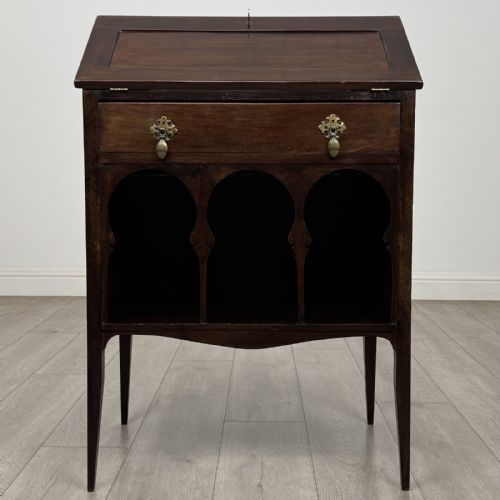
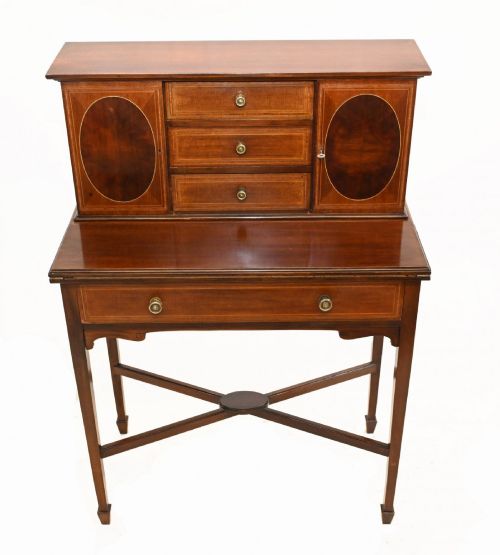
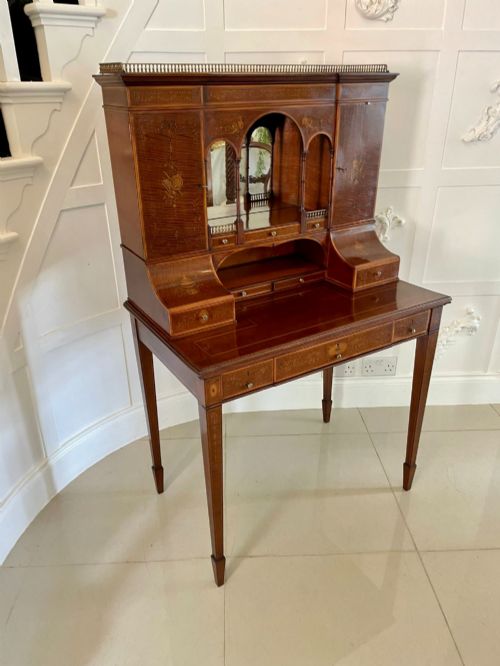
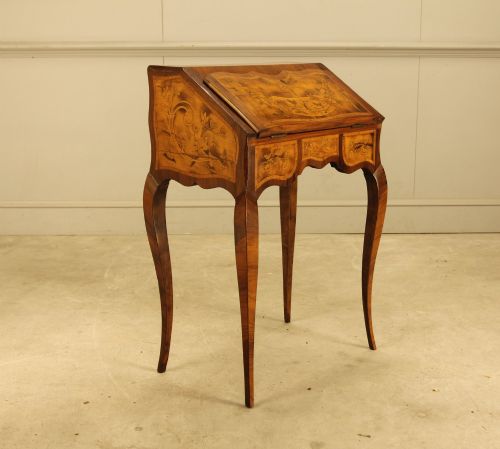
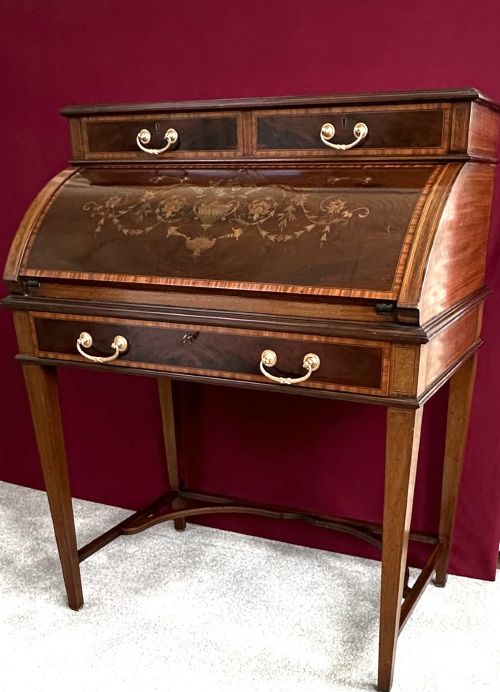
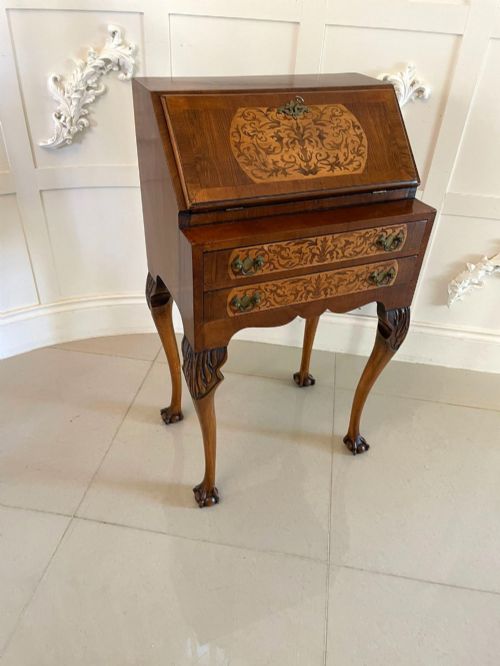
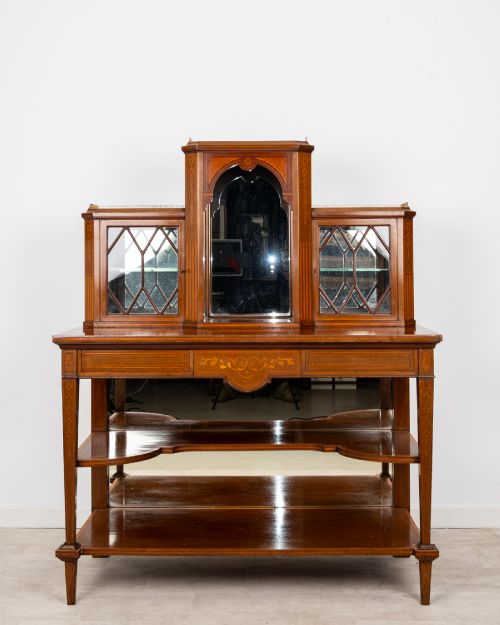
A vintage ladies secretary encompasses compact writing desks, bureaux, and bonheur du jour tables designed for personal correspondence and paperwork. These pieces range from Edwardian satinwood models to Victorian mahogany variants, often featuring fall fronts, tambour doors, or lift-action mechanisms. You will frequently encounter smaller proportions suited for intimate spaces, reflecting the domestic writing habits of past decades.
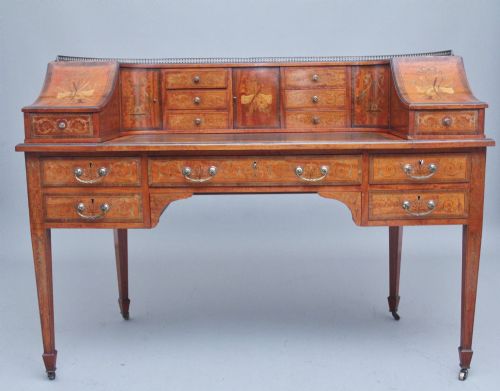
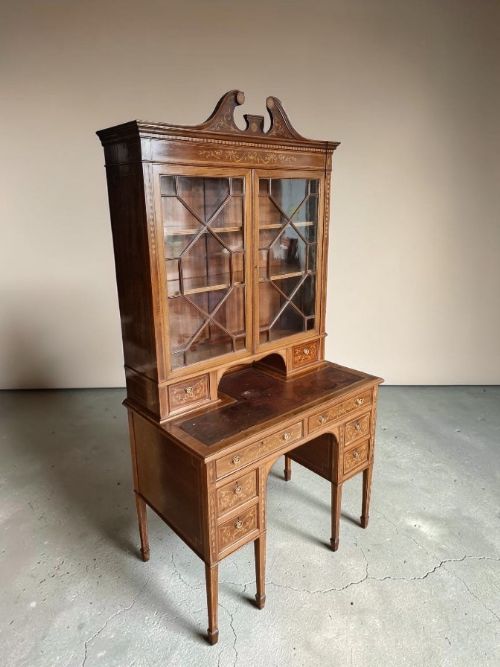
The selection here draws upon various historical periods, notably the Edwardian era and the nineteenth century, alongside specific revivals like Sheraton and Queen Anne. Formats vary from simple freestanding desks to elaborate Carlton house desks and display pieces. Each object serves the dual purpose of a functional writing desk and a decorative cabinet.
How they were made
Craftsmen utilised fine timber veneers such as mahogany, satinwood, burr walnut, and kingwood over sturdy primary woods. Marquetry inlay and painted plaques often embellish the exterior surfaces, adding decorative contrast to the natural grain of the wood. Brass handles, hinges, and gallery rails provide structural support and refined metallic detail.
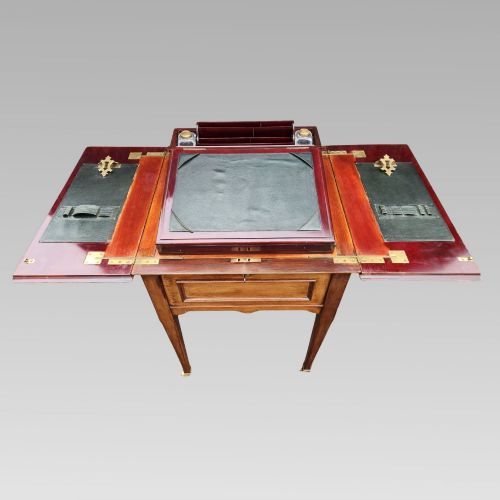
Interiors typically comprise fitted compartments, small drawers, and pigeonholes, sometimes lined with leather writing surfaces. Construction techniques include dovetailed drawer joints and hinged fall fronts designed for smooth daily operation. Specialised mechanisms allow for fold-over tops and metamorphic adjustments in certain writing tables.
Vintage Ladies Secretary Retail Price Guide 2026
Typical asking prices for vintage ladies secretary among the pieces listed under this phrase on Sellingantiques today, from the lower quarter to the upper quarter. They describe what is for sale here now, not the wider market.
Listings feature mahogany, satinwood, burr walnut, and kingwood across Edwardian and nineteenth-century periods.
What varies in quality
The refinement of the timber selection and the complexity of the marquetry inlay largely determine the standard of the piece. Superior examples display carefully matched wood veneers and intricate floral or geometric patterns across the fall front and drawers. Inferior pieces rely on simpler construction with minimal decorative embellishment.
The execution of the interior fittings and the durability of moving parts, such as tambour mechanisms and fold-over hinges, distinguish better workshops. Well-executed desks maintain tight joinery and smooth operation of drawers, whereas lesser examples show uneven wear or loose fittings.
Druce & Co.
The Vintage Ladies Secretary Glossary
- Bureau
- A sloping desk with a hinged flap that conceals a fitted interior of pigeonholes and small drawers. This form is common among Edwardian and nineteenth-century writing furniture.
- Bonheur du jour
- A light day-desk for a lady, typically featuring a small set of drawers or a cabinet on top of the writing surface. These desks emerged in eighteenth-century France and reappeared in later revival periods.
- Carlton house desk
- A Davenport-style writing desk with a curved superstructure of small drawers and compartments wrapping around the back and sides of the writing surface. This layout provides extensive organisation for stationery.
- Tambour
- A sliding door or shutter made of narrow vertical strips of wood glued to a canvas backing, allowing it to curve around a corner. You will find tambour panels enclosing compartments on specific writing tables.
- Marquetry
- The art of applying pieces of veneer to a structure to form decorative patterns and pictures. Craftsmen utilise various coloured woods to achieve pictorial depth.
Vintage Ladies Secretary: Frequently Asked Questions
What is a ladies secretary?
A ladies secretary is a compact desk designed for personal correspondence, typically featuring a writing surface and internal compartments for stationery and letters.
These pieces often include fall fronts or lift-action mechanisms to conceal the writing area when not in use.
How were these desks used?
Owners used them for writing letters, managing household accounts, and storing personal documents. The fitted interior kept ink, paper, and seals organised within easy reach.
Many examples also served as decorative furniture in private sitting rooms and boudoirs rather than formal libraries.
How do I identify an Edwardian piece?
Edwardian desks often display lighter satinwood or mahogany timbers, frequently enhanced with delicate inlaid borders and Sheraton revival motifs. The proportions tend to be smaller and lighter than their Victorian predecessors.
Construction details and hardware from this period reflect early twentieth-century manufacturing standards combined with traditional cabinetmaking.
Where should I place one at home?
These compact desks fit well in living rooms, bedrooms, or home offices where floor space is limited. Their finished backs often allow them to stand away from the wall as freestanding room elements.
Keep them away from direct sunlight and strong heat sources to protect the delicate wood veneers and leather surfaces.