



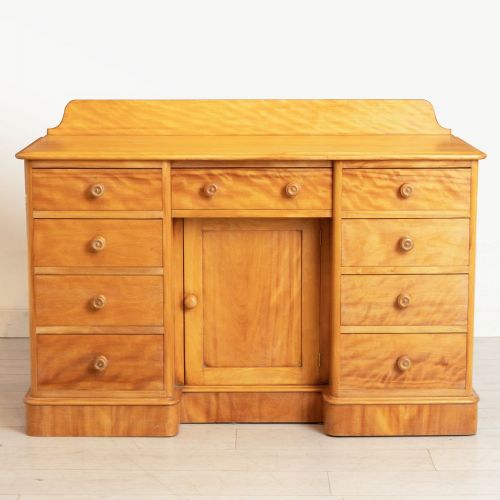


Vintage Kneehole Cabinet
These vintage kneehole cabinet examples combine compact proportions with recessed central spaces, offering refined workspace solutions suited to traditional and period interiors.
Vintage Kneehole Cabinet
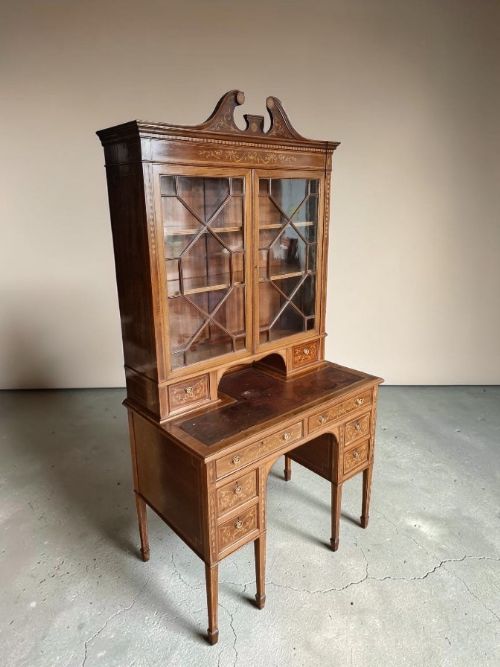
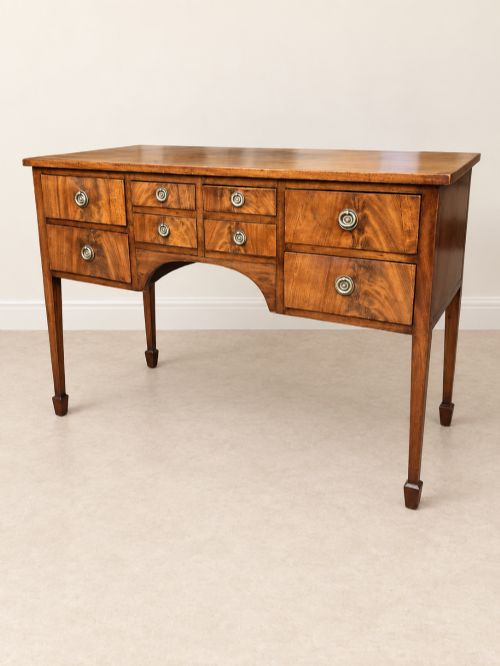
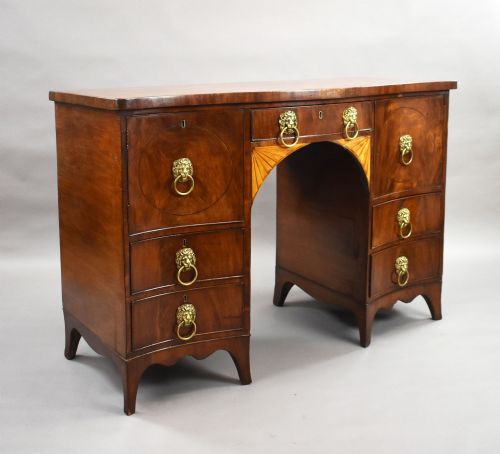
A vintage kneehole cabinet or desk presents a distinctive form featuring a central recess flanked by pedestals of drawers, designed primarily for writing or storage. The selection spans formal 18th-century walnut and mahogany iterations to early 20th-century revival pieces influenced by Queen Anne and Georgian aesthetics.
While the search points towards dedicated kneehole formats, the current range also encompasses related writing tables, lowboys, and bureau cabinets sharing similar pedestal configurations and compact footprints. These items serve equally well as intimate writing stations or decorative focal points in studies and reception rooms.
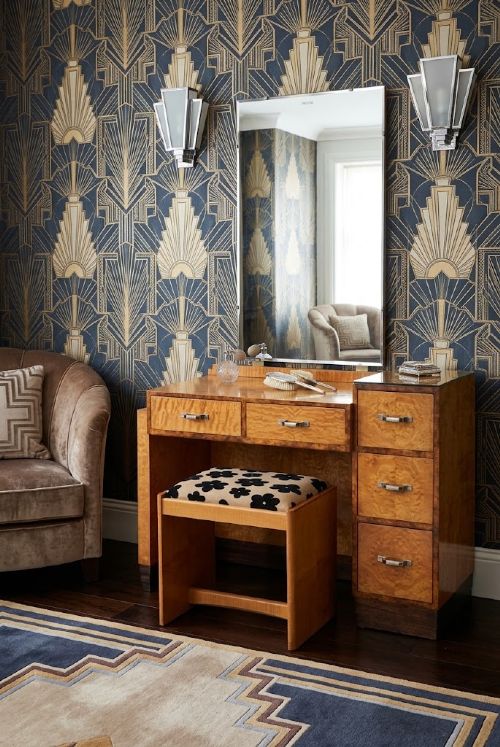
Origins stretch from the robust craftsmanship of the 18th century through Victorian interpretations in mahogany and satin birch up to 1930s variations. Buyers encounter pieces reflecting distinct period revivals, particularly Queen Anne walnut designs and Edwardian Sheraton influences.
How they were made
Construction relies upon traditional cabinet-making timbers, notably mahogany, walnut, oak, and yew wood, often enhanced by decorative elements like flame mahogany veneer, satinwood inlay, and burr walnut surfaces. Cabinetmakers utilised solid woods for structural integrity while applying choice veneers to flat expanses to display striking grain patterns.
Hardware forms an integral part of the construction, with cast brass handles, escutcheons, and drawer pulls finishing the pieces. Joinery techniques from earlier periods give way to later 19th and 20th-century mechanical developments, yet standard dovetailed drawer boxes remain consistent across the timeline.
Vintage Kneehole Cabinet Retail Price Guide 2026
Typical asking prices for vintage kneehole cabinet among the pieces listed under this phrase on Sellingantiques today, from the lower quarter to the upper quarter. They describe what is for sale here now, not the wider market.
Current listings span from the 18th century through to the 1930s, featuring walnut, mahogany, oak, and yew wood alongside Art Deco and Queen Anne styles.
What varies in quality
Quality rests significantly upon the choice of timber and veneer figure, where richly grained burr walnut or select flame mahogany commands greater visual presence than plainer secondary woods. The intricacy of inlay work and the crispness of carved details, such as bracket feet or crossbanding, distinguish finer workshops from standard production.
Internal construction standards dictate longevity and tactile pleasure, visible in the neatness of hand-cut dovetails within drawer linings and the choice of secondary woods. Originality of brass hardware and the preservation of polished patination further separate exceptional survivors from heavily restored examples.
The Vintage Kneehole Cabinet Glossary
- Kneehole
- A desk or cabinet featuring a recessed central space beneath the writing surface, flanked by banks of small drawers. This configuration allows the user to sit comfortably close to the piece.
- Lowboy
- A small dressing or side table with one or more rows of drawers supported on slender legs. They frequently share period characteristics with contemporary kneehole desks.
- Crossbanding
- A decorative border technique where veneer strips are laid perpendicular to the surrounding grain. This creates a contrasting frame around drawer fronts or table tops.
- Escutcheon
- A protective plate surrounding a keyhole, often cast in brass. These details help date a cabinet by their prevailing period style.
- Burr Walnut
- Timber taken from a tree growth deformity that produces highly intricate, swirling grain patterns. It was prized for luxury cabinet facades during the Queen Anne and Georgian eras.
Vintage Kneehole Cabinet: Frequently Asked Questions
What is a kneehole cabinet?
A kneehole cabinet is a compact desk or storage unit featuring a central recessed space beneath the top surface, flanked by vertical banks of drawers. This design allows a chair to fit snugly underneath for writing or administrative tasks.
Historically constructed from timbers like walnut, mahogany, and oak, these pieces serve as practical workspaces while maintaining a refined architectural presence in domestic interiors.
How do I style a kneehole desk?
Position the piece as a focal point against a wall or float it within a study to showcase finished backs and detailed timber grains. Pair the compact footprint with a low-backed chair that slides easily beneath the central recess.
Keep surface ornamentation minimal to highlight the natural figure of the wood and the period brass hardware. The versatile proportions allow these items to function effectively in both formal libraries and modern living spaces.
How do I identify period styles?
Examine the primary timber, leg configurations, and decorative motifs to determine the era of manufacture. Eighteenth-century examples often feature dense walnut or mahogany with bracket feet, whereas Edwardian and later revivals incorporate lighter satinwood details.
Look closely at construction methods, such as hand-cut dovetails in the drawer interiors, which indicate traditional craftsmanship. Period hardware styles, from engraved brass escutcheons to simple drop handles, offer further clues to the date of origin.
Were these used as desks?
Many kneehole cabinets and tables were specifically designed for correspondence, account management, and reading. The configuration of small drawers provided organised storage for writing instruments, ink, and personal documents.
Some variations incorporate bureau flaps or writing slides that extend the usable surface area. Their modest scale made them ideal private writing stations before the advent of dedicated modern office furniture.