
Vintage Kneehole Bureau
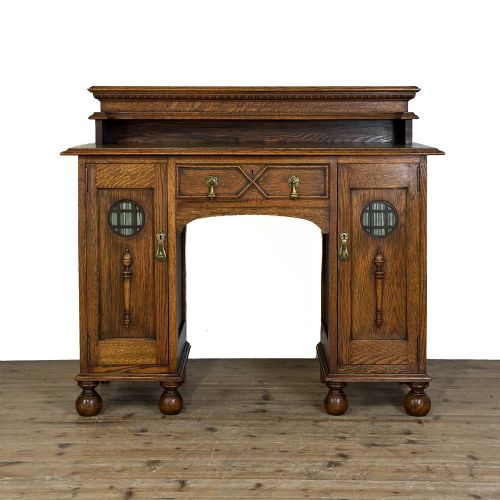
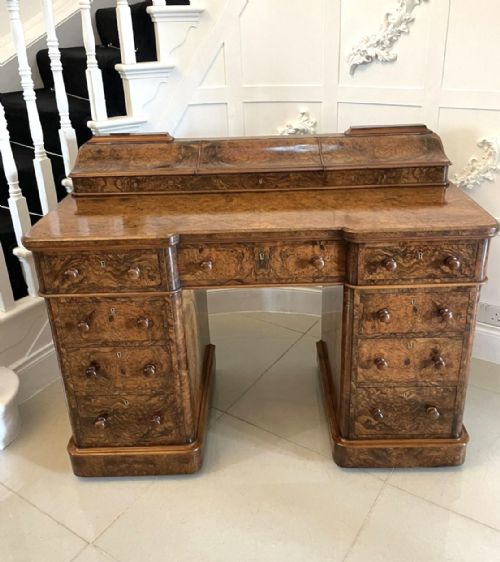
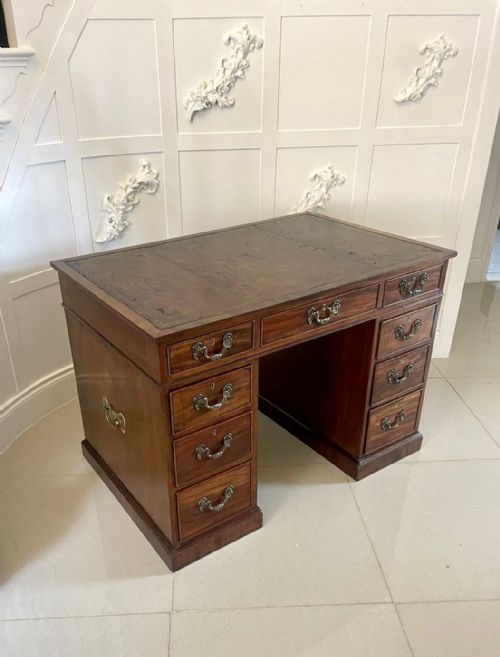
A vintage kneehole bureau provides a compact writing workspace framed by pedestals of drawers, combining period craftsmanship with practical domestic utility.
Vintage Kneehole Bureau
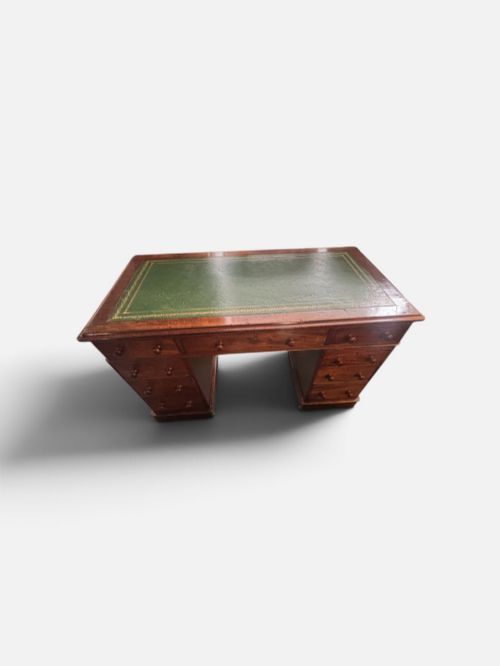
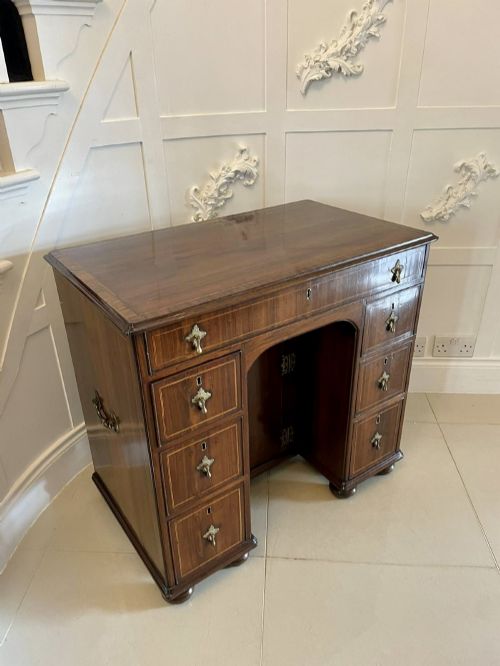
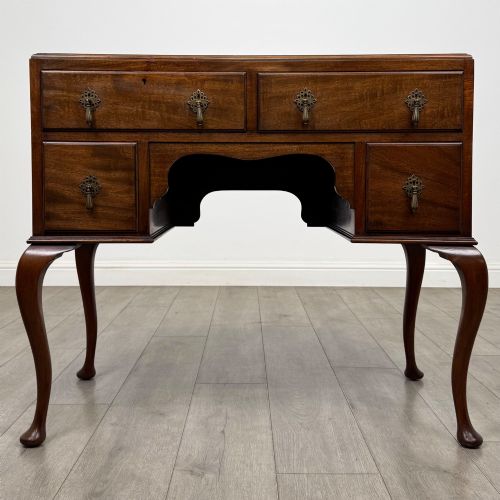
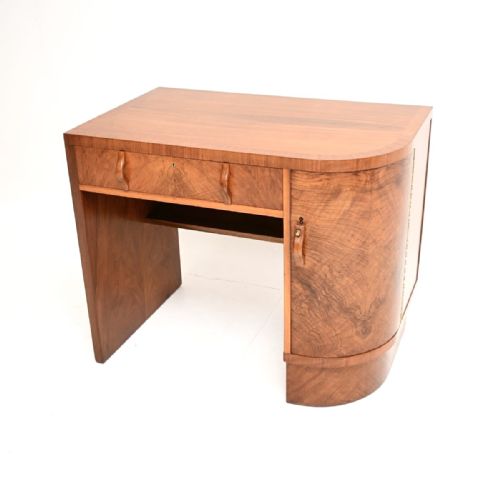
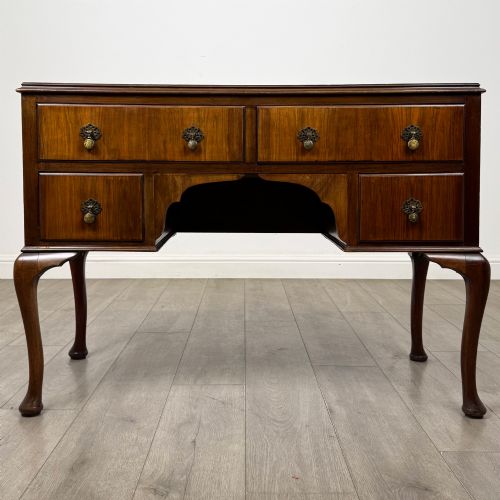
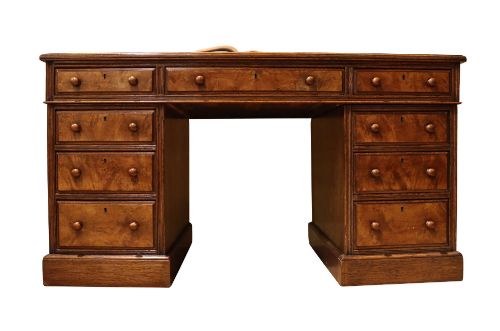
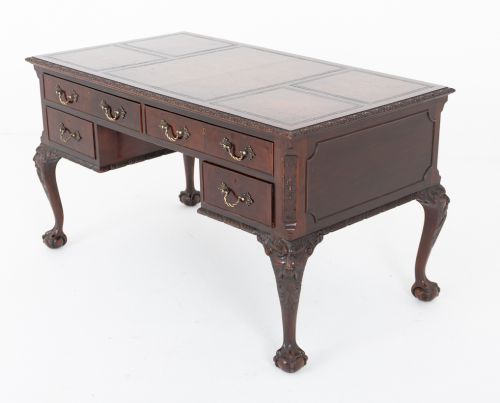
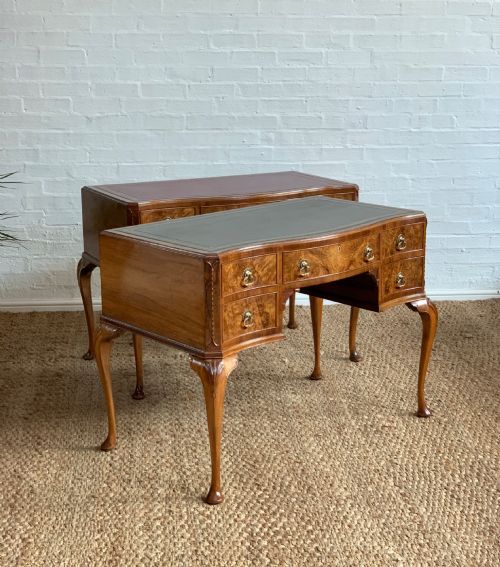
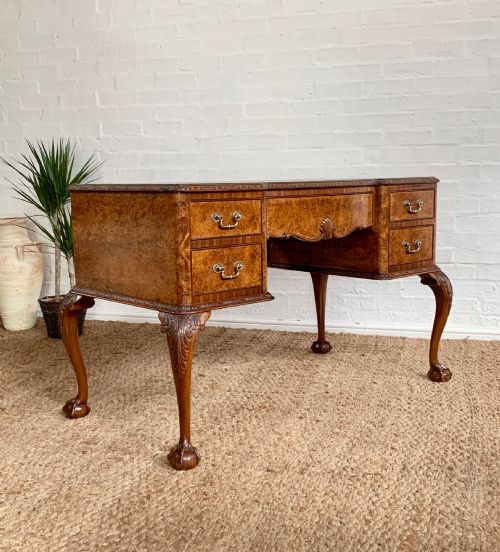
When you search for a vintage kneehole bureau, you encounter pedestals of drawers flanking a central recessed space, often fitted with a writing surface. The pieces listed span Georgian, Victorian, Edwardian, and Art Deco periods, though heavy mahogany and burr walnut pedestal forms dominate.
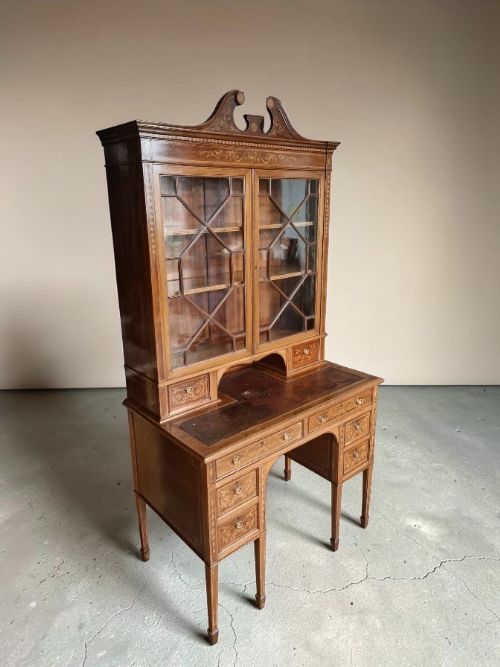
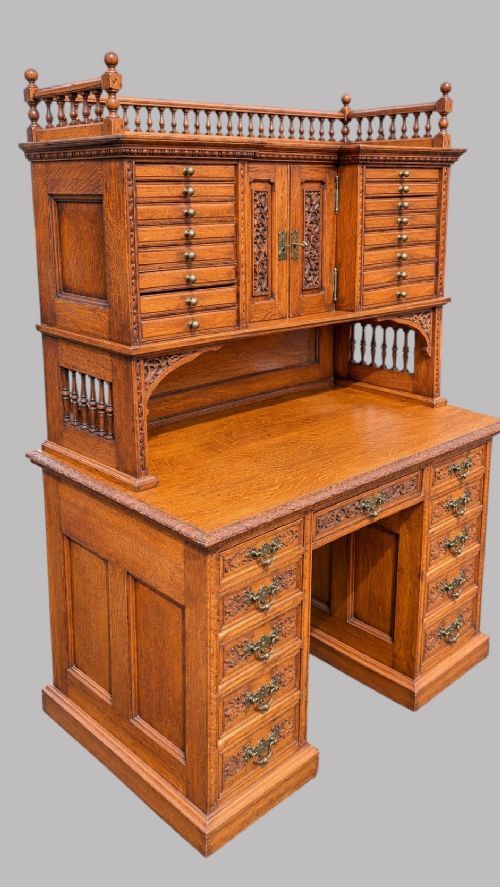
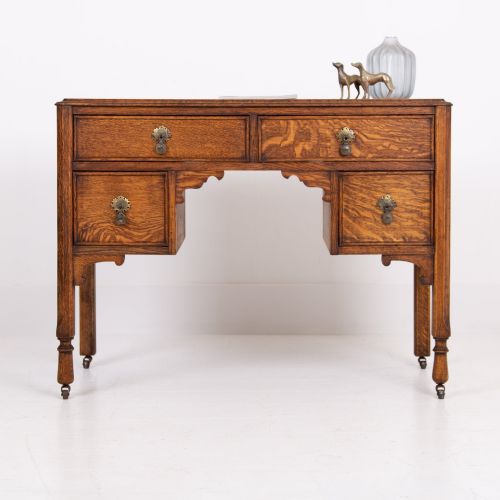
The selection ranges from straightforward oak desks to elaborate bureau bookcases and serpentine fronts in walnut. Makers such as Maple & Co., Wylie & Lochhead, James Shoolbred, and Étienne Kohlmann appear among the listings, showing both British cabinet-making traditions and continental Art Deco design.
Forms vary from small proportioned writing tables to substantial library bookcases. These pieces served as private correspondence centres in domestic studies and offices, retaining their utility as functional desks today.
Materials and construction methods
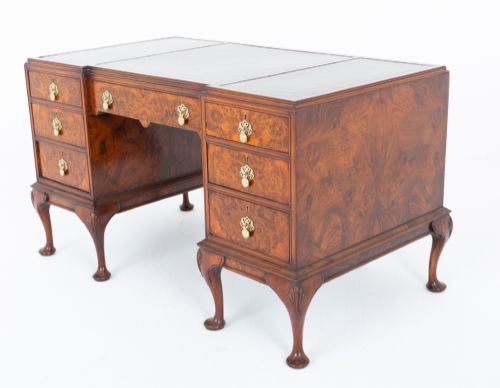
Makers utilised solid timbers alongside veneered surfaces, choosing mahogany, oak, and burr walnut for their distinct grain patterns. Cabinet-makers applied burr walnut veneer over pine or oak carcases to create decorative patterned surfaces on drawer fronts and desk tops.
Brass handles, escutcheons, and hinges punctuate the woodwork, whilst writing surfaces frequently incorporate green or dark leather tooled in gold leaf. Joinery relies on traditional dovetail construction for drawers and panelled carcases designed to withstand daily use.
Listings span eight distinct periods, stretching from eighteenth-century Georgian examples to 1930s Art Deco designs in walnut and oak.
Factors determining quality
The choice of timber underpins the hierarchy of these pieces, separating plain utility furniture from examples utilising highly figured burr walnut or fine mahogany. Grain selection, book-matching of veneers across drawer fronts, and timber thickness set the finer productions apart from standard workshops.
Carved detail and hardware integration also divide the grades. Sharp, hand-carved mouldings and original brass fittings indicate superior cabinet-making, whereas machine-cut elements and replacement hardware mark simpler commercial output.
Maple & Co.·Wylie & Lochhead Glasgow·James Shoolbred of London·Étienne Kohlmann
The Vintage Kneehole Bureau Glossary
- Kneehole
- A recessed central space beneath a desk top flanked by pedestals of drawers. This design allows the user to sit squarely in front of the writing surface.
- Pedestal
- A vertical columnar structure containing a stack of drawers. Two such supports typically hold up the desk top.
- Veneer
- A thin slice of decorative wood glued over a secondary timber carcase. Burr walnut veneer utilises the knotted growth of the tree to create swirling patterns.
- Escutcheon
- A protective plate surrounding a keyhole. These brass fittings prevent wear to the surrounding timber.
- Dovetail
- An interlocking joint formed by interlocking wedge-shaped fingers. This method secures drawer corners with high tensile strength.
Vintage Kneehole Bureau: Frequently Asked Questions
What is a kneehole bureau?
A kneehole bureau is a desk featuring two banks of drawers separated by a central recess for the legs. They provide compact storage alongside a dedicated writing surface.
These pieces emerged in various periods from the eighteenth century onwards, adapting from formal secretary desks to pedestal writing tables.
How do I date a wooden desk?
Dating relies on observing construction techniques, timber choices, and hardware styles. Hand-cut dovetails and native timbers generally point to earlier eras, while machine production indicates the twentieth century.
Cabinet-makers often stamped their work or used specific locks that help narrow down the period of manufacture.
Where were kneehole desks used?
These desks served as private writing stations in domestic studies, libraries, and bedrooms. Wealthy households utilised them for managing correspondence and household accounts.
Their compact proportions allowed them to sit comfortably against walls or within smaller reception rooms.
How do I care for leather desk tops?
Leather writing surfaces require gentle cleaning with a damp cloth followed by neutral leather cream. Avoid harsh chemical cleaners that strip the gold tooling.
Keeping the room at a stable humidity prevents the leather from drying out and cracking over time.
What is burr walnut?
Burr walnut is a timber derived from the gnarled growths on walnut trees. It yields complex, swirling grain patterns highly prized by cabinet-makers.
Craftsmen sliced this wood into thin veneers to adorn the prominent surfaces of high-end desks and cabinets.