





Vintage Jockey Artwork
Vintage jockey artwork captures the speed and colour of historic turf life through oils, pastels and engravings.
Vintage Jockey Artwork
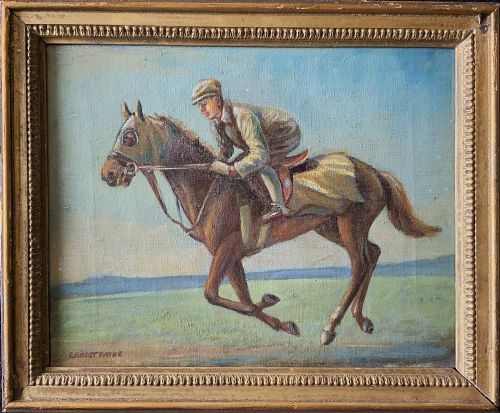
Vintage jockey artwork encompasses paintings, drawings and prints celebrating historic horse racing and equestrian portraits. Buyers seeking vintage jockey artwork encounter oil paintings, pastels, watercolours, and traditional engravings spanning several centuries.
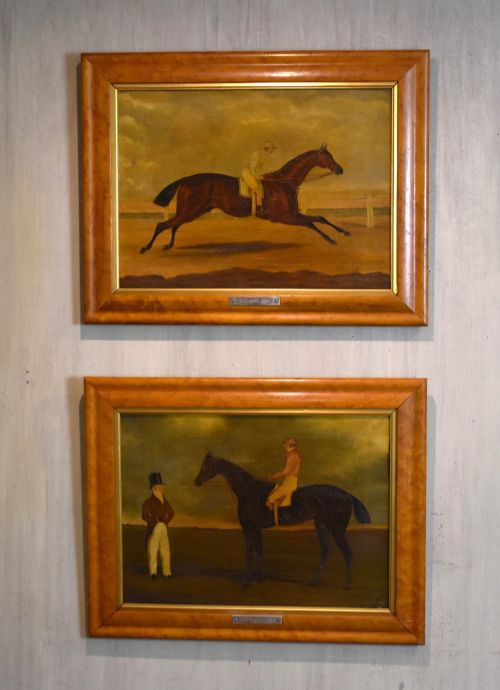
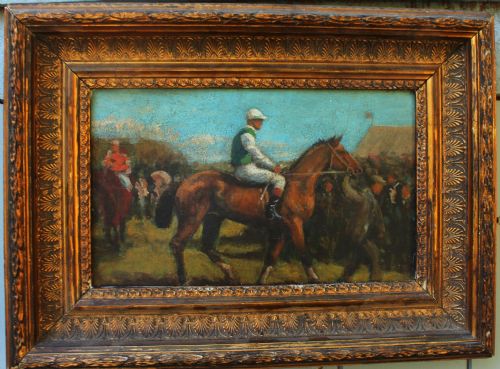
The pieces on this page range from Georgian and Victorian depictions to mid-century modern interpretations. Most works portray named thoroughbreds alongside their riders, capturing the atmosphere of the paddock and the final furlong.
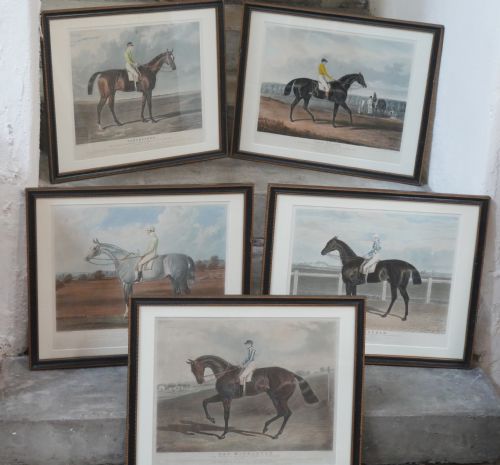
Mediums vary from detailed oil on canvas studies to vibrant gouache works on paper and chromolithographs. Collectors find both intimate preparatory sketches and finished framed prints documenting turf history.
Materials and techniques
Artists utilise oil paint on canvas or wooden panels to build rich textures and deep tones in traditional racing scenes. Many works employ pastel, gouache, and watercolour on paper to capture swift movement and fleeting light.
Prints and engravings rely on mechanical and hand-finished techniques, including chromolithography and aquatint, to reproduce detailed sporting compositions. Wood and glass typically enclose these pieces, protecting delicate paper and canvas surfaces.
Vintage Jockey Artwork Retail Price Guide 2026
Typical asking prices for vintage jockey artwork among the pieces listed under this phrase on Sellingantiques today, from the lower quarter to the upper quarter. They describe what is for sale here now, not the wider market.
Several vintage jockey artworks proudly record the exact names of legendary racehorses like Creeping Molly and Persimmon.
Factors of quality
Quality rests upon the artist's ability to render the anatomy and kinetic energy of both horse and rider accurately. Superior works display confident brushwork or precise draughtsmanship that conveys genuine motion rather than a stiff pose.
The provenance and documentation of the subject, such as named winning horses and documented jockeys, elevate a piece's historical significance. Original mediums like oil paintings and signed pastels command higher regard than mass-produced prints.
Ernest Payne·John Frederick Herring Snr·Alfred Munnings·John Rattenbury Skeaping·Gabriel Dauchot·Alfred Wheeler·John Atkinson·Isaac Cullin·Frank Giggs
The Vintage Jockey Artwork Glossary
- Aquatint
- A printmaking technique that produces tonal areas resembling watercolour washes. It was frequently utilised for 19th-century sporting prints.
- Chromolithography
- A colour lithographic printing method used to produce multi-coloured images. Victorian publishers employed this technique for magazine supplements and art prints.
- Gouache
- An opaque water-based paint that provides solid, vibrant colours. Artists use it on paper for detailed illustrative work.
- Paddock
- The enclosure where racehorses are saddled and paraded before a race. Many mid-century and Victorian oil studies focus on this setting.
Vintage Jockey Artwork: Frequently Asked Questions
What subjects appear in vintage jockey artwork?
These works primarily depict racehorses, named winning thoroughbreds, and their riders in competitive settings. Scenes range from portraits of famous turf champions to dynamic views of steeplechases and race paddocks.
Many pieces document specific historical events, famous courses such as Newmarket and Kempton Park, and portraits commissioned by prominent owners and patrons.
How do I date a piece of racing art?
Dating relies on stylistic clues, framing methods, inscriptions, and the historical records of the horses and jockeys depicted. Victorian and Georgian pieces often feature specific clothing styles, handwritten annotations, or traditional engraving techniques.
Twentieth-century works may showcase modernist influences, specific artist signatures, or materials characteristic of the 1900s through to the 1960s.
How were these artworks originally displayed?
Historical sporting art was traditionally hung in country houses, estate libraries, and racing club rooms to celebrate equestrian victories and lineage. Owners often displayed portraits of their own champion horses alongside depictions of famous historic races.
Today, collectors place these framed pieces in studies, living rooms, and hallways as a nod to traditional equestrian culture.
Are these pieces original paintings or prints?
The selection includes a mixture of unique hand-painted works and period reproduction prints. You will find original oil paintings, gouache studies, and pastels alongside aquatints, engravings, and chromolithographs.
Each listing specifies the exact medium used, allowing you to distinguish between a one-off painted canvas and a published print.