
Vintage Jewellery Watch
A vintage jewellery watch search uncovers a rich assortment of antique watch chains, fobs, and jewellery boxes spanning the Victorian and mid-century eras.
Vintage Jewellery Watch
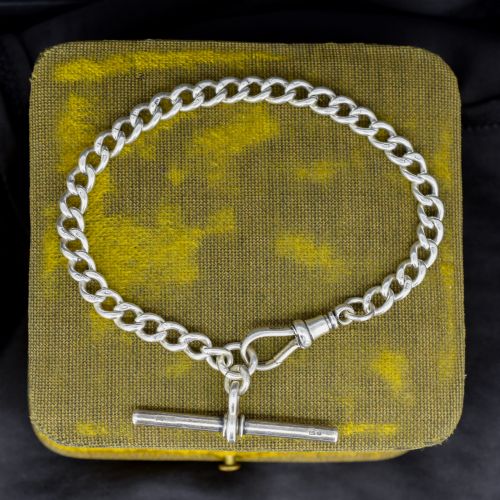
A vintage jewellery watch search primarily encounters functional pieces of nineteenth and twentieth-century horological dress, including pocket watch chains, albert chains, and spinning fobs. These items originate from periods such as the Victorian, Edwardian, and Art Deco eras, alongside mid-century additions.
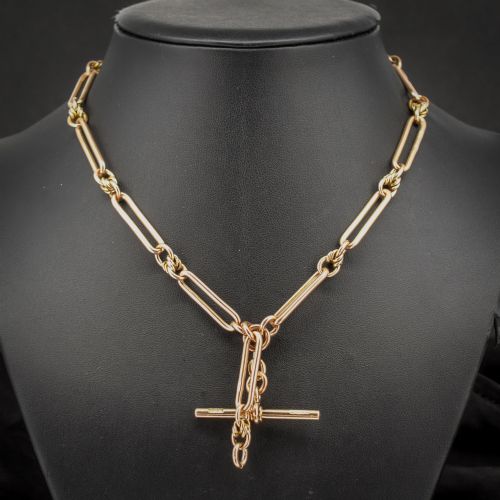
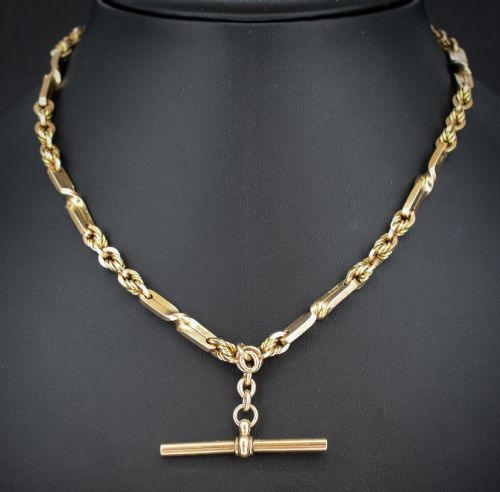
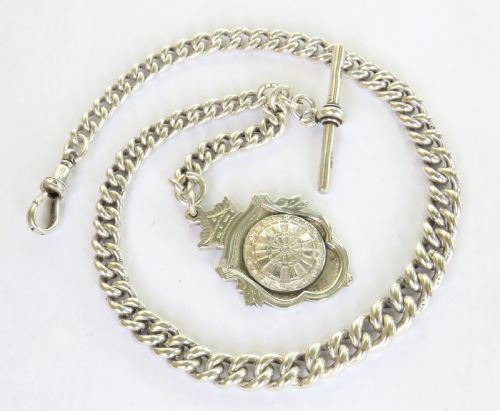
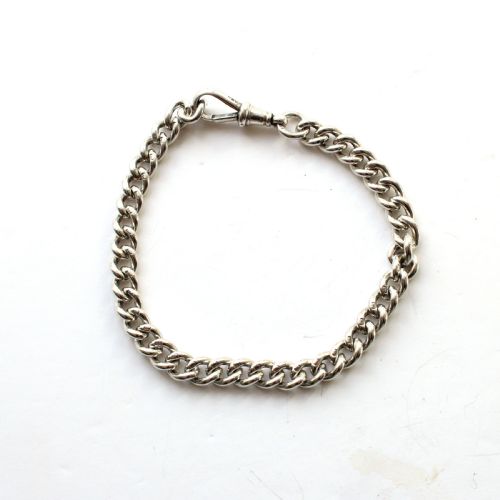
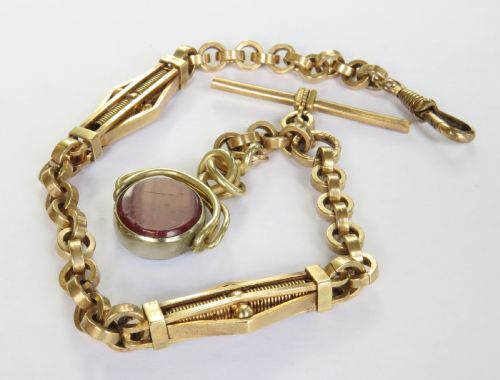
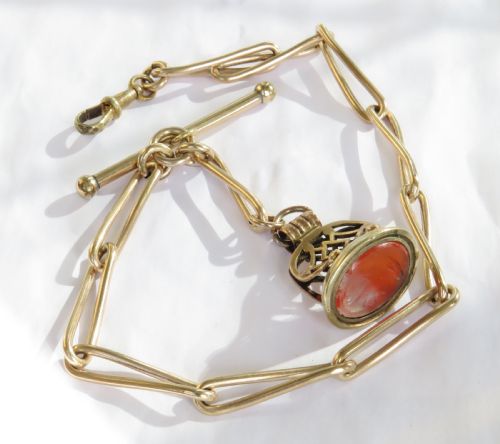
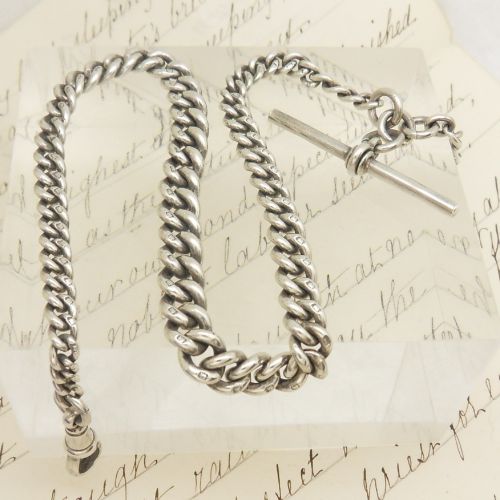
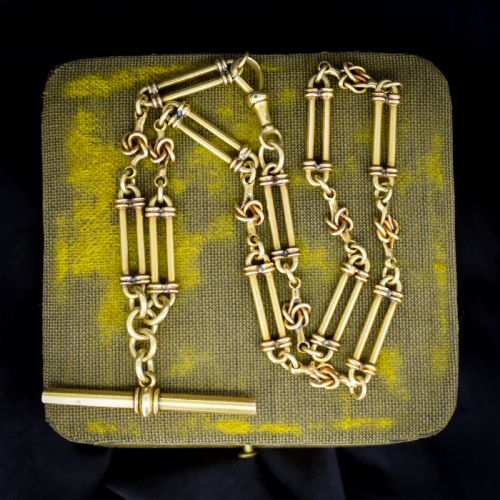
Buyers frequently meet items like 9ct gold curb link bracelets, silver pocket watch albert chains, and swivel fobs set with bloodstone or carnelian. Forms range from long guard chains and trombone link necklaces to specialised jewellery and cufflink cases.
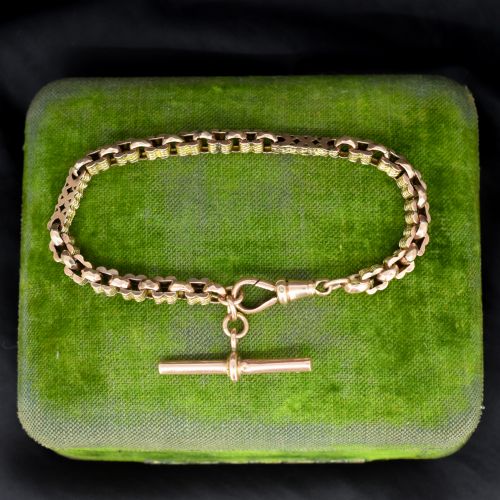
The selection reflects both solid precious metal work and rolled gold alternatives, often complete with original dog clips, T-bars, and charms. These utilitarian objects now function primarily as decorative necklaces or charm bracelets.
How they were made
Metals such as 9ct gold, 18ct yellow gold, sterling silver, and rolled gold form the structural basis of these chains and fobs, shaped into curb links, belcher links, and intricate trombone patterns. Hallmarks stamped into the metal provide official records of assay towns and production dates.
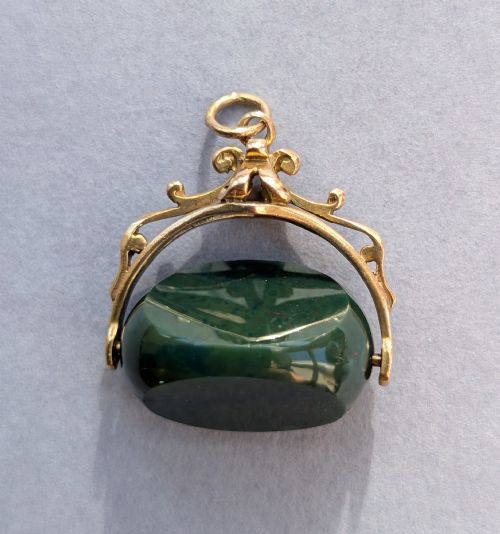
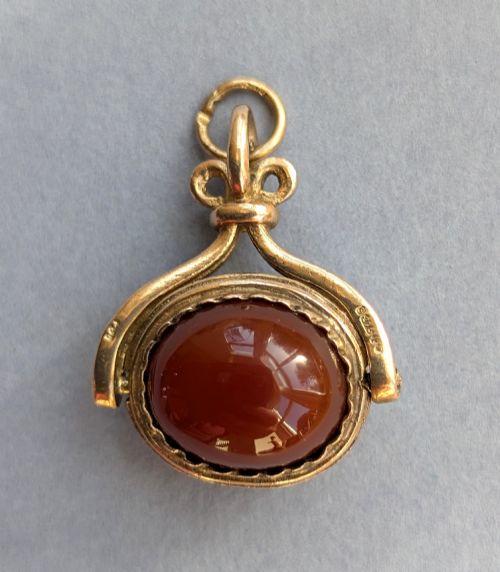
Decorative elements incorporate natural hardstones like bloodstone and carnelian, mounted in spinning fobs that allow the wearer to display either face. Leather and specialised wooden construction define storage pieces like crocodile leather cases and mahogany boxes.
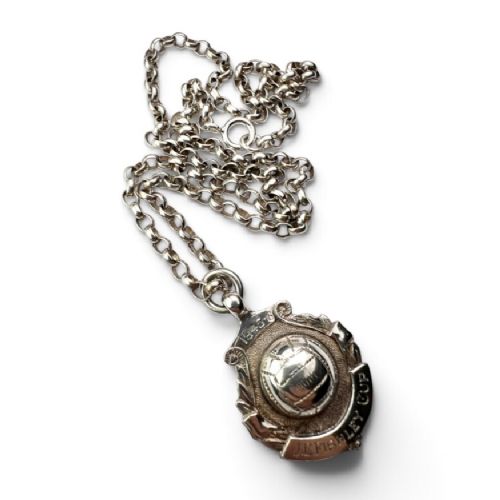
Object forms on this page include pocket watch albert chains, spinning fobs, cufflink cases, and charm-laden bracelets.
What varies in quality
The degree of preservation in individual links, swivel mechanisms, and dog clips determines the integrity of each chain. Substantial weight and solid metal construction separate robust daily wear items from lighter rolled gold pieces.
Completeness of original components, such as matching T-bars, functional spinning mounts, and legible Hallmarks on every individual link, distinguishes the finer examples from altered or assembled pieces.
The Vintage Jewellery Watch Glossary
- Albert chain
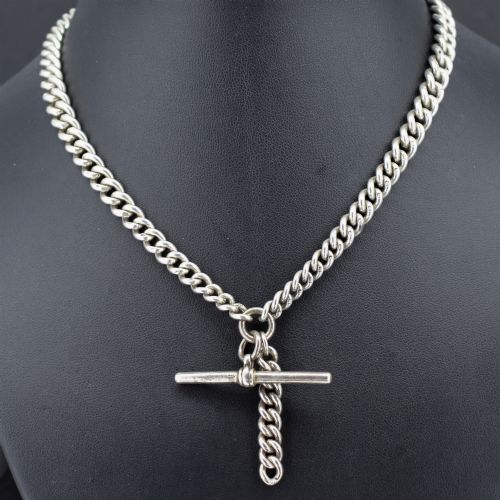
- A short length of chain designed to attach a pocket watch to a waistcoat, featuring a T-bar at one end and a swivel clasp at the other. These chains are frequently worn today as necklaces or wrap bracelets.
- Dog clip
- A spring-loaded snap hook attached to watch chains and bracelets for securing fobs, pendants, or pocket watches. This mechanism allows for quick attachment and removal.
- Spinning fob
- A small pendant mounted on a swivel axis, typically holding two different hardstones such as bloodstone and carnelian. The wearer rotates the stone to display the desired face.
- T-bar
- A short transverse bar attached to the end of a watch chain, designed to slip through a buttonhole to anchor the chain securely. It remains a defining feature of albert chains converted into necklaces.
- Trombone link
- A specific watch chain link style formed by alternating elongated rectangular loops with smaller round or decorative connecting links. This pattern creates a distinctive geometric rhythm along the length of the chain.
Vintage Jewellery Watch: Frequently Asked Questions
How do I wear an antique watch chain?
Antique watch chains, such as albert chains, adapt easily into modern necklaces or wrap bracelets by utilising their existing dog clips and T-bars.
Many collectors wear them at various lengths by fastening the clasp to different links along the chain.
What is a spinning fob used for?
Spinning fobs were originally worn on watch chains as decorative seals or markers, featuring two distinct gemstone faces mounted on a swivel axis.
Victorian and Edwardian gentlemen utilised them to display initials, coats of arms, or contrasting stones like bloodstone and carnelian.
How can I date my silver watch chain?
British silver watch chains often carry hallmarks stamped directly onto the links or the T-bar, indicating the assay office, metal purity, and date letter.
Matching these stamped letters against historical assay records reveals the precise year of manufacture.
What is the difference between solid gold and rolled gold?
Solid gold pieces consist of uniform precious metal throughout their entire structure, offering lasting durability and intrinsic material value.
Rolled gold involves a layer of gold mechanically bonded to a base metal core, providing a similar visual appearance with lighter weight.