



Vintage Jewellery Display
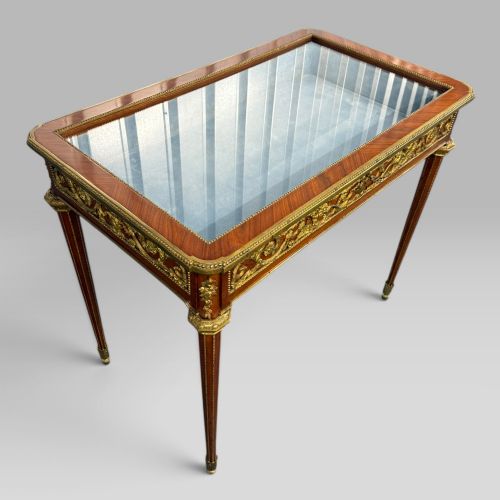
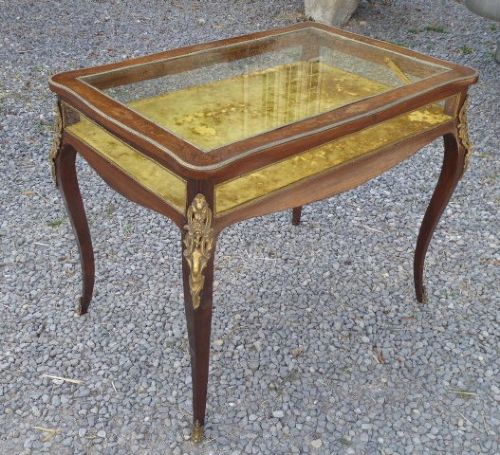
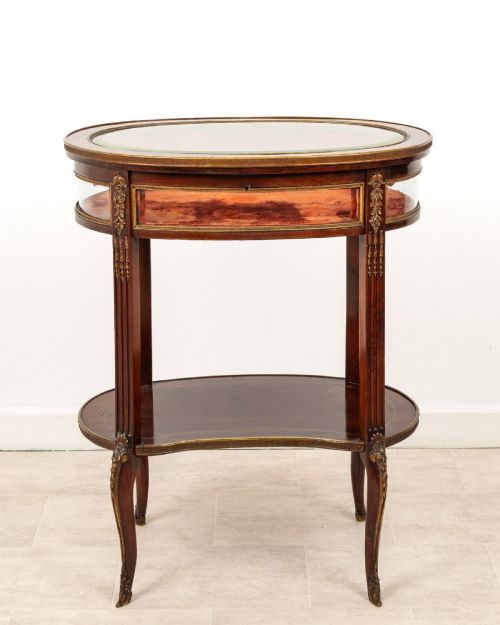
Vintage jewellery display pieces range from glazed countertop cabinets to mahogany bijouterie tables, designed to protect and present small treasures.
Vintage Jewellery Display
When you search for vintage jewellery display, you find pieces intended for both domestic interiors and retail counters. The selection includes bijouterie tables, vitrines, and tabletop display cabinets originating from the nineteenth and twentieth centuries.
The most common forms on this page are Edwardian mahogany display tables and glazed cabinets. Continental variations, such as French Louis XVI style bijouterie tables, also appear alongside industrial items like aluminium glove moulds.
Makers and workshops from England, France, and America produced these fixtures in oak, satinwood, and ebonised timber. They served jewellers, merchants, and collectors who needed secure glass enclosures to showcase precious objects.
Materials and Construction
Makers relied heavily on solid and veneered mahogany, oak, and kingwood to build the structural frames of these display cases. Glazed panels formed the viewing areas, allowing light to enter from the top or sides while keeping contents secure under lock.
Ormolu mounts, brass fittings, and velvet linings added decorative contrast and interior protection for delicate items. Marquetry inlay appeared on finer tables, while simpler commercial counters utilised straightforward timber framing and glass tops.
Vintage Jewellery Display Retail Price Guide 2026
Typical asking prices for vintage jewellery display among the pieces listed under this phrase on Sellingantiques today, from the lower quarter to the upper quarter. They describe what is for sale here now, not the wider market.
Several tables carry later sign-written details for Breitling watches, bridging decades of retail history.
Quality and Execution
The standard of a vintage jewellery display depends upon the crispness of its timber mouldings and the retention of original glass and hardware. Fine examples show careful timber selection, such as figured mahogany or satinwood, paired with detailed brass or ormolu casting.
Simpler shop counters demonstrate robust joinery suited for daily commercial use rather than ornamental refinement. The presence of period locks, keys, and untouched velvet linings distinguishes better preserved survivals from heavily altered pieces.
François Linke·Quincy Showcase Works·Josef Herzog
The Vintage Jewellery Display Glossary
- Bijouterie table
- A glass-topped table specifically designed for displaying small ornaments, trinkets, and jewellery. These pieces usually feature a hinged lid that opens upwards.
- Vitrine
- A glass display cabinet used for protecting and exhibiting objects of vertu. They range from small tabletop versions to large freestanding floor cabinets.
- Ormolu
- Gilt bronze ornamentation applied to furniture and decorative objects. It provides a bright metallic contrast against dark woods like mahogany.
- Kingwood
- A dense, richly figured timber often used as a veneer in cabinet making. It frequently appears on continental display tables from the nineteenth century.
- Marquetry
- The art of applying pieces of veneer to a structure to form decorative patterns. Craftsmen utilised various coloured woods to create pictorial designs on tabletops.
Vintage Jewellery Display: Frequently Asked Questions
What is a bijouterie table?
A bijouterie table is a low glazed table designed to exhibit small valuable items beneath a glass top. They became popular in the nineteenth and early twentieth centuries for domestic drawing rooms.
Users lifted the hinged glass lid to arrange rings, brooches, and pocket watches on the fabric lining inside.
How do I date a display cabinet?
Dating relies on timber choice, construction methods, and decorative styles visible on the frame. Edwardian pieces often use inlaid mahogany, while earlier nineteenth-century items display heavier proportions and simpler glazing bars.
Hardware such as brass hinges and locks also provides clues to the manufacturing decade.
Were these used in shops or homes?
These pieces served both commercial storefronts and private domestic interiors. Countertop cabinets and trade signs belonged in jewellers' shops to merchandise pocket watches and rings.
Bijouterie tables and vitrines stayed in parlours so collectors could show off curated items to guests.
What woods are common in these displays?
Mahogany is the predominant timber found across these listings, appearing in both simple shop counters and refined drawing-room tables. Other woods include oak, satinwood, ebonised timber, and kingwood veneers.
Cabinet makers selected these hardwoods for their strength and ability to take fine polished finishes.