







Vintage Japanned Tray
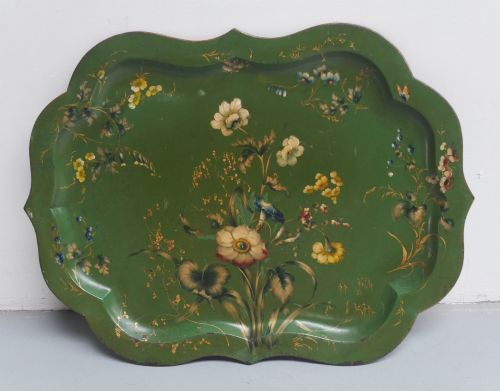
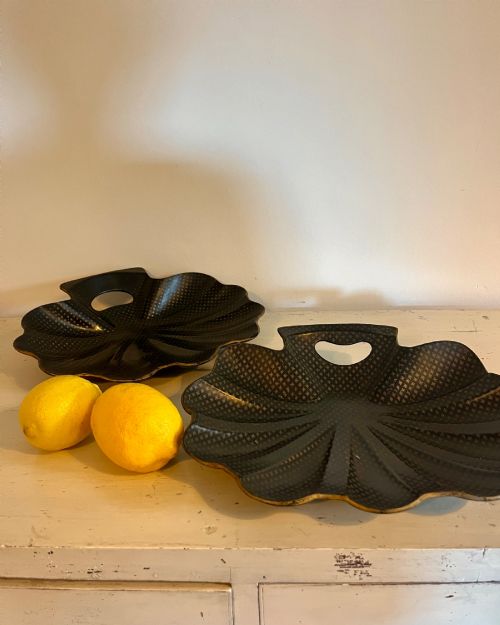
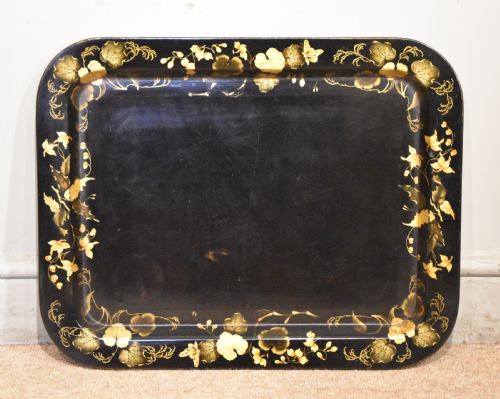
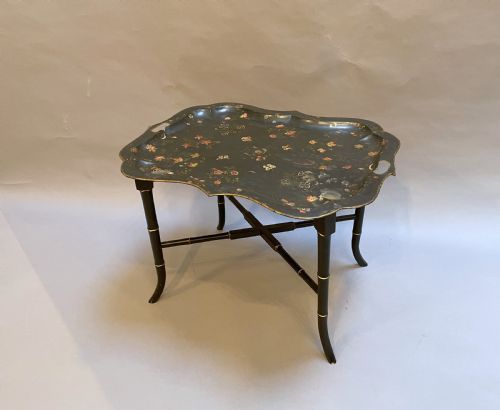
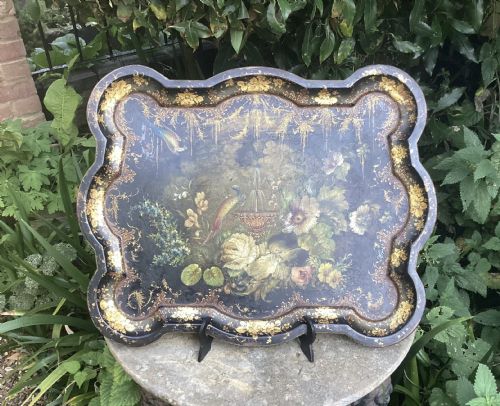
These vintage japanned tray examples bring dark lacquer and gilt Chinoiserie decoration directly to the table.
Vintage Japanned Tray
A vintage japanned tray combines painted lacquer surfaces with deep historical forms from the Regency and Victorian periods, often taking the shape of serving trays or larger decorative items. Buyers searching this phrase encounter substantial pieces fashioned from papier-mâché and sheet iron, frequently displaying intricate Chinoiserie motifs and gilded borders.
The objects span the nineteenth century, including shaped items, kidney-shaped serving pieces, and larger formats adapted onto stands as side tables or coffee tables. Many items reflect the dark, lustrous finishes characteristic of nineteenth-century European interpretations of Eastern lacquerwork.
Beyond traditional serving wares, the selection extends to related forms like desk sets, letter racks, and game boards sharing the same dark japanned or painted lacquer vocabulary. These pieces offer functional utility alongside strong visual presence in a room.
Materials and construction
Makers utilised papier-mâché and sheet iron, known as toleware, as the primary rigid bases for these painted objects. Papier-mâché provided a light yet robust surface for large serving pieces, while sheet iron suited smaller bowls and trays.
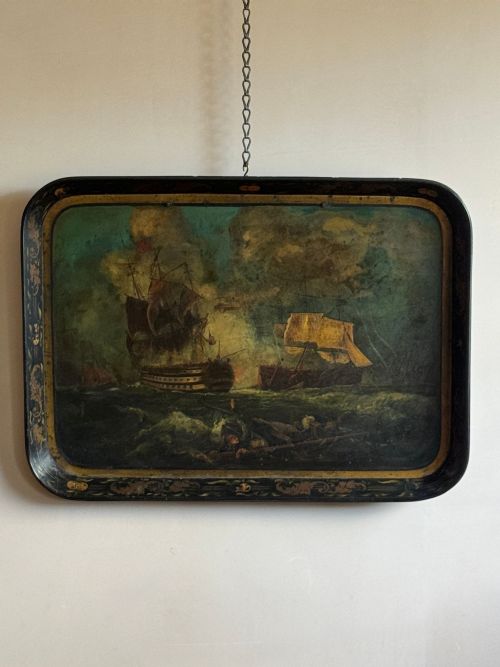
Workers applied layers of dark lacquer and paint to build a deep, reflective ground before adding gold leaf and detailed gilding. Artisans frequently painted specific figural scenes, hunting subjects, or classical narratives directly onto the dark surfaces.
Vintage Japanned Tray Retail Price Guide 2026
Typical asking prices for vintage japanned tray among the pieces listed under this phrase on Sellingantiques today, from the lower quarter to the upper quarter. They describe what is for sale here now, not the wider market.
Some trays preserve centuries-old hunting scenes and literary narratives, letting a stray hound watch over your afternoon tea.
Evaluating quality and execution
The refinement of the hand-painted details and the crispness of the gold leaf application distinguish superior examples from simpler utilitarian pieces. Artisans who executed detailed figurative scenes or complex Chinoiserie landscapes achieved a higher artistic standard than those producing repetitive geometric or floral borders.
The integrity of the underlying papier-mâché or metal sheet dictates the structural soundness of the object. Pieces retaining their original curved edges, stable lacquer layers, and intact gilding represent the more accomplished survivals of the period.
H. Meeson
The Vintage Japanned Tray Glossary
- Japanned
- European imitation of East Asian lacquerwork, created by applying successive coats of varnish and paint to a base material. This technique produces a dark, glossy finish often decorated with gold highlights.
- Papier-mâché
- A composite material made from paper pulp or layers of paper bound with glue, pressed and dried into a rigid form. It allowed makers to shape large, lightweight serving trays with smooth surfaces.
- Toleware
- Painted or enamelled sheet metal objects produced in Europe during the eighteenth and nineteenth centuries. The metal serves as a durable base for dark japanned finishes and gilded decoration.
- Gilding
- The application of gold leaf or gold powder to a surface to create decorative borders and highlights. On these objects, it frames the central painted scenes.
Vintage Japanned Tray: Frequently Asked Questions
How do I care for papier-mâché trays?
Keep papier-mâché and painted trays away from direct sunlight and damp environments to protect the delicate lacquer surface. Dust them gently with a dry, soft cloth rather than using liquid cleaners.
If placed on a stand as a table, avoid resting heavy objects or hot liquids directly on the fragile painted finish.
How do I date a toleware tray?
Dating relies on examining the specific weight and composition of the sheet metal alongside the style of the painted decoration. Regency examples often display crisp gilt borders, while later Victorian pieces lean toward varied floral or figurative subjects.
Construction marks and the specific formulation of the dark paint layers also help indicate the period of manufacture.
Were these trays meant for serving?
Many nineteenth-century pieces served functional roles in wealthy households for carrying tea or glasses. Their robust papier-mâché or metal construction handled daily domestic use.
Others functioned purely as decorative objects or desk accessories, reflecting the refined tastes of the period.