



Vintage Japanese Chest
These vintage japanese chest selections offer sturdy storage and traditional craftsmanship rooted in the nineteenth, early twentieth, and Taisho periods.
Vintage Japanese Chest
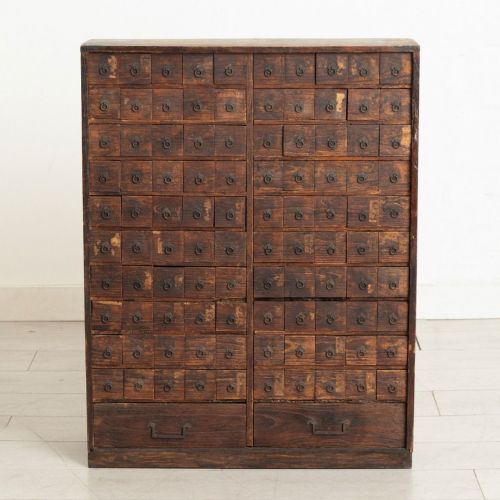
A vintage japanese chest brings historical utility into modern interiors, encompassing diverse forms such as the tansu cabinet, apothecary bank of drawers, and merchant chest. Buyers searching for a vintage japanese chest encounter sturdy storage solutions originally designed for specific domestic or commercial tasks in nineteenth-century and early twentieth-century Japan.
The pieces listed on this page predominantly feature traditional Japanese construction styles, including wheeled kuruma-dansu, kitchen mizuya storage, and table-top kodansu cabinets. Most examples originate from the Meiji, Taisho, and broader nineteenth-century periods, reflecting the practical domestic architecture of those eras.
Every vintage japanese chest serves as both a functional storage unit and a distinct historical object, whether configured as a ship's tansu or a compact black lacquered table cabinet. The selection focuses on wooden cabinetry equipped with functional drawers and compartments rather than modern reproductions.
Materials and construction methods
Construction relies heavily on native timbers such as keyaki wood, elm, cedar, and general wood structures that provide durability and structural integrity. Cabinet makers utilised these robust woods to build heavy storage units designed to withstand daily use.
Hardware elements like iron, brass, and copper reinforcement brackets, side handles, and key plates secure the structural joints while adding functional detail. Surface finishes incorporate black lacquer alongside natural wood treatments to protect the timber and define the exterior appearance.
Vintage Japanese Chest Retail Price Guide 2026
Typical asking prices for vintage japanese chest among the pieces listed under this phrase on Sellingantiques today, from the lower quarter to the upper quarter. They describe what is for sale here now, not the wider market.
Some storage boxes spent their early days guarding precious Japanese porcelain plates instead of merchant ledgers.
Distinguishing quality in storage cabinetry
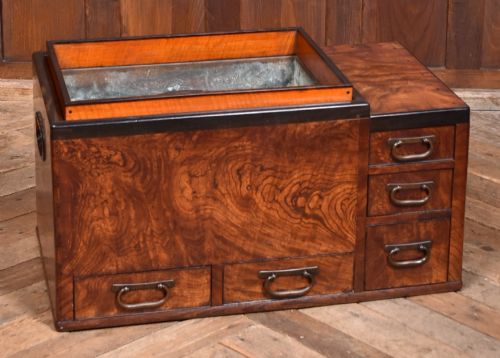
Quality differences emerge through the selection of primary timbers, where dense grain woods like keyaki command greater appreciation for their strength and finish. The intricacy and preservation of metal hardware, from iron straps to brass mounts, separate standard utility pieces from more refined examples.
The integrity of surface treatments, particularly the depth of black lacquer or the preservation of natural elm and cedar grain, influences the overall character of each cabinet. Furthermore, the complexity of internal drawer arrangements and the retention of original locking mechanisms dictate the sophistication of individual pieces.
The Vintage Japanese Chest Glossary
- Tansu
- A traditional Japanese mobile chest of drawers or storage cabinet used for various domestic purposes. These units often feature robust iron or copper hardware and specialised internal compartments.
- Keyaki
- A species of Japanese zelkova timber valued for its dense grain and durability in traditional cabinet making. It frequently appears in high-status merchant chests and storage furniture.
- Hibachi
- A traditional Japanese heating device or brazier, often constructed with wooden frames and metal linings. It serves as a container for burning charcoal to provide warmth or heat water.
- Kodansu
- A small portable table cabinet featuring multiple drawers and compartments for storing valuables or documents. These miniature pieces mirror the construction methods of larger tansu chests.
- Mizuya
- A traditional Japanese kitchen storage cabinet utilised for holding culinary utensils, food items, and tableware. These large storage units form a key part of domestic Japanese furniture history.
Vintage Japanese Chest: Frequently Asked Questions
How were these cabinets used?
These cabinets served specific domestic and commercial functions, ranging from kitchen storage to merchant accounting and general household organisation. Apothecary banks held medicinal ingredients, while ship's chests stored valuables during transit.
Each form was tailored to its environment, utilising sturdy woods and iron reinforcement to protect contents during daily use or transport.
How do I care for wooden cabinets?
Maintain these wooden cabinets by placing them away from direct sunlight and extreme temperature fluctuations that can dry out the timber. Dust them gently with a dry cloth and avoid harsh chemical cleaners.
Preserving the original surface finish, whether lacquered or natural wood, ensures the longevity of the vintage materials.
What periods do these pieces span?
The available items span the nineteenth century, the Meiji period, and the Taisho period, extending into the early decades of the twentieth century. These eras encompass traditional Japanese craftsmanship before widespread industrialisation.
Each period exhibits distinct characteristics in hardware design, timber selection, and cabinet proportions.