



Vintage Iron Log Holders
Vintage iron log holders are robust hearth accessories designed to store firewood neatly by the fire, bringing industrial utility and period character to a room.
Vintage Iron Log Holders
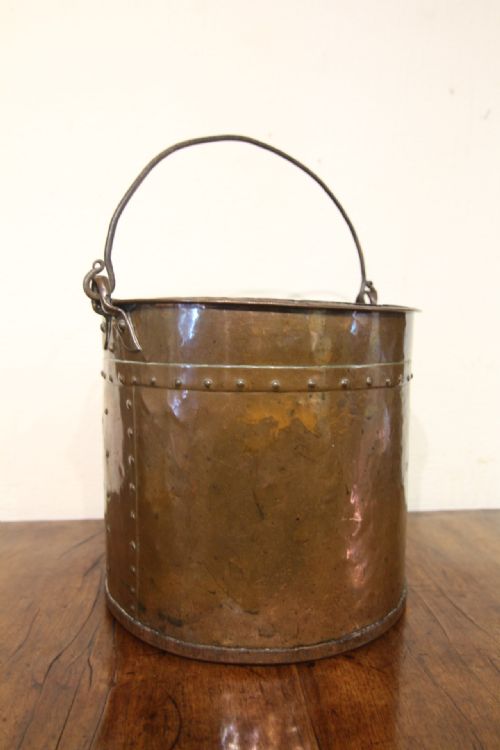
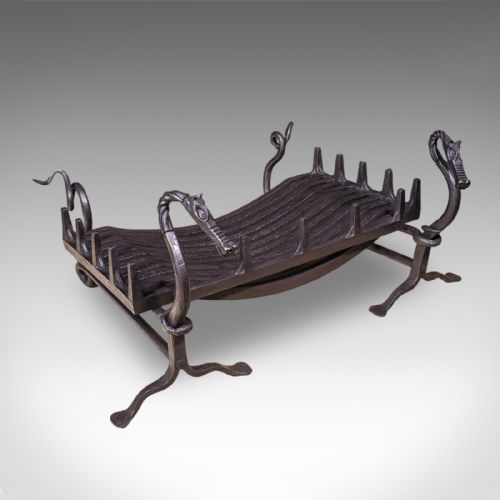
When you search for vintage iron log holders, you encounter a robust selection of utilitarian hearth furniture and adapted vessels from the nineteenth and early twentieth centuries. These pieces encompass blacksmith-made carriers, copper bins in iron frames, and heavy fire baskets designed to manage solid fuel.
The inventory on this page draws heavily from Victorian, Edwardian, and Arts and Crafts periods, featuring materials like wrought iron, sheet iron, and cast iron. Many items serve multiple fireside functions, doubling as coal buckets, scuttles, and cauldrons.
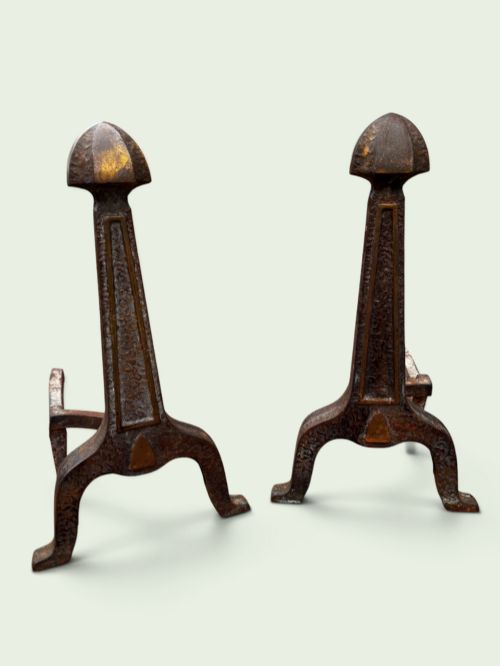
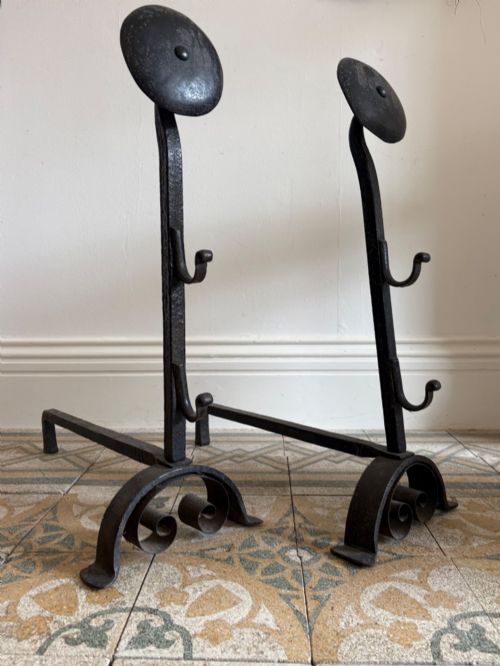
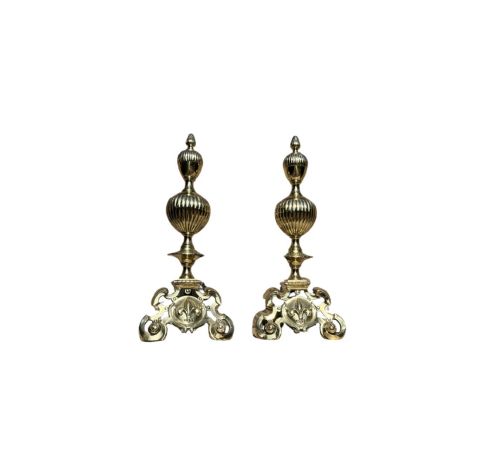
You also discover architectural fire dogs and andirons that frame the hearth, alongside rustic garden buckets and industrial measures repurposed for log storage. Each object reflects the heavy-duty metalworking traditions of its era.
How they were made
Blacksmiths forged these items by hand from wrought iron and cast iron, creating durable frames, handles, and structural supports designed to bear heavy loads of wood and coal. Riveting joined sheet iron and copper bodies to iron bases, ensuring structural integrity during daily use.
Makers incorporated non-ferrous metals like brass and copper for containers and accents, pairing them with iron swing handles, frames, and trim. Oak barrels and coopered staves occasionally formed the body of log bins, banded securely with iron hoops.
Listings feature items spanning the Georgian period through the 1930s, utilising wrought iron, copper, brass, and oak.
What varies in quality
The distinction between standard utility items and finer pieces lies in the hand-forged details of the ironwork and the thickness of the metal. Superior examples display careful blacksmithing, balanced proportions, and integrated decorative motifs rather than purely mass-produced assembly.
Material selection and original preservation dictate the standing of a piece within its type. Heavy-gauge copper riveted to solid iron frames, intact patination, and robust structural joinery elevate items from simple storage vessels to accomplished examples of period metalwork.
The Vintage Iron Log Holders Glossary
- Andirons
- Supports placed on hearths to raise firewood and improve airflow beneath logs. They frequently feature decorative front columns and robust iron billets extending backward.
- Cauldron
- A large metal pot with a wide rim, often fitted with a wrought iron swing handle for suspension or transport. These vessels appear frequently in copper and iron.
- Coal Scuttle
- A container specifically designed for holding and carrying coal to the fire. They often incorporate shovels and drop handles.
- Fire Basket
- An iron grate that holds burning fuel within a fireplace opening. They range from simple utilitarian bars to ornate Arts and Crafts designs.
- Wrought Iron
- Tough, malleable iron that is hammered and shaped by hand while hot. This material resists shock and fatigue, making it ideal for load-bearing hearth hardware.
Vintage Iron Log Holders: Frequently Asked Questions
What is the difference between an andiron and a log holder?
Andirons stand permanently inside the fireplace opening to support logs for burning and maintain airflow beneath the fire.
Log holders and bins remain beside the hearth to store reserve fuel wood and keep the surrounding floor tidy.
How do I care for antique iron log holders?
Keep iron surfaces dry and apply a light coat of microcrystalline wax or paste wax to protect the metal from atmospheric moisture and surface rust.
Avoid using harsh chemical cleaners on copper and brass components to preserve their historic patinas and original surface finishes.
Can these pieces be used outside the fireplace?
Many of these vessels adapt easily to alternative domestic uses such as umbrella stands, plant holders, and general storage bins.
Their robust iron construction and generous proportions make them practical additions to hallways, boot rooms, and gardens.
How can I tell the period of an iron log holder?
Examine the construction marks, joint types, and fastener styles, such as hand-forging versus machine rolling, to establish an approximate date.
Stylistic indicators like Gothic Revival elements, Arts and Crafts simplicity, or Victorian brass detailing help narrow the era of manufacture.