


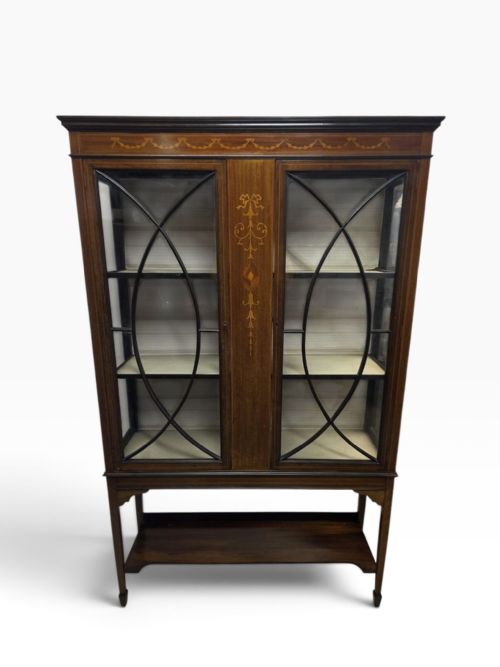
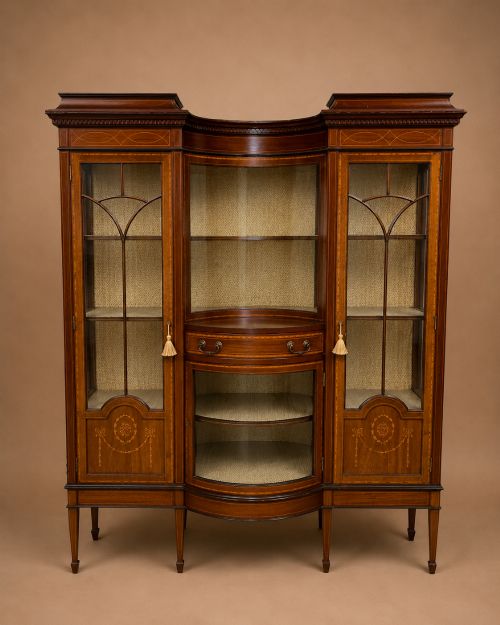
Vintage Inlaid Cupboard
A vintage inlaid cupboard brings together practical storage and fine decorative craft, offering character and utility to any room.
Vintage Inlaid Cupboard
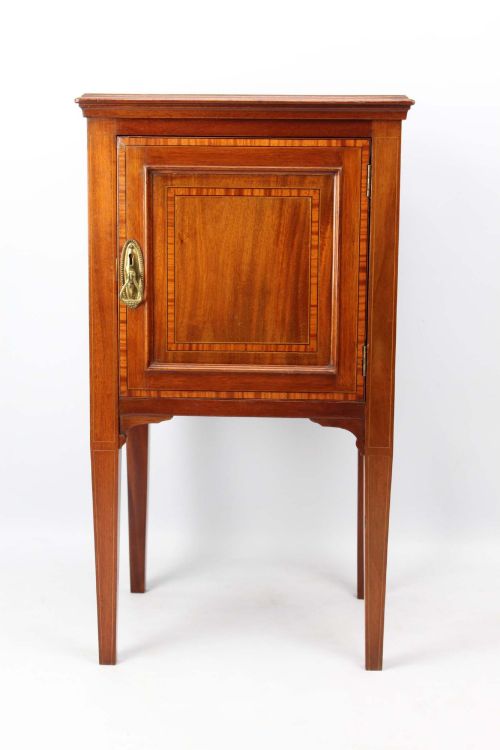
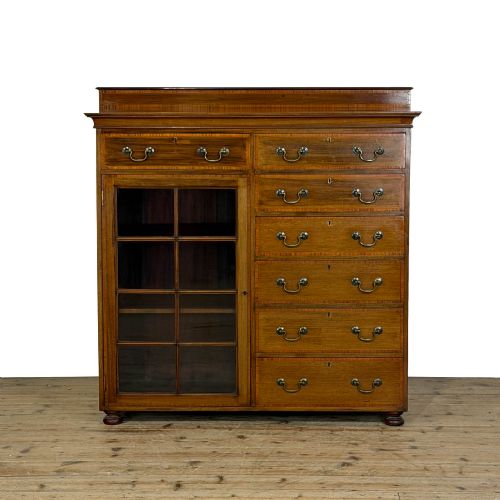
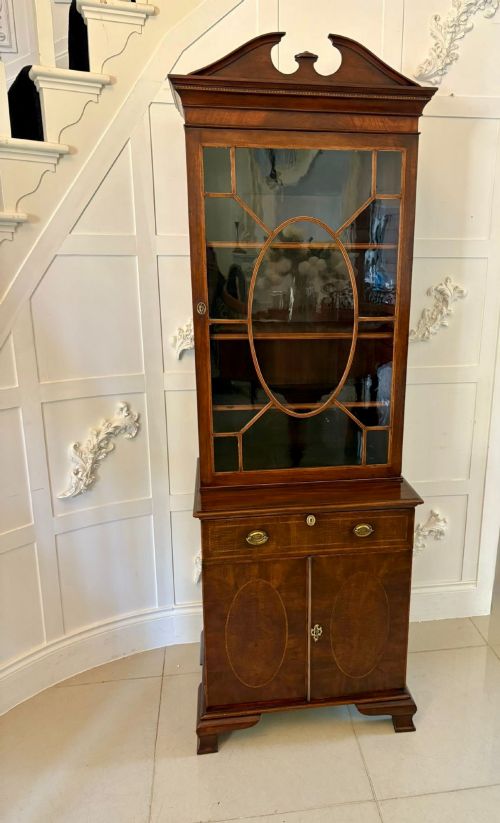
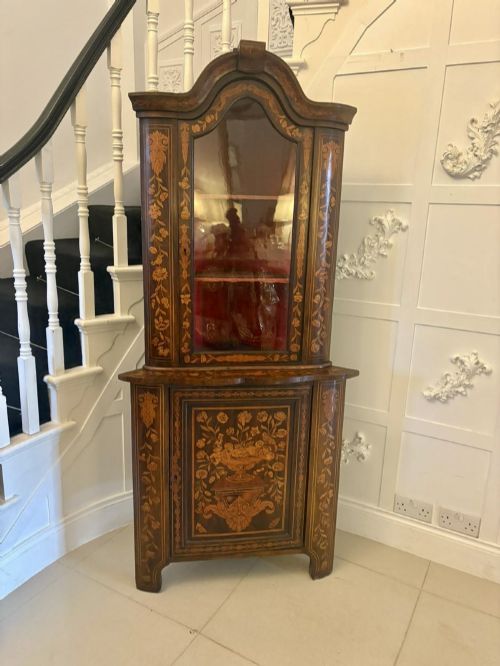
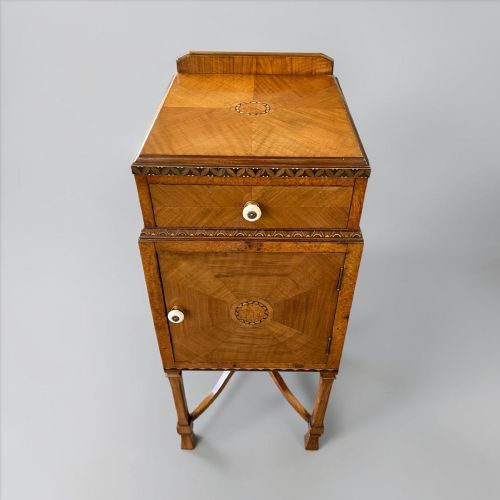
A vintage inlaid cupboard is a piece of case furniture designed to store linen, books, clothing, or display objects while featuring ornamental woodwork set into the primary timber. When searching for a vintage inlaid cupboard, buyers encounter forms ranging from compact bedside cabinets and corner cupboards to large wardrobes, linen presses, and display cabinets.
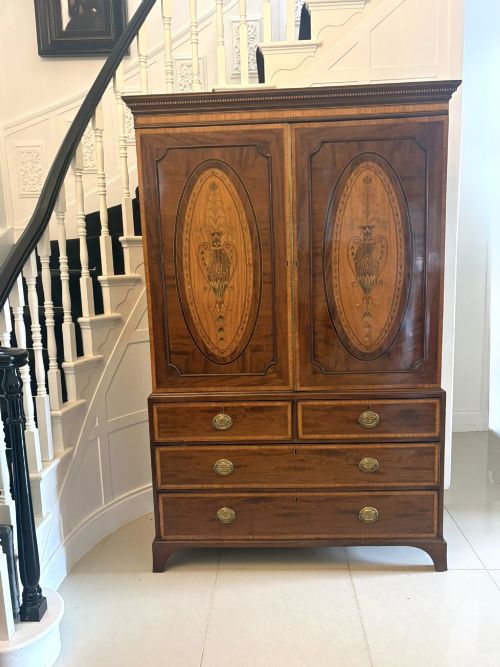
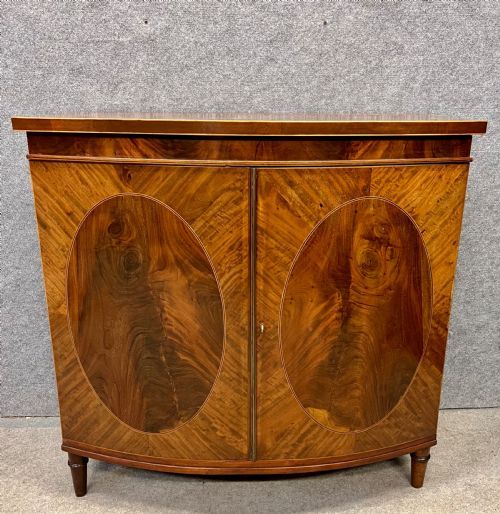
The pieces appearing on this page span the Edwardian and Victorian eras through to the Art Deco period, alongside earlier influences from the Georgian and Louis XVI styles. Edwardian mahogany and satinwood examples built around nineteen hundred are particularly common, often displaying Sheraton Revival motifs or delicate stringing.
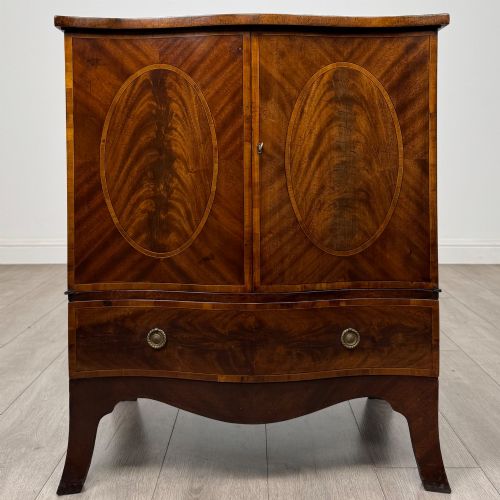
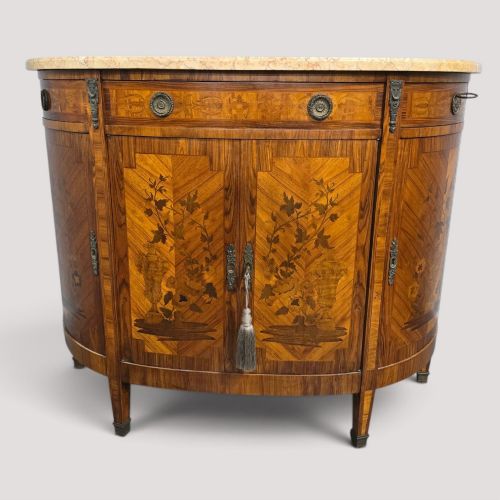
Beyond standard upright storage, the selection encompasses serpentine fronts, demi-lune sideboards, and glass-fronted display cases. Origins stretch across English workshops as well as French, Dutch, and Swedish makers, incorporating regional woods and distinct marquetry patterns.
Materials and construction
Makers built these carcases primarily using mahogany, walnut, oak, and pine, often selecting figured timbers like flame mahogany, rosewood, and burr walnut for the main surfaces. Secondary contrasting woods such as satinwood, boxwood, and various fruitwoods provided the pale tones necessary for detailed pictorial or geometric inlay.
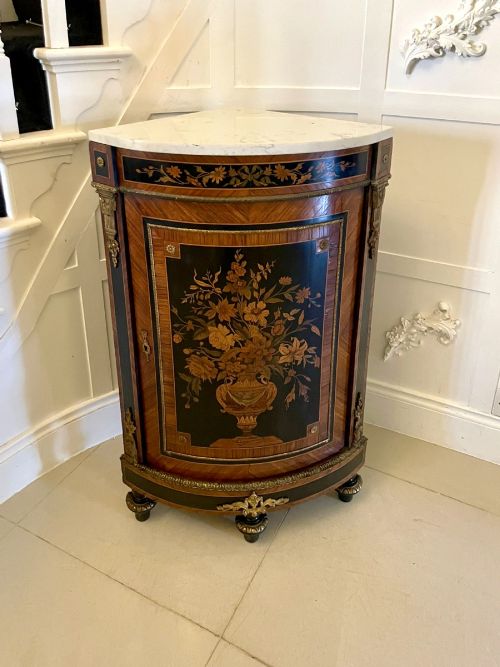
Craftsmen applied decorative elements through marquetry, where tinted or natural veneers formed pictorial scenes and floral scrolls, or via simpler stringing and banding inlaid directly into routed channels. Brass handles, glass panels, and occasionally marble tops completed the construction, uniting structural joinery with decorative surface work.
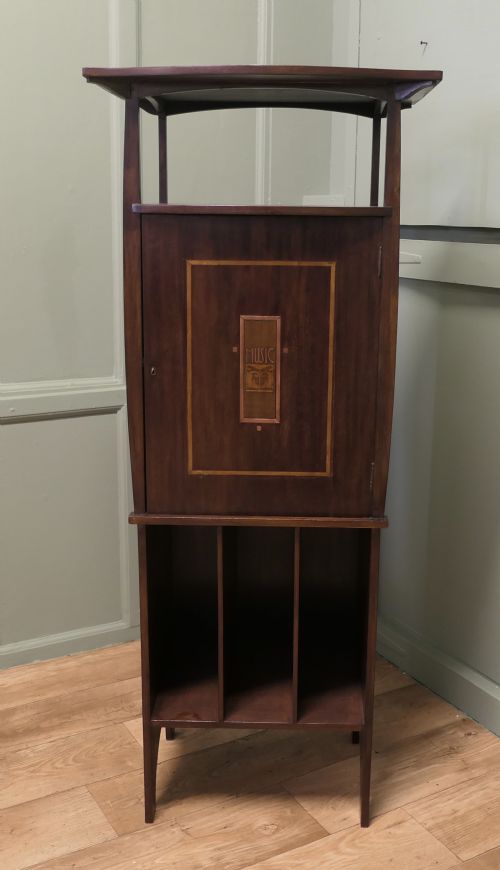
Corner cupboards and bedside tables appear in significant numbers, alongside larger wardrobes, linen presses, and display cabinets.
Distinctions in quality
Quality in these pieces rests upon the precision of the cabinetmaking and the crispness of the inlay work rather than the mere presence of decoration. Superior examples demonstrate tight, flush joints where contrasting veneers meet the primary timber without gaps, alongside well-figured grain chosen specifically for the door panels and drawer fronts.
The underlying structure dictates longevity, with higher-tier pieces employing solid secondary woods for drawer linings and robust carcase frames that prevent warping. Furthermore, the finesse of hand-carved mouldings, original brass hardware, and balanced proportions separate standard production items from workshop pieces created by notable cabinetmakers.
GM Elwood for JS Henry·maples & co·Morant & Co. London·Walter Carter Harrods·Maurice Jallot
The Vintage Inlaid Cupboard Glossary
- Marquetry
- A decorative technique where small pieces of veneer are assembled into pictorial or geometric patterns on a paper backing before being glued to the carcase. This method allowed makers to create complex floral sprays and architectural scenes across cabinet doors.
- Satinwood
- A pale, lustrous hardwood native to Ceylon and the West Indies, prized for its yellow sheen and reflective grain. It was frequently used for banding, stringing, or as the primary timber in high-status Edwardian display cabinets.
- Linen Press
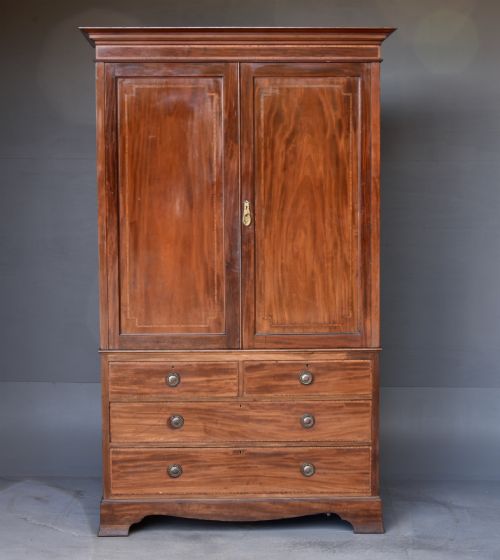
- A tall piece of furniture featuring upper doors enclosing sliding trays for folded textiles, placed above a base of wider drawers. Eighteenth and nineteenth-century examples often combined mahogany construction with satinwood inlay.
- Demi-Lune
- A half-moon shape used for the footprint and top of console tables, sideboards, and small cabinets. This curved form required skilled carpentry to fit drawers and doors along the radius.
- Stringing
- Thin lines of contrasting wood inlayed into channels cut into the surface of a panel to create a border. Cabinetmakers utilised boxwood or ebony stringing to outline drawers, tabletops, and door fronts.
Vintage Inlaid Cupboard: Frequently Asked Questions
What is a vintage inlaid cupboard used for?
These cabinets serve multiple domestic roles depending on their specific form, from bedside storage for lamps and personal items to grand wardrobes and linen presses for clothing. Corner cupboards and display cabinets additionally provide space to exhibit china or books while utilising awkward angles in a room.
Smaller pieces adapt easily as lamp tables or hallway units, whereas larger wardrobes and armoires remain functional as primary bedroom storage. The combination of enclosed shelving and decorative surfaces allows them to act as focal points while concealing everyday clutter.
How do I date an inlaid cabinet?
Dating relies on observing the combination of primary woods, interior construction methods, and stylistic motifs present in the piece. Edwardian items often feature lighter satinwood highlights and Sheraton Revival neoclassical elements, while mid-nineteenth-century examples tend to utilise heavier Victorian proportions and darker mahogany.
Construction details such as drawer dovetails, backboards, and hinge types provide further chronological clues. Machine-sawn timber indicates later Victorian or Edwardian production, whereas hand-cut elements point towards eighteenth or early nineteenth-century origins.
Are these pieces made of solid wood?
Most cabinets utilise a combination of solid timber frames and stable core woods veneered with choice decorative hardwoods. This construction method prevented the shrinkage and warping that often occurred when wide boards of figured mahogany, walnut, or satinwood were exposed to shifting household temperatures.
Secondary woods like pine, oak, or mahogany typically form the interior carcases, drawer linings, and back panels. Examining the edges and interior surfaces reveals how the maker balanced structural stability with decorative exterior veneers.
How do I care for a vintage cabinet?
Maintaining these pieces requires placing them away from direct sunlight and strong heat sources to prevent the wood from drying and the veneer from lifting. Consistent indoor humidity levels help protect both the primary timber and the delicate inlaid stringing.
Routine care involves dusting with a soft, dry cloth rather than applying silicone-based polishes that can degrade historical finishes. Occasional applications of traditional beeswax nourish the wood and maintain the natural lustre of the polished surface.