






Vintage Ink Pot
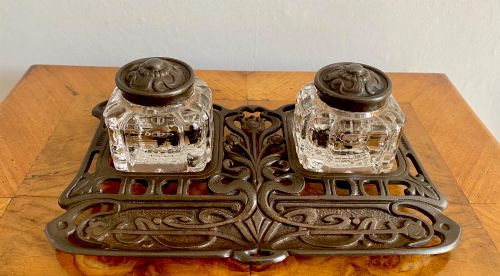
A vintage ink pot sits on the desk as a practical relic from a time when correspondence required a nib and liquid ink.
Vintage Ink Pot
A vintage ink pot serves as a functional desktop receptacle designed to hold writing fluid before the widespread adoption of the ballpoint pen. These pieces range from simple glass wells to elaborate desk sets featuring integrated stands and pen rests.
Domestic and continental workshops produced these objects across various materials, reflecting the changing tastes of the Victorian, Edwardian, and Art Deco periods. Many surviving examples retain their original glass inserts or silver lids.
Materials and Construction
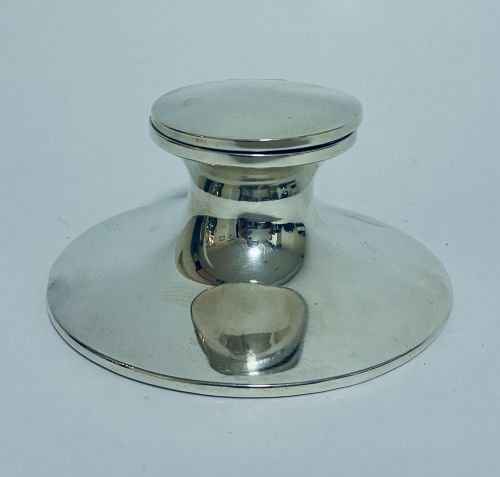
Makers utilised sterling silver, brass, and bronze for the structural mounts, hinged lids, and decorative collars of these vessels. Metal components often received hallmarks indicating the assay office and year of manufacture.
Glass forms appear frequently, shaped through heavy cutting, facet-cutting, or moulded production to contain the corrosive nature of iron gall ink. Some vessels combine clear cut glass with contrasting precious metals.
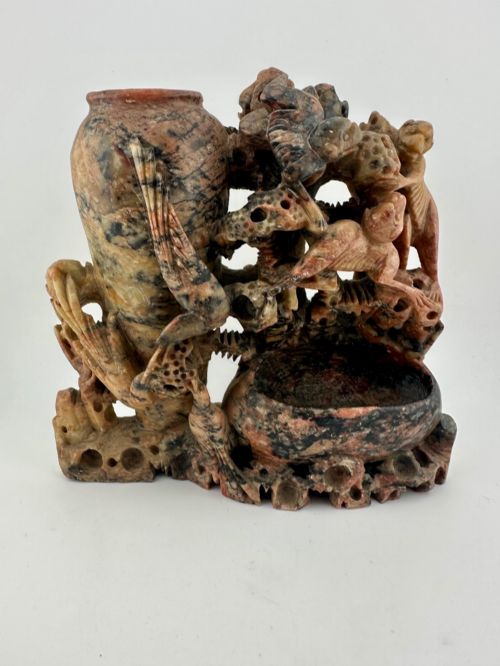
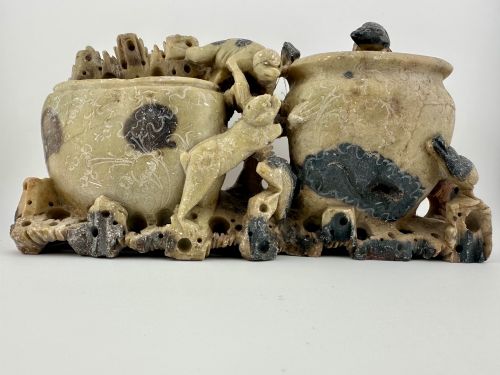
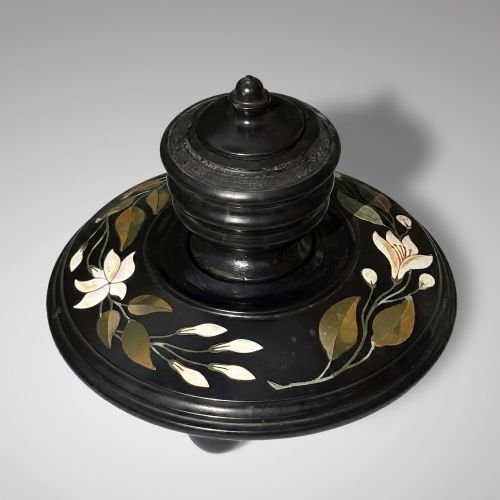
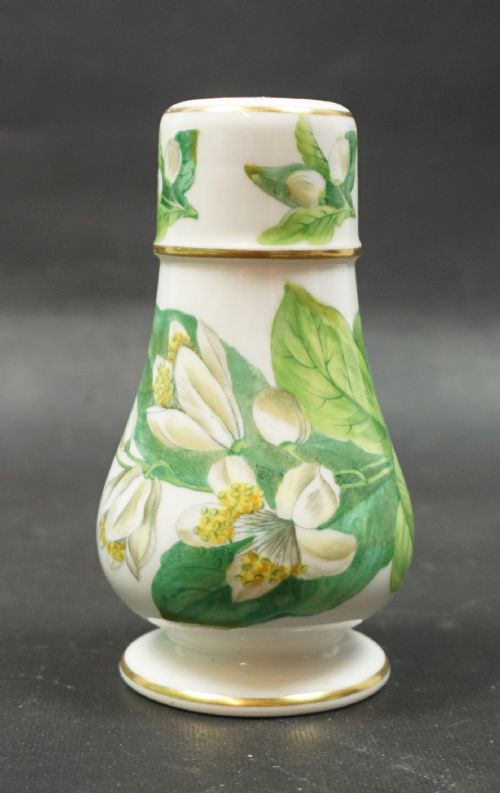
Ceramic variations include porcelain, earthenware, and stoneware, frequently decorated with hand-painting or enamel work such as guilloche. Artisans also worked with specialised stones like Ashford marble and soapstone.
Vintage Ink Pot Retail Price Guide 2026
Typical asking prices for vintage ink pot among the pieces listed under this phrase on Sellingantiques today, from the lower quarter to the upper quarter. They describe what is for sale here now, not the wider market.
A bulldog stares back with glass eyes from his post on the desk, guarding the ink.
Assessing Craftsmanship
Quality rests in the precision of the metalwork, the weight and clarity of the glass or crystal, and the integration of components. Finer examples display crisp hallmarks, substantial sterling silver mounts, and well-fitted hinged lids that close securely.
The sophistication of the design dictates much of the distinction between standard utilitarian pieces and superior studio or factory outputs. Items bearing documented maker attributions or complex decorative motifs like Art Nouveau whiplash lines command greater interest.
Tiffany and Co·Maurice Dufrene·Kralik or Loetz·Meissen
The Vintage Ink Pot Glossary
- Capstan inkwell
- A desk accessory shaped like a nautical capstan, featuring a wide circular base tapering toward the top. This profile provides stability to prevent accidental tipping on a busy writing desk.
- Pounce pot
- A small shaker container used to sprinkle powdered sand or cuttlefish bone onto freshly written ink to accelerate drying. These precursors to blotting paper often match the design of companion inkwells.
- Guilloche enamel
- A decorative technique where an engraved metal surface is coated with translucent enamel, allowing the geometric pattern beneath to show through. This finish appears frequently on early twentieth-century vanity and desk wares.
- Ashford marble
- A polished black limestone inlaid with coloured mineral specimens, produced in Derbyshire during the nineteenth century. It frequently forms the heavy rectangular bases for Victorian desk stands.
- Inkstand
- A complete desk set comprising one or more ink pots, pen trays, and sometimes a bell or taperstick fitted onto a shared base. These larger desk furnishings coordinated the accessories of a Victorian or Edwardian writing table.
Vintage Ink Pot: Frequently Asked Questions
How do I date a vintage ink pot?
Dating relies heavily on hallmarks stamped into the silver mounts, which indicate the assay office and year of production. Stylistic markers such as Art Nouveau curves or heavy Victorian brass casting also help narrow down the decade.
Unmarked pieces require examination of the manufacturing technique, glass clarity, and wear patterns on the base. Comparing the form to dated catalogue examples provides further chronological context.
Are original glass inserts important?
Original glass inserts maintain the integrity and usability of the piece, as replacements rarely fit the collar precisely. Finding a pot with its matching liner preserves its original manufacturing state.
Many antique vessels suffered damage or loss to their internal glass components over decades of use. Their presence significantly enhances the completeness of the item.
How were these pots used?
These vessels held liquid writing ink in a central reservoir on a desk or table, allowing a writer to dip a quill or steel nib pen. The design kept the fluid accessible while minimising evaporation and accidental spills.
Desk sets often included pen rests and separate compartments for stamps or sealing wax. They formed the central apparatus of daily correspondence before modern fountain and ballpoint pens.
How do I clean metal mounts?
Sterling silver and brass mounts require gentle cleaning with a soft cloth to remove tarnish without disturbing patination or enamel work. Harsh chemical dips should be avoided, particularly on pieces with glass or ceramic bodies.
Care must be taken to keep polishing compounds away from fabric linings and stone surfaces. Regular dusting with a dry microfiber cloth is generally sufficient for maintenance.