



Vintage Highland Cattle
These vintage highland cattle pieces bring the drama of Scottish landscapes and their shaggy beasts into your room through porcelain, oil paint, and watercolour.
Vintage Highland Cattle
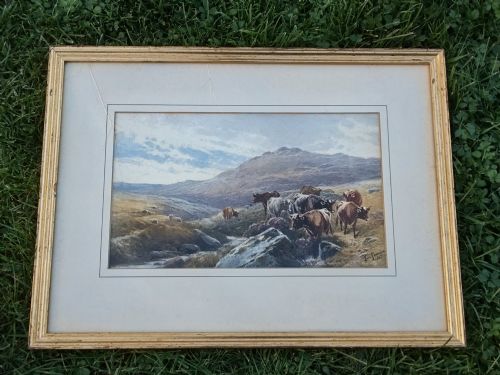
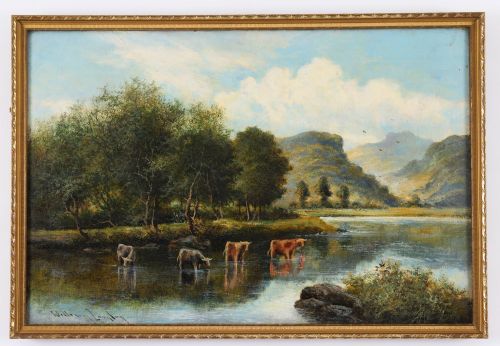
When you search for vintage highland cattle, you encounter a distinct gathering of oil paintings, watercolours, gouache works, and Royal Worcester porcelain decorated with these characteristic animals. The paintings range from grand Victorian canvas works to smaller framed pieces depicting the cattle in misty lochs and mountainous terrain. Alongside these flat works, porcelain spill vases, cabinet plates, ewers, and decorative urns carry finely painted scenes of the cattle.
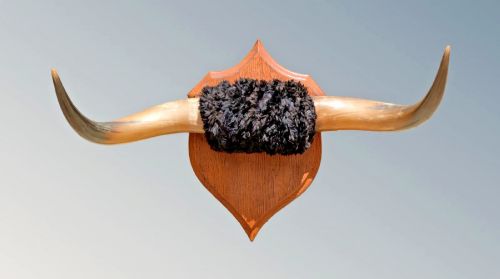
The material record spans from the late nineteenth century into the early decades of the twentieth century, with strong representation from the Victorian and Edwardian periods. Royal Worcester items painted by members of the Stinton family form a substantial part of the ceramic offering. You will also find traditional framing supporting oils and watercolours, plus mounted steer horns on oak shields reflecting the Highland Lodge style.
What varies in quality
Quality in the porcelain pieces rests on the precision and detail of the hand-painted brushwork. Pieces bearing signatures from established ceramic artists show finer control in rendering the anatomy and expression of the cattle. The crispness of the gilt accents and the smoothness of the porcelain glaze further distinguish superior ceramic work.
In paintings, the strength of the composition and the handling of light separate the finer examples. Works that capture the atmospheric conditions of the Scottish Highlands with confident brushstrokes demonstrate superior artistic execution. The preservation of the canvas and the quality of the original framing also influence the standing of a painted piece.
Vintage Highland Cattle Retail Price Guide 2026
Typical asking prices for vintage highland cattle among the pieces listed under this phrase on Sellingantiques today, from the lower quarter to the upper quarter. They describe what is for sale here now, not the wider market.
A set of steer horns mounted on an oak shield preserves the literal texture of the Highlands indoors.
Royal Worcester·Henry Robinson Hall·Alfred de Breanski Sr·George Turner·William Langley·Thomas Rowden·Milton Drinkwater
The Vintage Highland Cattle Glossary
- Spill vase
- A small vertical ceramic container designed to hold wooden spills used for lighting fires or pipes. These often feature hand-painted wildlife or cattle scenes.
- Cabinet plate
- A decorative ceramic plate intended for display rather than dining use. They frequently showcase detailed artistic subjects like landscape cattle.
- Gouache
- An opaque water-based paint that dries to a matte finish and allows for rich colour application. Artists use it on paper to achieve solid blocks of tone.
- Ewer
- A large jug with a wide spout and handle, historically used for water but collected as an ornamental vessel. Ceramic versions often carry elaborate painted decoration.
- Giltwood
- Wood that has been coated with a thin layer of gold leaf or gold paint. This technique frames many of the period oil paintings.
Vintage Highland Cattle: Frequently Asked Questions
What periods do these pieces come from?
The pieces span from the late nineteenth century through the Edwardian era and into the 1930s. Victorian and Edwardian examples dominate the selection.
You will find work created during periods when Scottish romanticism strongly influenced British visual culture and interior decoration.
How were the Royal Worcester pieces decorated?
Artists painted the highland cattle scenes by hand directly onto the glazed porcelain body. Skilled painters used fine enamel colours to render the shaggy coats and misty backgrounds.
Many of these ceramic pieces are signed by members of the Stinton family, who specialised in animal subjects for the pottery.
What mediums were used for the paintings?
Painters worked in oil on canvas, watercolour on paper, and gouache. Each medium creates a different atmosphere, from heavy textured oils to light translucent washes.
Most of the flat works come preserved in period wood or giltwood frames appropriate to their date of creation.
How should I display a highland cattle plate?
Cabinet plates are intended for visual display rather than daily table use. They work well mounted in wall brackets or supported securely on sturdy plate stands.
Keep them away from direct sunlight to protect the hand-painted enamel colours from fading over time.