



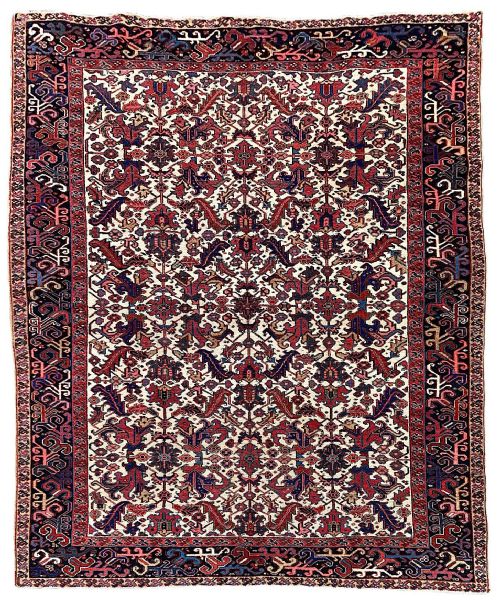
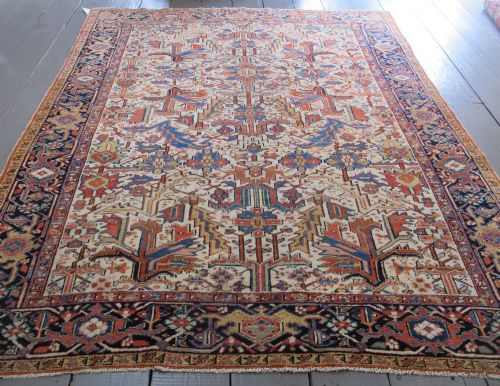
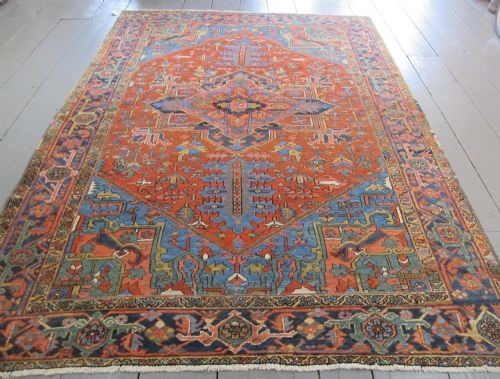
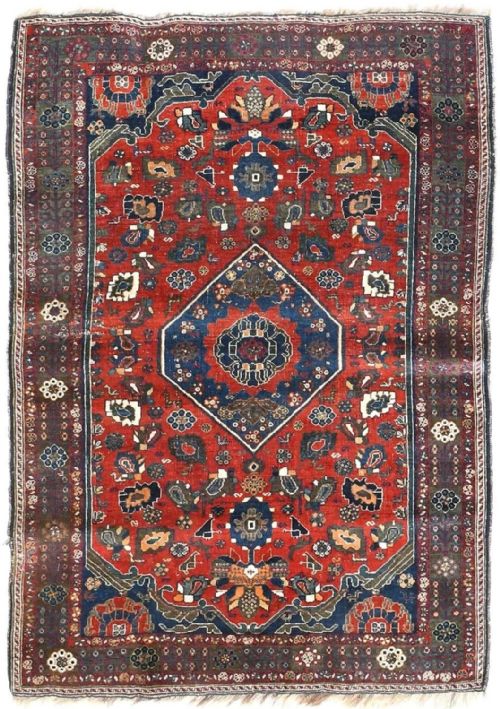


Vintage Heriz Floor Carpet
These large-format floor coverings combine geometric village patterns with durable wool pile to anchor a room.
Vintage Heriz Floor Carpet
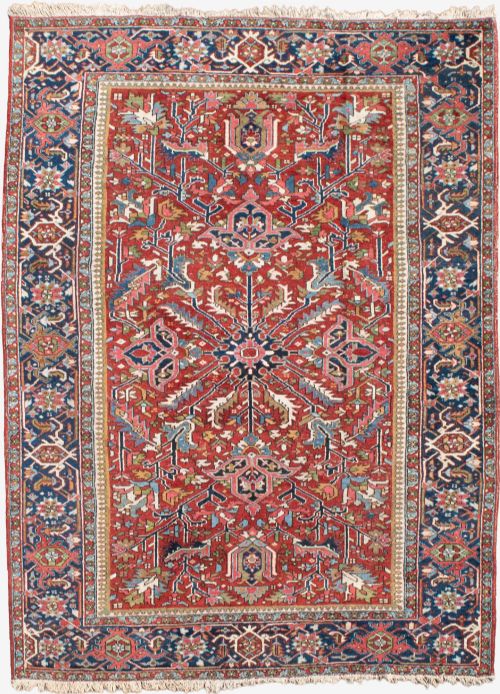
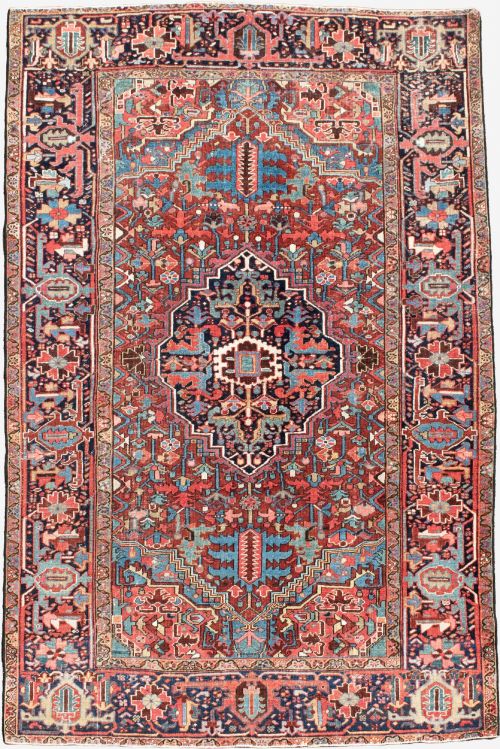
When you search for a vintage heriz floor carpet, you are looking at hand-knotted room-sized rugs originating from north-west Persia during the late nineteenth and early twentieth centuries. These woven pieces typically display bold central medallions and strong angular motifs rather than delicate curves, reflecting the traditional designs of the region.
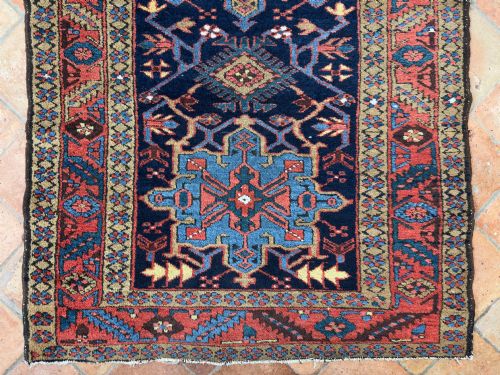
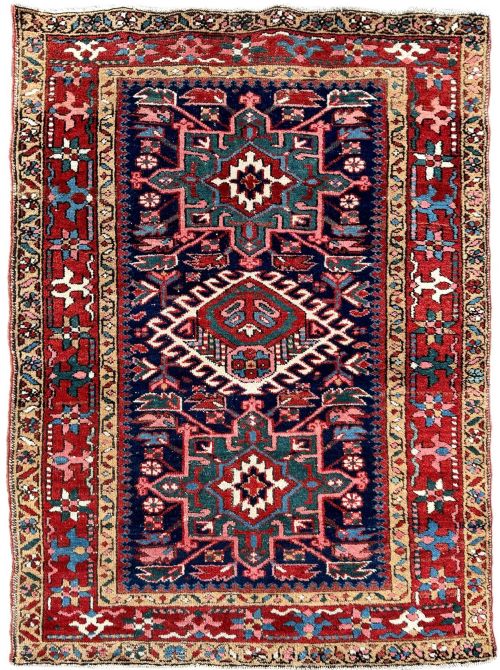
The specimens you are most likely to meet on this page date from the decades between eighteen-eighty and nineteen-thirty. They appear as large carpets, smaller rugs, and long hallway runners designed to withstand heavy foot traffic while providing substantial decorative presence in an interior.
What varies in quality
The distinction between tiers rests upon the fineness of the knotting and the complexity of the geometric layout within the medallion and border. Tightly packed knots allow for sharper definition in the angular motifs and greater longevity underfoot.
The nuance of the dye palette and the clarity of the wool also separate standard village productions from the finest historic examples attributed to specific regional centres like Serapi or Bakshaish.
Several runners stretch over four metres long, proving that nineteenth-century hallways were built for serious pacing.
The Vintage Heriz Floor Carpet Glossary
- Heriz
- A town and carpet-weaving region in north-west Persia known for producing durable floor coverings with bold geometric medallions. These carpets often use a heavy cotton foundation.
- Medallion
- The central ornamental motif dominating the field of the rug. In this group, it typically takes a strong angular or star shape.
- Runner
- A long, narrow carpet format used primarily in hallways and corridors. The evidence shows these stretching over four metres in length.
- Karaja
- A village style closely related to Heriz weaving, frequently featuring geometric repeat patterns or smaller medallion formats. These appear in runner and rug sizes.
Vintage Heriz Floor Carpet: Frequently Asked Questions
Where were these carpets made?
These floor coverings originated in north-west Persia, specifically in and around the town of Heriz and neighbouring villages.
The weavers utilised local materials and traditional geometric designs distinct from urban Persian workshops.
How do I care for a wool carpet?
Regular gentle vacuuming without a beater bar removes surface grit and protects the wool pile from premature wear.
Professional cleaning suited to antique textiles maintains the integrity of the cotton foundation and dyed fibres.
What size do these rugs come in?
The inventory ranges from small scatter rugs measuring over one metre to large room-sized carpets exceeding four metres in length.
Narrow hallway runners also appear among the listed formats for linear spaces.
How do I identify a Heriz design?
Look for a prominent geometric central medallion set against a field of stylised floral and vine motifs.
The colour palette relies heavily on rich reds, deep blues, and ivory grounds with strong angular outlines.