




Vintage Hammered Mirror
These vintage hammered mirror pieces bring hand-worked metal texture and warm metallic tones into a room.
Vintage Hammered Mirror
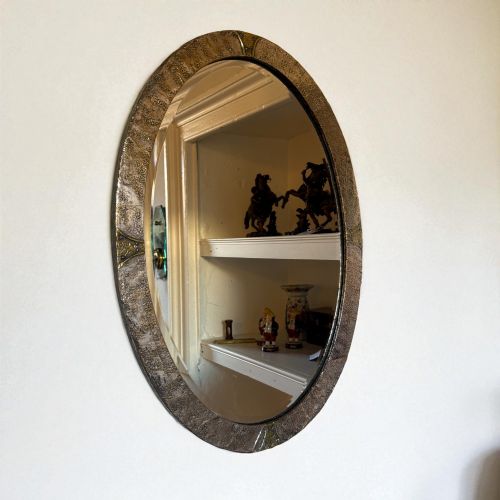
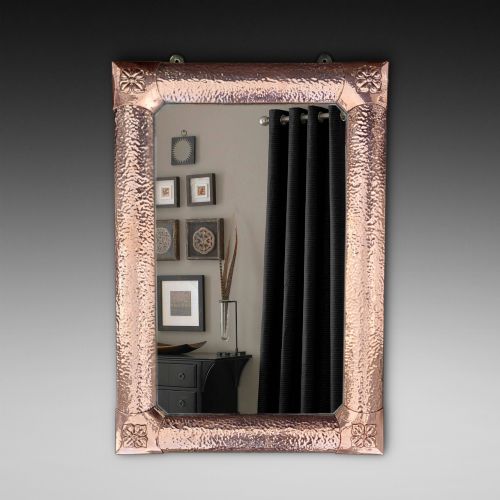
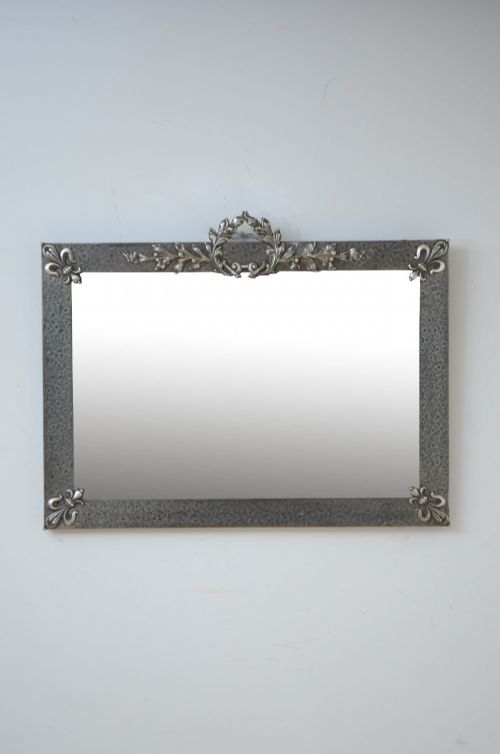
A vintage hammered mirror brings tangible texture and artisan craft into an interior, combining reflective glass with beaten metal frames. When you search for a vintage hammered mirror, you encounter pieces primarily rooted in the Arts and Crafts and Art Nouveau styles, spanning from the late nineteenth century through to the mid twentieth century. Wall mirrors dominate the selection, alongside occasional table and easel variants.
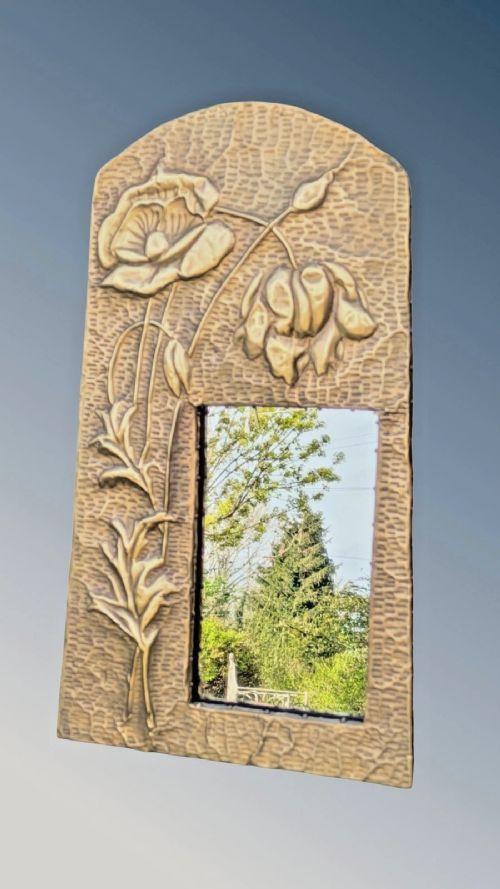
Copper is the most common framing material you will meet, often showing a warm patina developed over decades of age. Brass and silvered copper frames also appear, alongside rarer examples featuring ceramic cabochon inserts or Peruvian Colonial Revival silver borders. Forms range from simple rectangular and oval shapes to circular designs bearing stylised tree or seed pod motifs.
How they were made
Craftsmen shaped these frames by hand, beating sheets of copper, brass, or silvered copper over wooden or composite backings to create the characteristic dimpled texture. Artisans utilised repoussé techniques to push patterns from the reverse and chasing to refine details from the front, producing raised motifs such as honesty seed pods or stylised trees.
The mirror glass itself was frequently bevelled at the edges to catch the light, then secured into the beaten metal housing. Wooden supports and backing boards provide structural rigidity to the metal frames, while brass easel stands or copper hanging loops complete the construction.
Vintage Hammered Mirror Retail Price Guide 2026
Typical asking prices for vintage hammered mirror among the pieces listed under this phrase on Sellingantiques today, from the lower quarter to the upper quarter. They describe what is for sale here now, not the wider market.
Listings feature periods from the nineteenth century through the nineteen fifties, with nineteen hundred being the most common date.
What varies in quality
The distinction between standard production and exceptional work lies in the depth and control of the hand-beaten surface texture. Skilled metalworkers achieved an even, rhythmic hammer pattern across the entire frame rather than random or mechanical indentations.
Design complexity further separates the pieces, with superior examples incorporating integrated ceramic cabochons, finely chased botanical motifs, or substantial bevelled mirror glass plates. The integrity of the original metal patina and the preservation of the underlying wooden structure also dictate the standing of an individual piece.
Liberty & Company
The Vintage Hammered Mirror Glossary
- Repoussé
- A metalworking technique where the artisan hammers a design from the reverse side to form a raised relief on the front. This method gives texture to the decorative borders of the frames.
- Bevelled glass
- Mirror glass with edges cut and polished at an angle to create a framed border effect within the glass itself. It catches light differently than a flat, straight edge.
- Cabochon
- A polished, convex gemstone or ceramic piece with a smooth, rounded top and flat base, often set into metal frames as an accent. Ruskin pottery inserts frequently appear in this form.
- Arts and Crafts
- A design movement valuing manual skill, honest materials, and traditional craftsmanship over mass production. Most metal frames draw directly from this aesthetic.
- Art Nouveau
- A style characterised by sinuous, organic lines and floral motifs that flourished around the turn of the twentieth century. It appears in several of the brass and copper frames.
Vintage Hammered Mirror: Frequently Asked Questions
What periods do these mirrors come from?
The pieces span the late nineteenth century, the Edwardian era, and the early decades of the twentieth century. A small number of mid-century examples also appear.
Most items date from the height of the Arts and Crafts movement around nineteen hundred.
How do I hang a heavy copper mirror?
These metal frames with wooden backings carry significant weight and require secure wall fixtures anchored properly into masonry or studs.
Utilise robust screws and wall plugs matched to the weight of the specific frame rather than standard picture hooks.
Are the mirrors original?
Many retain their original bevelled glass plates, though mirror glass from this era can develop natural foxing and age spots.
Such spotting is a normal characteristic of antique glass and reflects the long history of the object.
What metal types are used?
Copper is the primary metal seen in the frames, often left with its natural warmth or silvered for a different tone.
Brass frames also feature frequently, whilst rarer examples incorporate Peruvian silver borders.
How do I clean the metal frame?
Dust the frame gently with a soft dry cloth to preserve the accumulated patina and aged surface character.
Avoid abrasive metal polishes that strip away the dark oxidation valued in antique copper and brass.