




Vintage Hallway Rail
These vintage hallway rail pieces organise entranceways with character, offering robust hanging and storage solutions shaped by centuries of domestic craft.
Vintage Hallway Rail
A vintage hallway rail brings practical utility to an entrance space, combining structural mounting boards with functional hanging points. When searching for a vintage hallway rail, buyers encounter wall-mounted coat racks, umbrella stands, and cloakroom valets designed for daily use.
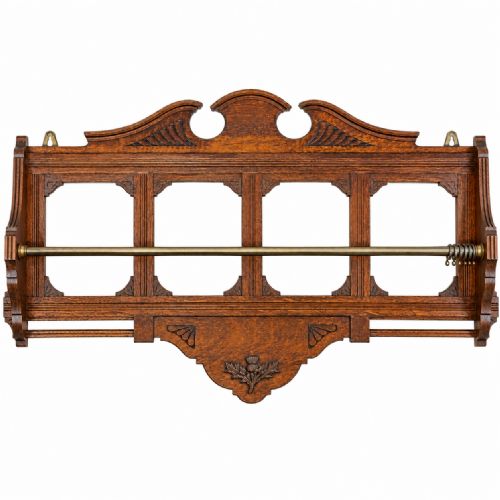
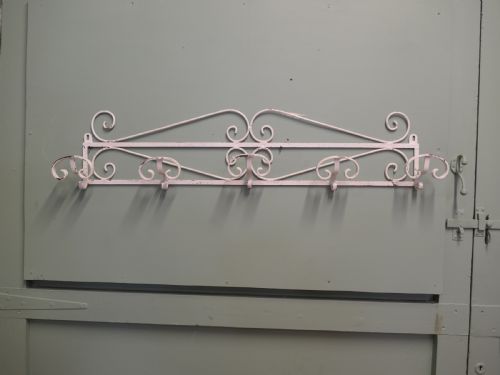
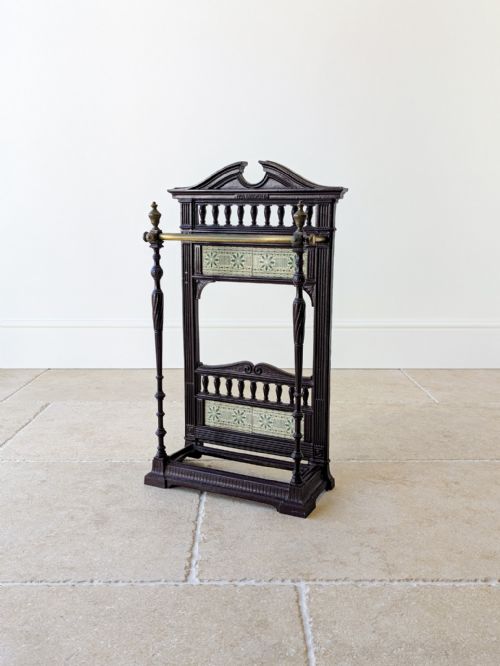
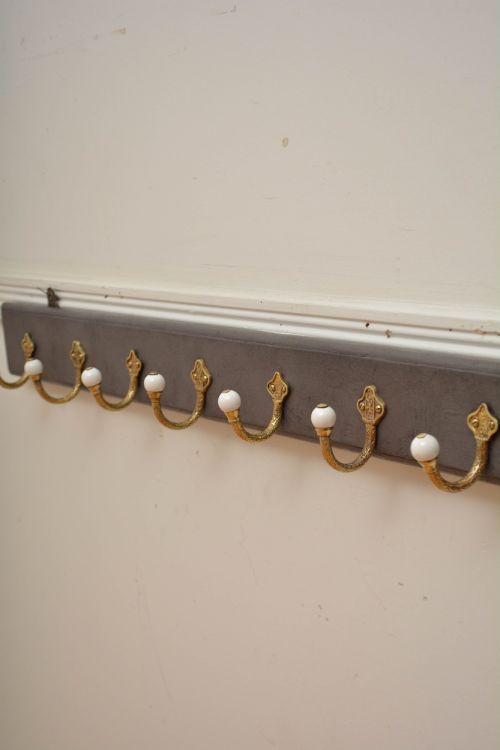
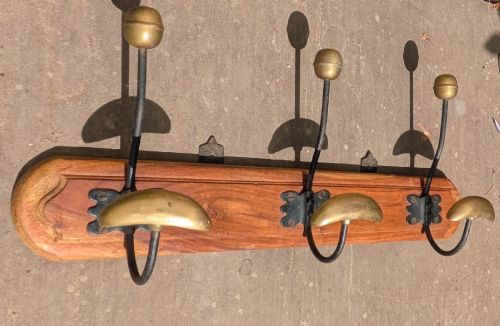
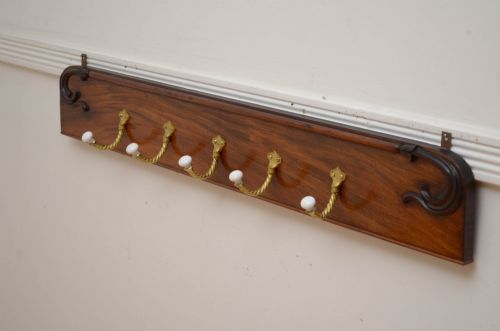
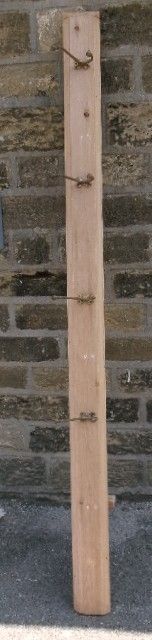
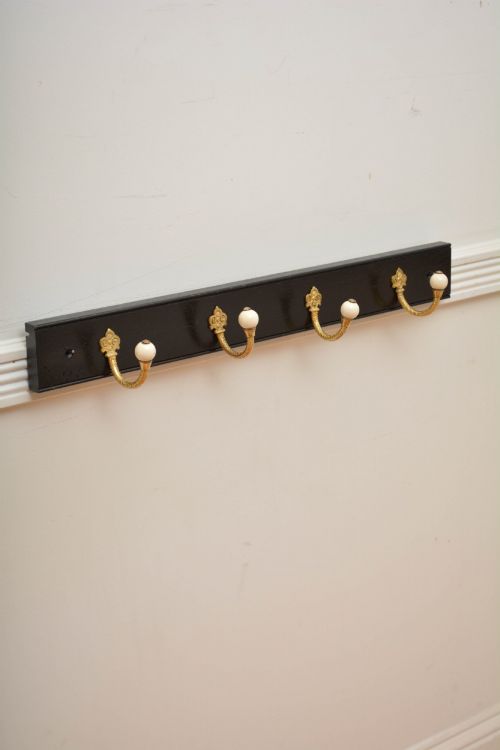
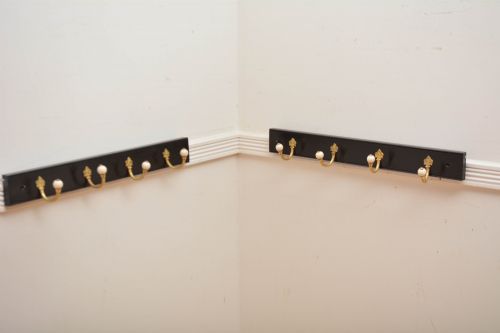
The pieces on this page span several distinct periods, drawing heavily from Victorian, Edwardian, and earlier 18th or 19th-century traditions. Formats range from long wooden backboards fitted with multiple brass and ceramic hooks to heavier cast iron wall racks and umbrella holders.
Origin and style variations include classic English reception pieces alongside French country influences and Aesthetic Movement designs. These items serve the same fundamental purpose today as they did originally, providing an orderly spot for hats, coats, and walking sticks.
How they were made
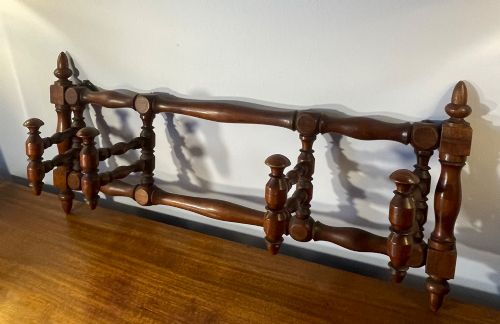
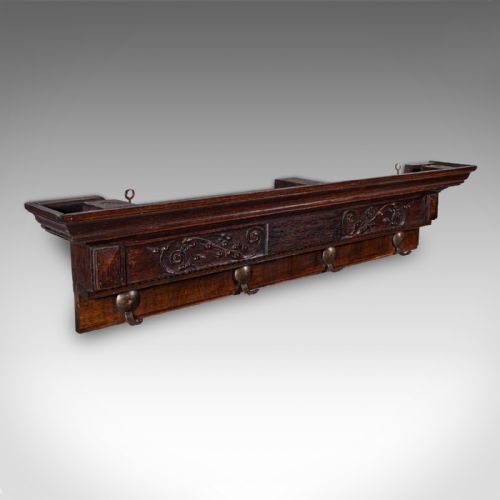
Construction relies heavily on durable timbers like mahogany, oak, pine, and ebonised wood, providing a solid foundation for mounted hardware. Metal elements such as brass, cast iron, and wrought iron are secured to these backboards to form the hooks and hanging rails.
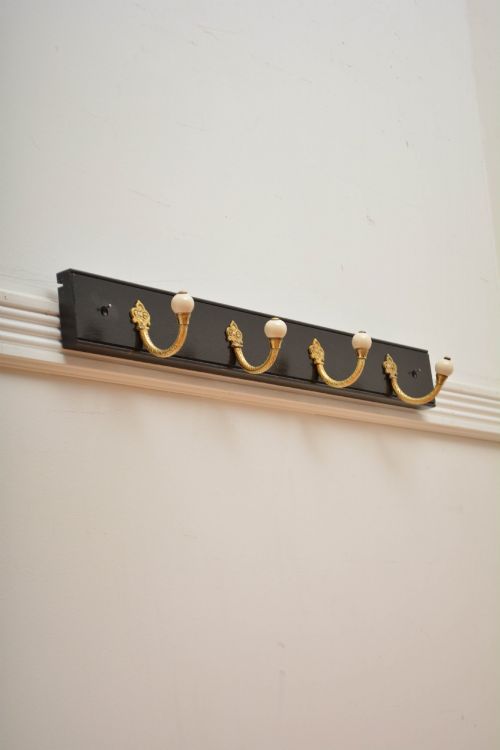
Many examples incorporate decorative detailing through carved woodwork, twisted rope motifs, and beautifully cast mounting plates. Functional additions often include ceramic hook inserts, combining different media into a single utilitarian object.
Vintage Hallway Rail Retail Price Guide 2026
Typical asking prices for vintage hallway rail among the pieces listed under this phrase on Sellingantiques today, from the lower quarter to the upper quarter. They describe what is for sale here now, not the wider market.
Listings feature woods spanning mahogany, oak, pine, and ebonised timber alongside brass, cast iron, and ceramic elements.
What varies in quality
Quality rests on the integrity of the materials and the cohesion of the hardware fixed to the backboard. Superior examples feature substantial timber mounts paired with well-cast brass or iron hooks that show clear definition in their manufacture.
The method of attachment and the condition of the integrated elements, such as ceramic inserts or mounting plates, dictate the overall standard. Pieces that retain their original hooks and structural backing without replacement parts demonstrate greater authenticity.
Coalbrookdale
The Vintage Hallway Rail Glossary
- Backboard
- The horizontal wooden mounting plank that supports the individual coat hooks or hanging rails. It is typically screwed directly to a wall.
- Cast Iron
- A robust alloy poured into moulds to create heavy-duty structural frames and decorative brackets, often seen in stick stands.
- Ebonised Wood
- Timber treated with a dark finish to imitate expensive ebony wood, frequently utilised in Victorian decorative hardware.
- Aesthetic Movement
- A late 19th-century design style focusing on visual and material beauty over heavy narrative symbolism, visible in select ironwork.
- Stick Stand
- A dedicated piece of hallway furniture designed to hold umbrellas and walking sticks upright, often incorporating metal drip trays.
Vintage Hallway Rail: Frequently Asked Questions
How do I mount a heavy wooden coat rail safely?
Heavy wooden rails require secure fixing directly into wall studs or appropriate masonry anchors to support the weight of winter garments.
Distributing the load across multiple mounting points ensures the vintage backboard remains stable under daily use.
Are ceramic hook inserts original to Victorian racks?
Ceramic inserts were commonly utilised on 19th-century coat hooks to provide a smooth contact surface for clothing and hats.
Many period pieces combine brass brackets with white or coloured ceramic bosses.
What is the difference between a wall rack and a cloakroom rail?
Wall racks generally describe shorter mounted fixtures, whereas cloakroom rails often denote longer rows of hooks intended for high-capacity reception areas.
Both serve the primary function of hallway garment storage.
How do I care for ebonised wood and brass?
Ebonised wood benefits from gentle dusting and occasional waxing to preserve the dark surface without stripping the finish.
Brass components can be left with their natural aged patina or cleaned carefully depending on personal preference.