



Vintage Greyhound Figures
Vintage greyhound figures capture the sleek lines and athletic grace of hounds in bronze, porcelain, and earthenware.
Vintage Greyhound Figures
Vintage greyhound figures capture the sleek anatomy and noble posture of hounds across diverse forms such as sculptures, paperweights, quill holders, and desk accessories. When searching for vintage greyhound figures, collectors encounter pieces spanning the Victorian era through the Art Deco period of the 1920s and 1930s.
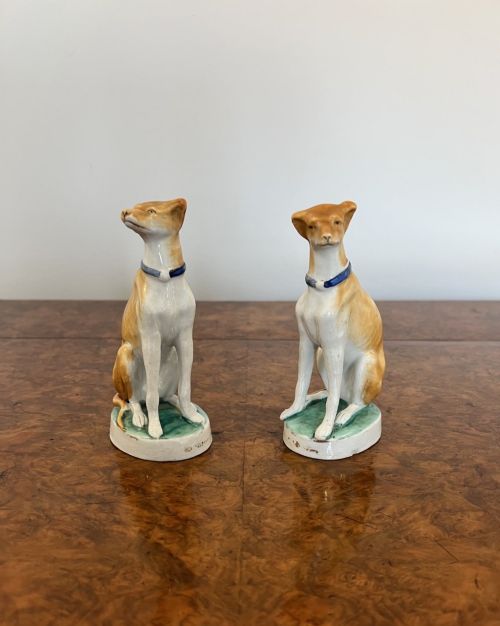
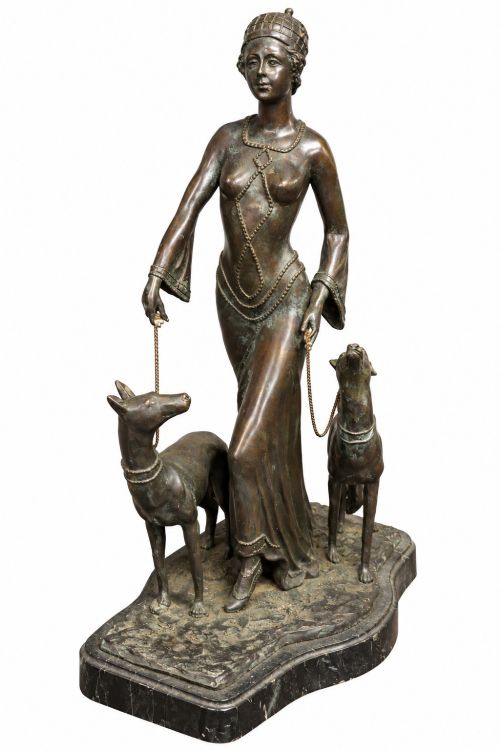
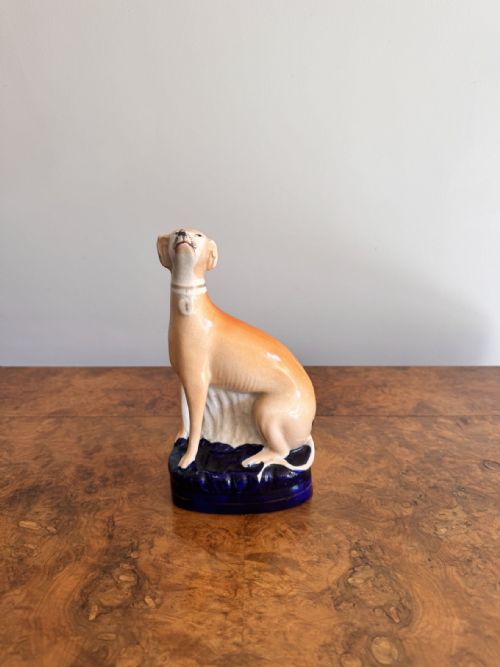
Victorian examples often take the form of earthenware Staffordshire pottery, including seated hounds and pairs of quill holders, while later decades favour dynamic bronze sculptures and porcelain figurines. French animalier bronzes and Art Deco racing hounds represent the most prominent sculptural interpretations on this page.
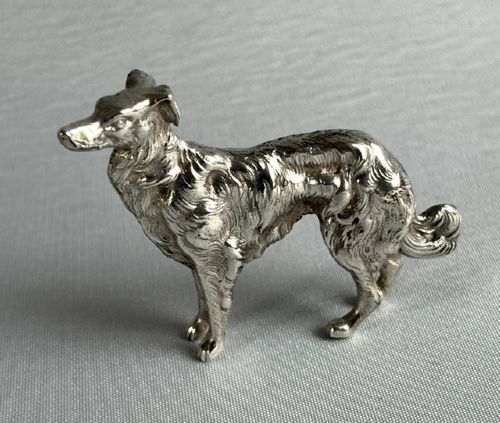
The materials range from cast silver and bronze mounted on marble to glazed porcelain and carved wood, reflecting the aesthetic preferences of their respective decades. Each piece serves primarily as a decorative ornament or sculptural figurine, embodying the speed and elegance prized by dog enthusiasts.
How they were made
Bronze sculptures utilise the lost-wax casting technique, capturing fine muscle definition and texture before being mounted on marble bases or finished with coloured enamel. Animalier sculptors focused on realistic musculature and naturalistic poses, often casting editions after prominent makers.
Ceramic and porcelain versions employ earthenware bodies finished with detailed glazes, hand-painted markings, and occasional gilt touches. Staffordshire potters shaped these hounds using traditional earthenware moulds, while twentieth-century factories applied smooth white porcelain glazes.
Cast silver and mixed media constructions incorporate detailed metalwork, sometimes combining silver bodies with wooden or stone elements. Artisans shaped desk accessories and paperweights to balance functional utility with sculptural fidelity.
Vintage Greyhound Figures Retail Price Guide 2026
Typical asking prices for vintage greyhound figures among the pieces listed under this phrase on Sellingantiques today, from the lower quarter to the upper quarter. They describe what is for sale here now, not the wider market.
Listings feature periods spanning the Victorian era through the 1940s, utilising bronze, marble, porcelain, earthenware, and cast silver.
What varies in quality
The weight of the material and the integrity of the base, particularly in marble-mounted bronzes or multi-part Staffordshire figures, distinguish superior works. Evidence of careful hand-painting on porcelain and distinct hallmarks on silver elevate individual pieces above standard decorative wares.
Berthold Muller·Georges Gori·Geo Maxim·Christophe Fratin
The Vintage Greyhound Figures Glossary
- Animalier
- A nineteenth-century artistic movement focusing on the realistic depiction of animals, particularly prominent in French bronze sculpture. Practitioners of this style studied live subjects closely to capture natural movement.
- Staffordshire
- A type of English earthenware produced in the Staffordshire potteries, famous for Victorian mantel dogs and quill holders. These figures are typically moulded and hand-painted with distinctive underglaze markings.
- Art Deco
- A design style dominant in the 1920s and 1930s characterised by sleek geometric lines, stylised forms, and a sense of modern movement. Sculptures from this period often depict racing greyhounds and running figures.
- Quill Holder
- A desktop accessory featuring a hollow or moulded section designed to hold writing quills or pens, frequently modelled as seated dogs. These functional Victorian items combined utility with domestic display.
Vintage Greyhound Figures: Frequently Asked Questions
What periods do these figures come from?
The pieces span from the Victorian era through the Edwardian period and into the Art Deco styles of the 1920s, 1930s, and 1940s.
Victorian Staffordshire and nineteenth-century animalier bronzes represent the earlier works, while cast silver and bronze racing hounds define the twentieth-century pieces.
How were ceramic hounds used?
Many ceramic and porcelain dogs served as decorative mantel ornaments, decorative figurines, or practical desktop items.
Pairs of Staffordshire hounds often sat flanking a fireplace, while specific earthenware models incorporated hollows to function as quill holders.
What materials are most common?
Bronze and earthenware appear frequently, alongside porcelain, cast silver, marble, wood, and enamel.
Metal sculptures are often mounted on marble bases, while ceramics feature hand-painted glazes and distinct surface finishes.
How do I identify an Art Deco hound?
Art Deco figures typically emphasise speed, dynamic motion, and stylised anatomy, often depicting leaping dogs or running figures.
These pieces frequently date from the 1920s and 1930s, utilising bronze or streamlined porcelain rather than traditional earthenware.