


Vintage Green Stone Pendant
These vintage green stone pendant designs range from Edwardian peridot to Art Deco jade, offering rich colour and historic character for daily wear.
Vintage Green Stone Pendant
A vintage green stone pendant spans multiple eras, capturing the elegance of Edwardian work and the geometric lines of Art Deco pieces. Buyers encounter various green minerals set in gold or silver, reflecting distinct aesthetic movements across the decades.
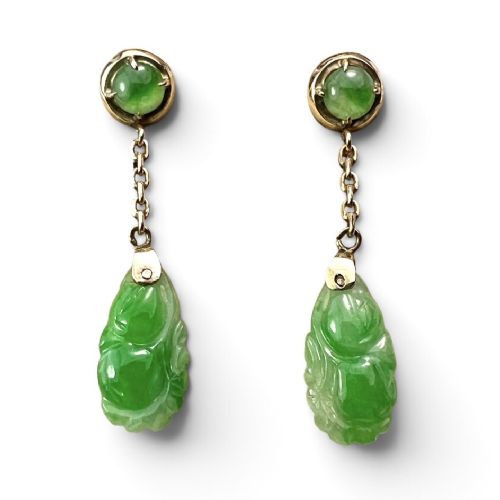
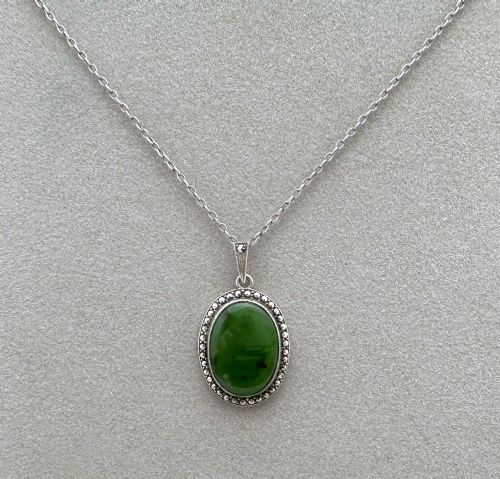
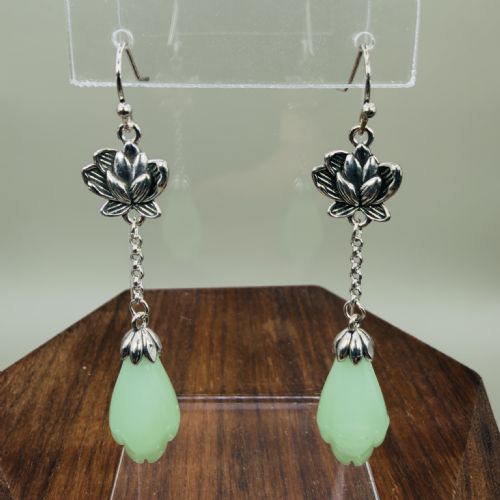
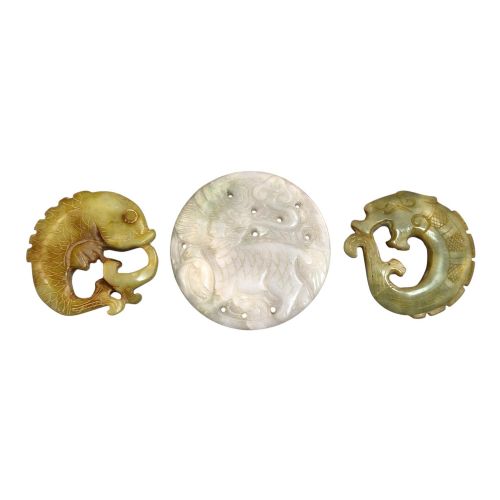
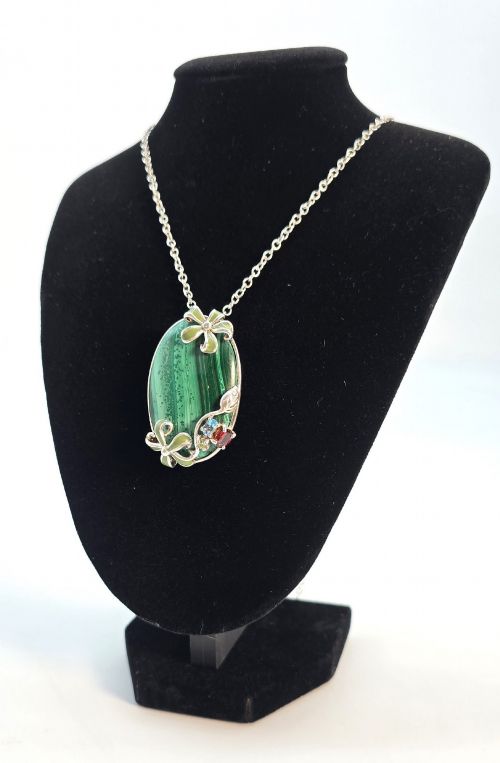
The selections available here showcase diverse green minerals including jade, peridot, malachite, chrysoprase, Amazonite, and emerald. These pieces appear in forms ranging from simple drops to intricate botanical revivals and traditional Chinese motifs.
Earrings, necklaces, and amulets share space within this category, often utilising matching stones or mixed gems like seed pearls and diamonds. The typical piece connects a distinct green mineral with precious metals characteristic of its period of origin.
What varies in quality
Quality differences lie in the integration of the design and the purity of the metal and stone selection. Superior examples demonstrate harmonious proportions between the mounting and the green mineral, whether carved jade or faceted peridot.
Artisanal execution distinguishes workshop pieces, particularly in hand-wrought settings associated with Arts & Crafts makers or precise geometric silverwork from the Art Deco period. The clarity of the green stone and the finesse of any accompanying pearl or diamond work elevate the overall standing of the item.
Listings feature items mounted in silver, 9ct gold, 15ct gold, and platinum across Edwardian, Art Deco, and Arts & Crafts styles.
Liberty & Co·Arthur & Georgie Gaskin
The Vintage Green Stone Pendant Glossary
- Cabochon
- A gemstone shaped and polished with a smooth, rounded surface rather than faceted. This style highlights the natural colour and internal qualities of opaque green stones like jade and chrysoprase.
- Peridot
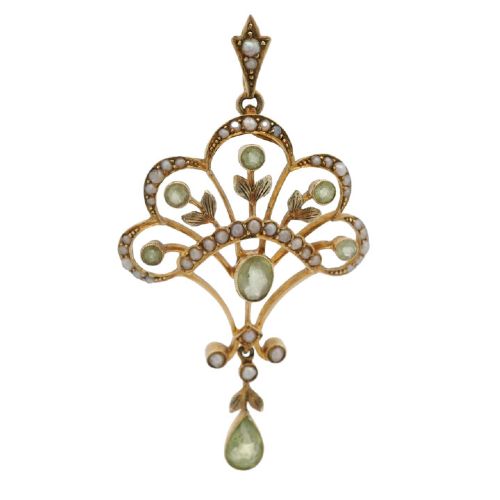
- A yellowish-green silicate mineral frequently utilised in Edwardian and early twentieth-century jewellery. It brings a bright, distinct citrus-green hue to gold and platinum pendants.
- Bi Disc
- A flat circular jade or stone artefact with a hole in the centre, originating in ancient China. Edwardian and later interpretations incorporate these traditional motifs into decorative amulets.
- Chrysoprase
- A gemstone variety of chalcedony containing nickel, known for its apple-green colour. Arts & Crafts makers favoured this vibrant stone in handcrafted silver settings.
- Seed Pearl
- A very small natural or cultured pearl often drilled and threaded into clusters or borders. These tiny pearls frequently accompany peridot in Edwardian necklace designs.
Vintage Green Stone Pendant: Frequently Asked Questions
What periods do these pendants represent?
The pieces span the nineteenth century through the mid-twentieth century, encompassing Victorian, Edwardian, Arts & Crafts, and Art Deco movements. Each era brings distinct metalwork techniques and design philosophies.
Craftsmanship evolved from ornate floral motifs in the early decades to streamlined geometric forms by the 1930s and 1940s.
Which green stones appear most frequently?
Peridot and jade dominate the selection, often accompanied by chrysoprase, malachite, Amazonite, emerald, and green chalcedony. Each mineral offers a different shade of green, from pale lime to deep forest tones.
Selection depends on the stylistic period, with chrysoprase and jade appearing prominently in Arts & Crafts and Art Deco contexts.
How should I care for a vintage pendant?
Gentle cleaning with a soft cloth preserves the integrity of both the metal mount and the softer green stones like jade and malachite. Avoid harsh chemical dips, particularly when pearls or softer minerals are present in the setting.
Store each necklace or pendant separately to prevent scratching between different gemstone surfaces and delicate metal chains.
How do I distinguish Edwardian from Art Deco pieces?
Edwardian jewellery relies on delicate platinum and gold work, often pairing peridot with seed pearls in botanical or lace-like patterns. Art Deco designs introduce bolder lines, stylized motifs, and strong contrasts using carved jade or Amazonite.
Examining the underlying metal structure and the cut of the stones usually reveals the manufacturing decade.