



Vintage Green Drop Earrings
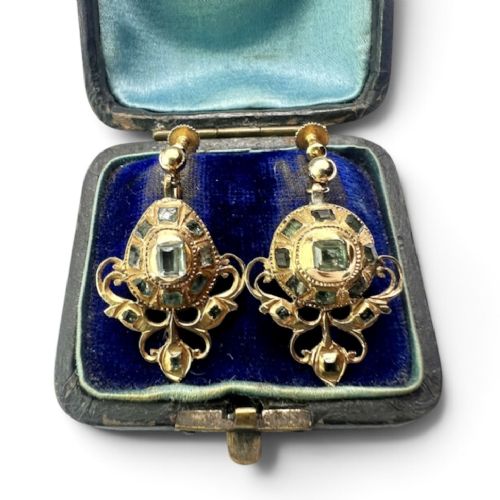
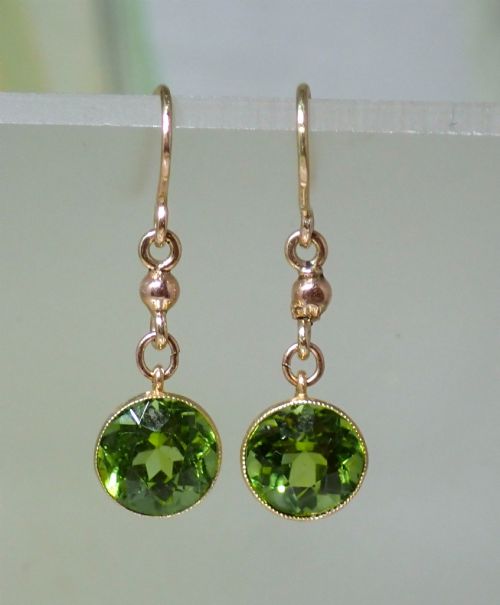
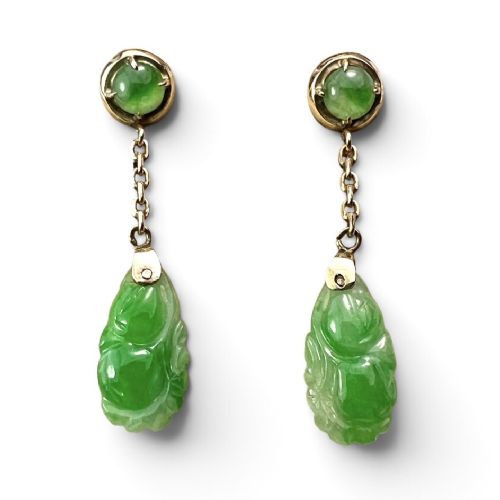
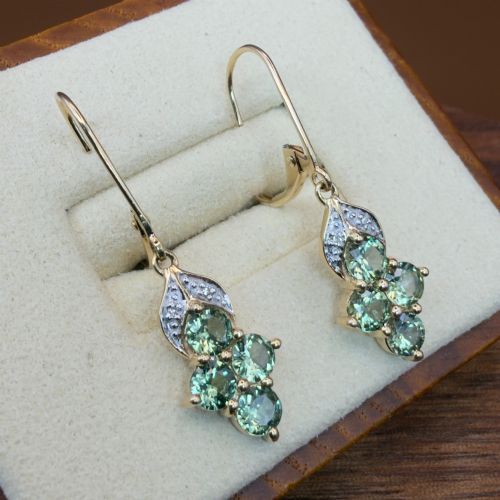
These vintage green drop earrings bring together historic metals, bright stones and precise geometry that catch the eye and lift the face.
Vintage Green Drop Earrings
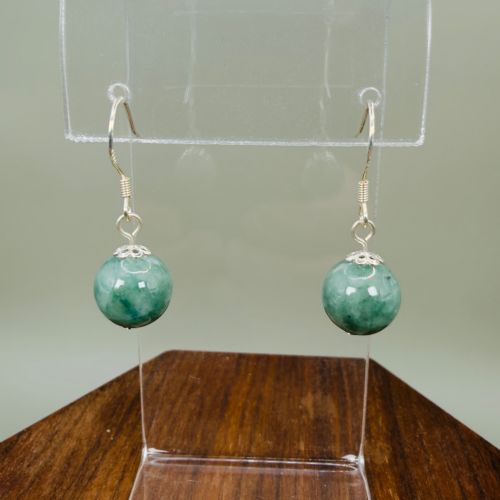
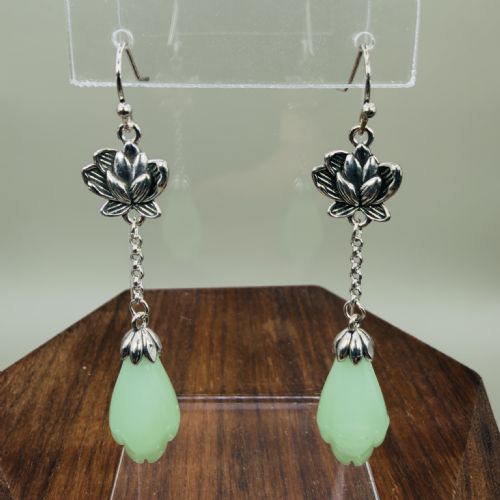
Vintage green drop earrings span periods from the nineteenth century through the mid-twentieth century, capturing the shifting tastes of Victorian, Edwardian, Art Deco and mid-century designers. When searching this phrase, a buyer meets styles ranging from Chinese export carvings to modern chrome and bakelite compositions.
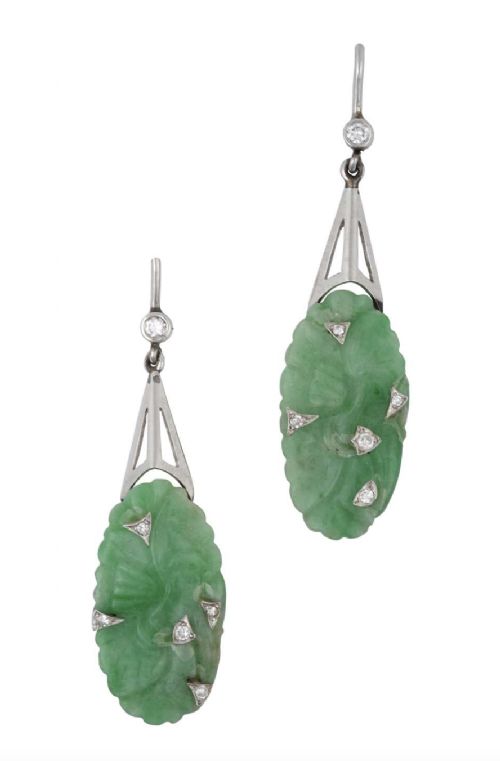
The materials paired with these green stones include platinum, silver and yellow gold alongside diamonds, pearls and marcasite. Forms vary from simple hook dangles to hinged backs and clustered settings that showcase emerald, jade, peridot and chalcedony.
Materials and construction methods
Goldsmiths and silversmiths shaped precious metals such as 9ct gold, 15ct gold, 18ct gold, platinum and sterling silver to house green gemstones. Stones were faceted, carved or polished into beads, pear drops and marquise cuts before being secured in bezels, prongs or cluster settings.
Makers also employed alternative modern materials including phenolic bakelite, chrome, glass and marcasite, particularly in modernist and Art Deco pieces. These varied techniques allowed both fine precious jewels and accessible modernist designs to achieve a distinct vertical drop.
Bakelite earrings from the 1930s prove that industrial plastics could be just as glamorous as platinum and emeralds.
Distinguishing quality across the range
Quality rests in the harmony between the gemstone and its metal setting, whether platinum, gold or silver. Superior examples show careful carving of jade and jadeite, crisp faceting of emeralds and sapphires, and robust construction in the hooks, hinges and backs.
Artistic execution also separates the exceptional from the ordinary, particularly in period pieces where marcasite, glass, bakelite or diamonds are balanced around the central green stone. The precision of the metalwork and the integration of secondary stones dictate the character of the piece.
The Vintage Green Drop Earrings Glossary
- Drop earrings
- Earrings that hang below the earlobe, often moving slightly with the wearer. They provide length and draw attention to the jawline.
- Jadeite
- A dense, tough mineral prized for its smooth texture and vibrant green colour. It frequently appears in carved Chinese export and Art Deco designs.
- Marcasite
- Small, faceted pyrite stones set closely together in silver to create a sparkling, textured border. It is a hallmark of many Art Deco jewels.
- Parure
- A matching set of jewellery consisting of pieces designed to be worn together, such as earrings, a ring and a necklace.
- Bakelite
- An early synthetic phenol formaldehyde resin used in modernist twentieth-century jewellery. It offers rich colour and lightweight structure.
Vintage Green Drop Earrings: Frequently Asked Questions
What periods do these earrings come from?
The pieces span the nineteenth century through the 1960s, covering periods like the Edwardian era, the 1920s and 1930s Art Deco movement, and mid-century modernism.
Each era brings distinct materials and shapes, from delicate platinum and diamond drops to bold bakelite and chrome designs.
What green stones are most common?
Buyers encounter a wide variety of green materials, including emerald, jade, jadeite, peridot, chalcedony, green glass and sapphires.
Some feature natural precious gems paired with diamonds, while others utilise carved jade or green chalcedony set in silver or gold.
How do I care for vintage earrings?
Care depends entirely on the materials used in the specific pair, as softer stones like jade or chalcedony require gentle treatment compared to diamonds and gold.
Keep them stored separately to avoid scratching, and avoid harsh chemical cleaners, particularly on silver, bakelite or paste stones.
Are all the gold pieces the same purity?
No, the metal purity varies across different decades and manufacturing traditions, with items recorded in 9ct, 14ct, 15ct and 18ct yellow and white gold.
Platinum and sterling silver also appear frequently alongside these gold variations, sometimes complemented by gold-plated or silver-plated settings.