

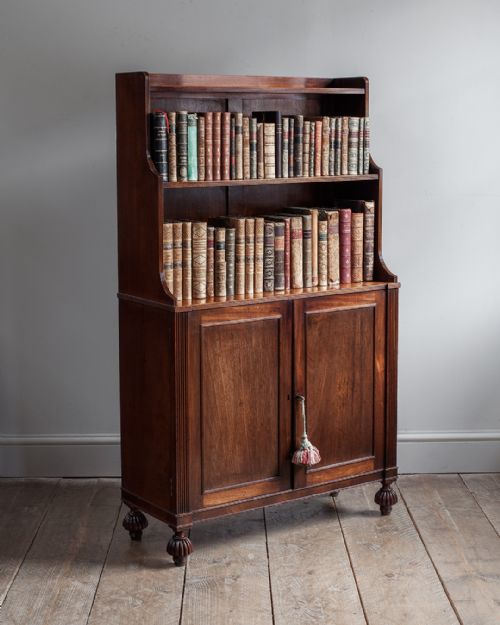


Vintage Graduated Shelves
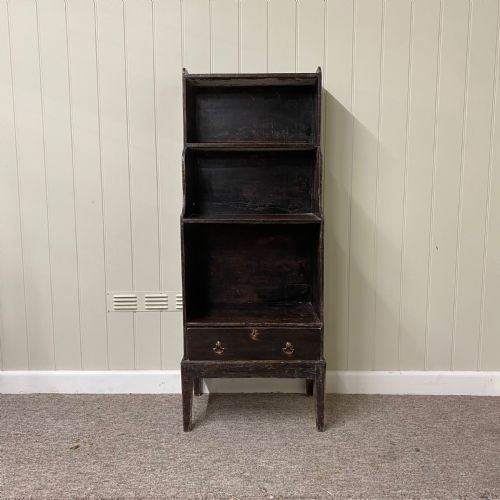
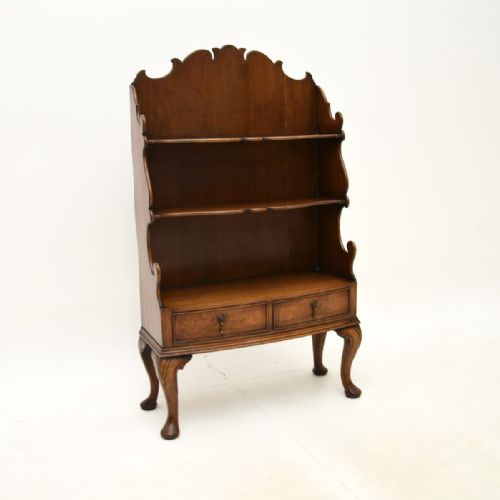
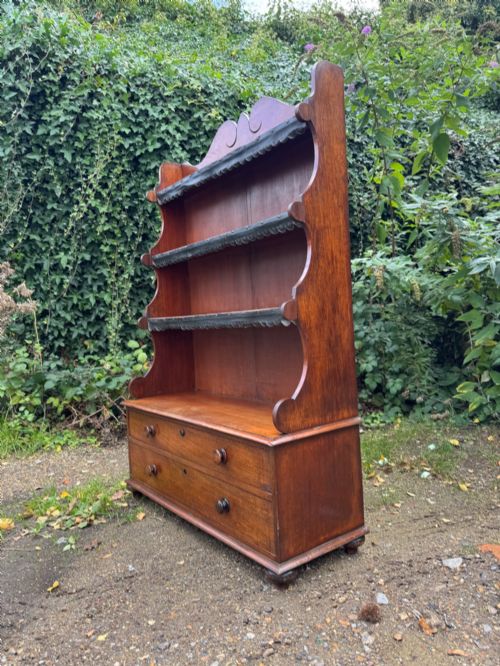
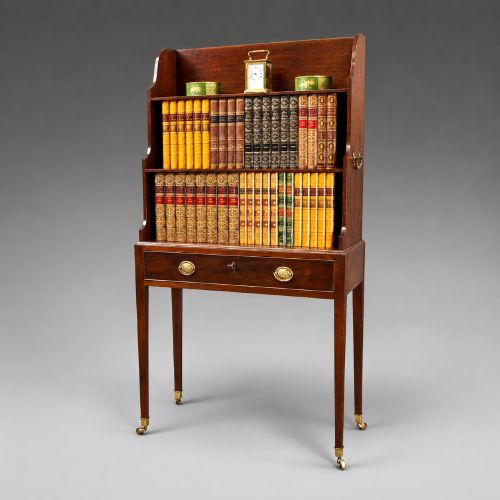
These vintage graduated shelves cascade in descending tiers to display books and objects with architectural grace.
Vintage Graduated Shelves
Vintage graduated shelves, frequently encountered as waterfall bookcases and cascading display units, step down tier by tier from top to bottom. These open or enclosed structures originate across the nineteenth and early twentieth centuries, spanning Regency, Victorian, Edwardian, and later revivals.
The forms on this page range from freestanding dwarf bookcases and open display shelves to fitted cupboard bases and specialised compartments like integrated canterburys. Woods such as mahogany, burr walnut, yew, and teak predominate, sometimes enriched by brass details or leather accents.
Buyers seeking vintage graduated shelves find pieces designed to utilise vertical space efficiently while keeping collections accessible. The descending tiers create a distinctive silhouette that bridges utilitarian storage and decorative display.
Construction and materials
Cabinetmakers constructed these cascading shelves primarily from solid timbers and choice veneers, applying flame mahogany, burr walnut, or yew wood across curved and tiered profiles. Supporting galleries, uprights, and vertical dividers frequently incorporate brass fixtures or subtle turned supports.
Joining techniques combined traditional cabinet joints with tiered shelving supports secured to graduated side panels. Surface finishes relied on hand-applied polishes that emphasised the natural grain patterns of the walnut and mahogany timbers.
Vintage Graduated Shelves Retail Price Guide 2026
Typical asking prices for vintage graduated shelves among the pieces listed under this phrase on Sellingantiques today, from the lower quarter to the upper quarter. They describe what is for sale here now, not the wider market.
Some adventurous makers added brass galleries simply to keep runaway novels from tumbling onto the rug.
Markers of quality
Superior examples display careful selection of timber veneers, where grain patterns flow harmoniously across the descending tiers rather than appearing mismatched. The finesse of the fretwork, the crispness of turned galleries, and the stability of the stepped uprights set finer pieces apart.
Proportion and execution define the hierarchy of these shelves, from simple utilitarian storage to sophisticated pieces featuring integrated cupboards or specialised lower sections. The integration of secondary woods and the precision of the stepped joints indicate the level of workshop care.
The Vintage Graduated Shelves Glossary
- Waterfall bookcase
- A tiered shelving unit where each successive shelf steps forward from the one above, creating a cascade effect. This design became popular during the Regency period for displaying books and decorative objects.
- Graduated shelves
- Shelves that decrease in depth or height progressively from bottom to top. This arrangement stabilizes the structure and presents items at different visual levels.
- Flame mahogany veneer
- A decorative wood slicing chosen for its fiery, swirling grain pattern. Cabinetmakers applied this veneer to prominent surfaces on nineteenth-century bookcases.
- Canterbury
- A low stand featuring partitioned sections for holding sheet music or books, occasionally incorporated into the base of larger shelving units. Originating in the eighteenth century, it adds multi-functional utility to display furniture.
- Open gallery
- A low decorative railing or pierced surround fitted to the top or tiers of a bookcase. It prevents items from sliding off while adding architectural detail.
Vintage Graduated Shelves: Frequently Asked Questions
What are vintage graduated shelves used for?
These tiered units serve primarily to display books, ceramics, and small collections while occupying minimal floor space. Their stepped configuration allows items on every tier to remain clearly visible.
Historically placed in parlours, libraries, and studies, they function today in living rooms and hallways as both practical storage and decorative focal points.
How do I identify a Regency waterfall bookcase?
Regency examples typically feature rich mahogany timbers, graceful curved side supports, and sometimes brass gallery rails. Proportions tend to be elegant and compact, reflecting early nineteenth-century design tastes.
Makers of this era favoured clean architectural lines combined with warm wood tones, setting them apart from heavier Victorian or later revival pieces.
Are these shelves sturdy enough for heavy books?
Most vintage graduated shelves handle standard book collections comfortably, though the descending depth means lower shelves hold larger volumes than the shallower top tiers. Solid wood construction provides inherent stability across the stepped structure.
Distributing heavier volumes toward the deeper lower sections ensures the unit remains balanced during daily use.
How do I care for wood veneer shelves?
Maintaining these surfaces requires dusting with a dry, soft cloth and avoiding direct sunlight or excessive moisture, which can damage old polishes and veneers. Natural wax applied occasionally helps preserve the timber finish.
Placing the shelves away from direct heat sources prevents the wood from drying out and protects the joints over time.