

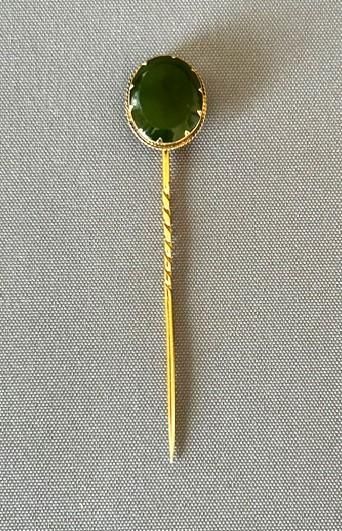
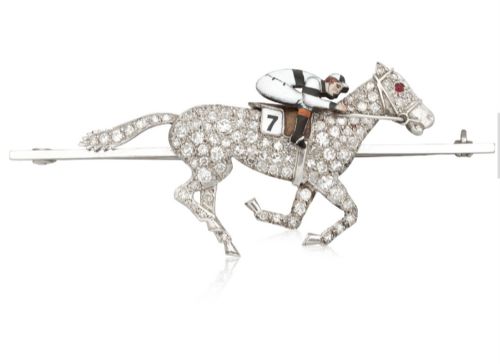


Vintage Gold Tie Pin
A vintage gold tie pin secures a cravat or lapel with period character, offering the solid weight of gold and the gleam of fine gemstones.
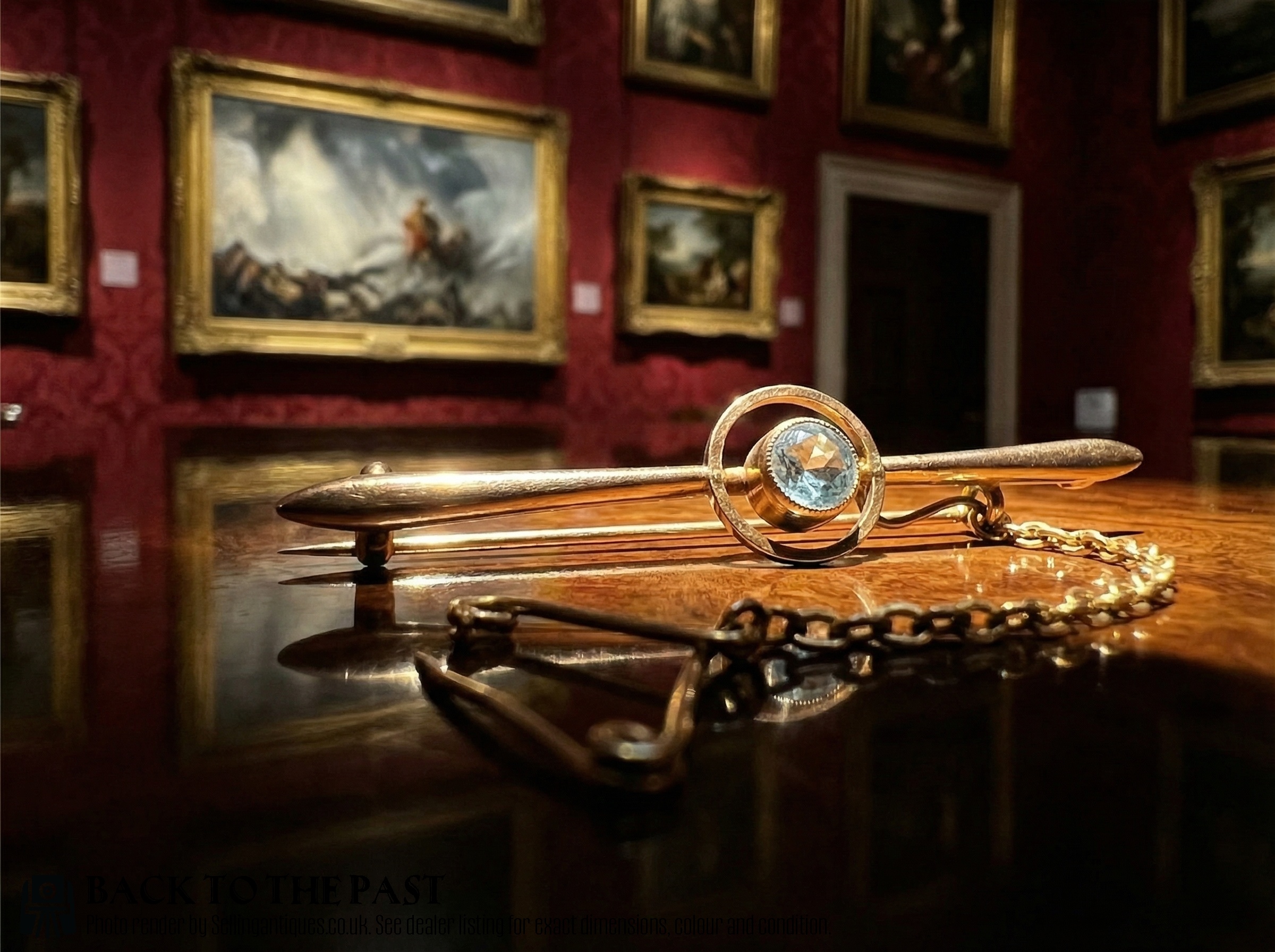
Vintage Gold Tie Pin
A vintage gold tie pin serves primarily as a decorative fastening for neckwear or lapels, encompassing delicate stick pins, bar brooches, and lapel pins. Pieces matching this search phrase emerge from periods spanning the Victorian era through the Edwardian years, the 1920s Art Deco period, and into the mid-twentieth century.
Origin details in the inventory point to French craftsmanship alongside British Victorian and Edwardian examples. Buyers frequently encounter pins pairing gold settings with pearls, diamonds, rubies, or enamel work.
Materials and construction methods
Goldsmiths utilised varying purities of yellow and white gold, alongside platinum, to form the structural mounts of these pins. Settings often incorporate 9ct, 15ct, 18ct, or 19th-century gold standards combined with platinum for secure stone claw or bezel work.
Gemstone selection focuses on diamonds, pearls, rubies, aquamarines, and garnets, supplemented by detailed enamel work and carved Essex crystal. Stones appear in rose cuts, old brilliant cuts, and old European cuts, secured alongside natural pearls, pink pearls, and baroque pearls.
Vintage Gold Tie Pin Retail Price Guide 2026
Typical asking prices for vintage gold tie pin among the pieces listed under this phrase on Sellingantiques today, from the lower quarter to the upper quarter. They describe what is for sale here now, not the wider market.
Object forms documented on this page include stick pins, bar brooches, lapel pins, and Essex crystal fox motifs.
Assessing quality in gold pins
The calibre of a pin rests on the precision of its metalwork and the integration of its components, where hand-forged gold mounts demonstrate superior artistry over mass production. Weight, substantial gold purity, and secure pin stems indicate higher initial manufacture.
Gemstone selection dictates overall value, separating pieces set with matched natural pearls and clean old-cut diamonds from simpler designs. The survival of crisp enamel work, undamaged Essex crystals, and original boxed presentations further elevate a piece.
The Vintage Gold Tie Pin Glossary
- Bar brooch
- A horizontal metal bar, frequently mounted with gemstones or central motifs, fitted with a pin stem and safety catch on the reverse.
- Old cut diamond
- A hand-faceted diamond cut popular in the Victorian and Edwardian eras, characterised by a small table and high crown.
- Essex crystal
- A technique where a convex piece of rock crystal is reverse-painted by hand to create a three-dimensional miniature portrait or motif.
- Enamel
- A durable vitreous substance fused to metal through high-temperature firing, used to add permanent colour and pattern.
Vintage Gold Tie Pin: Frequently Asked Questions
What is the difference between Edwardian and Victorian pins?
Victorian pieces tend to display heavier gold settings, sentimental motifs like horseshoes and hunting bugs, and deep gemstone colours. They often reflect the romantic or mourning traditions of the nineteenth century.
Edwardian items lean towards lighter platinum-on-gold settings, lacy openwork designs, and combinations of diamonds and pearls. This later period prioritised an airy, delicate aesthetic over heavy metal masses.
Are these pins made of solid gold?
The listings comprise items fashioned from solid gold standards, including 9ct, 15ct, and 18ct variations. Many Edwardian and later pieces also incorporate platinum sections to mount white diamonds securely.
Check individual descriptions for specific gold hallmarks or purity marks stamped onto the reverse or pin stem.
Can I use a bar brooch as a tie fastener?
Shorter bar brooches function well when secured across a narrow tie or through lapel buttonholes. Their secure pin stems and catches offer a reliable hold compared to standard hat pins.
Ensure the weight of the bar brooch matches the fabric weight of your neckwear to avoid pulling or tearing delicate silks.