


Vintage Gold Garnet Jewellery
Vintage gold garnet jewellery brings together deep red stones and warm yellow, rose or white gold across rings, brooches and necklaces.
Vintage Gold Garnet Jewellery
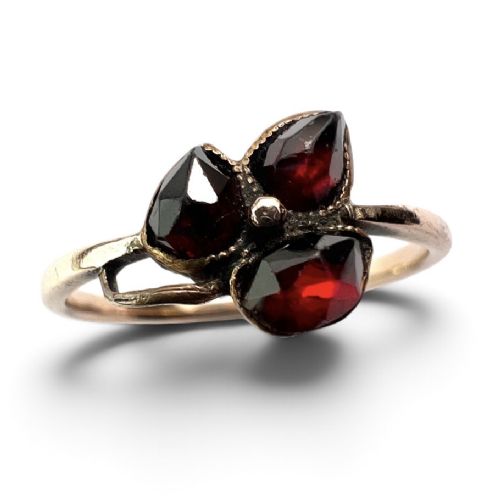
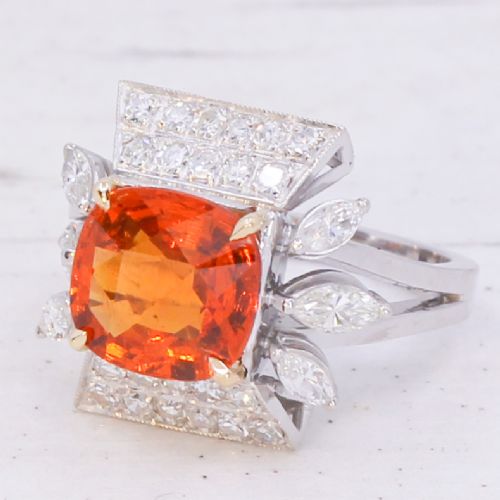
When you search for vintage gold garnet jewellery, you find items spanning the Victorian era through the mid-twentieth century, including the 1950s and 1960s. The selection on this page centres on rings, earrings, necklaces, brooches and pendants shaped from various carats of gold.
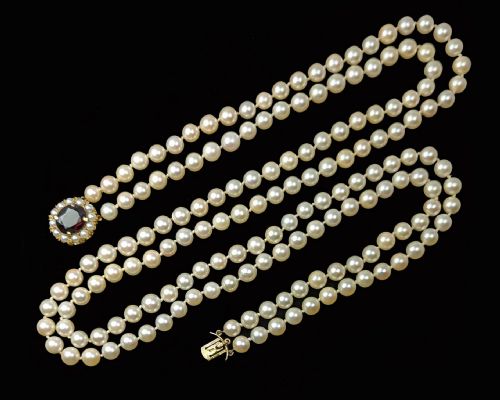
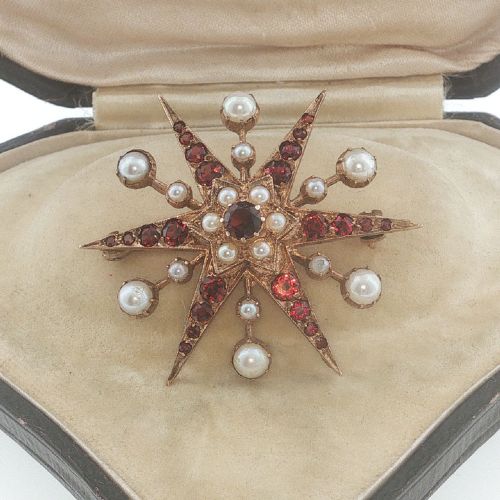
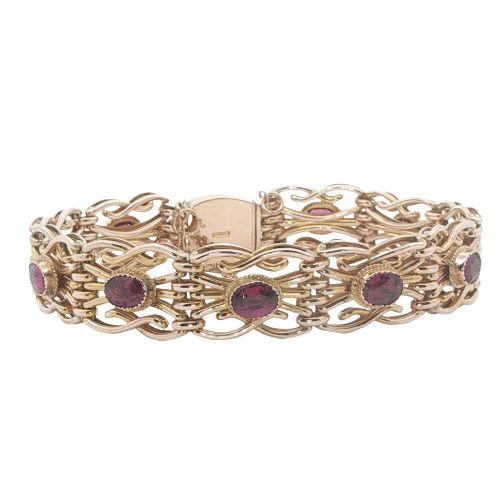
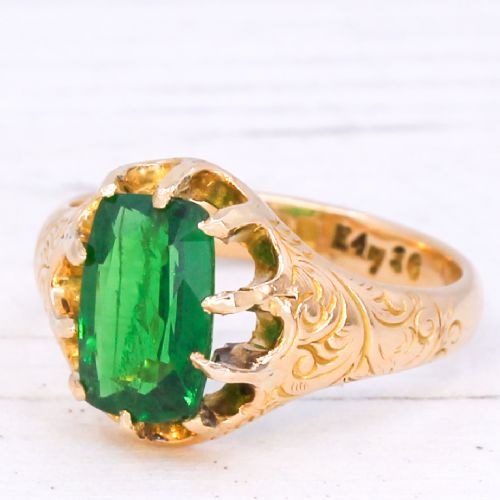
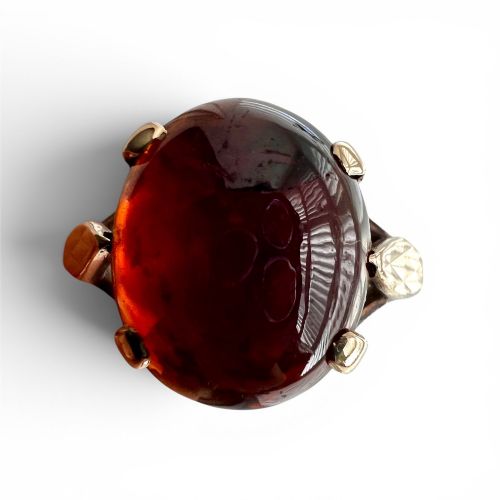
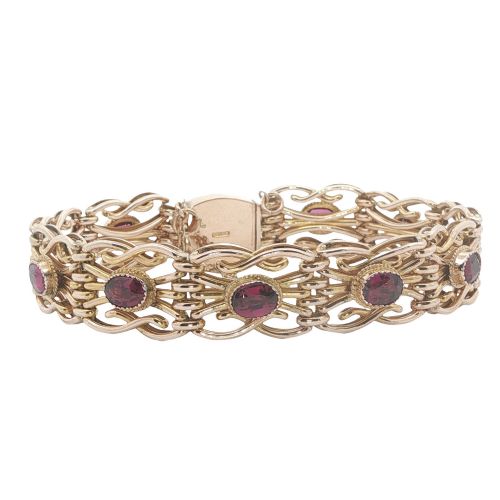
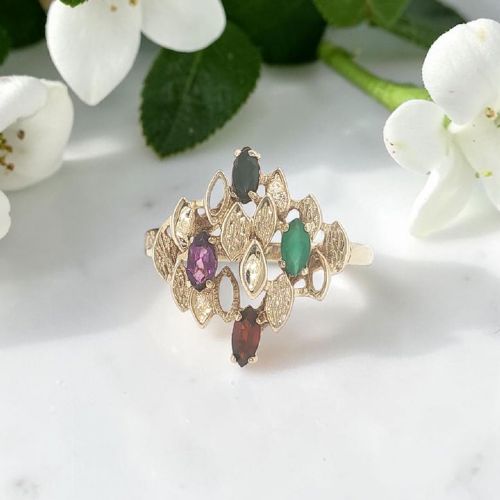
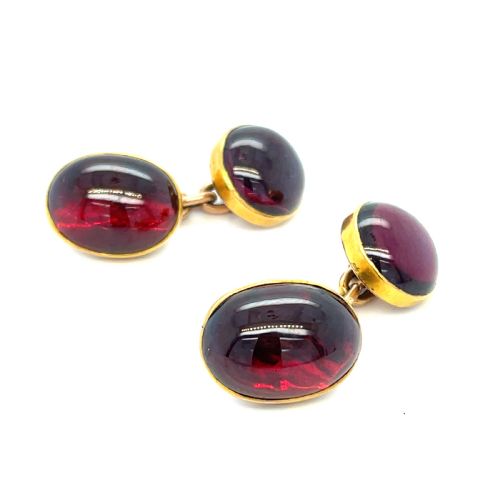
Victorian and Edwardian examples sit alongside mid-century cocktail rings, cluster designs and pearl necklaces featuring garnet clasps. Almandine garnets, cabochons and tsavorites appear frequently within floral, starburst and geometric settings.
How they were made
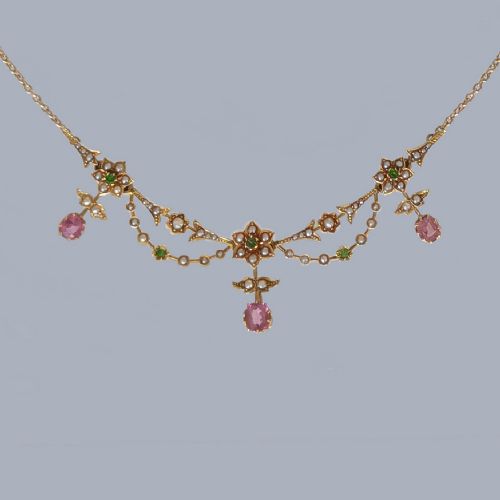
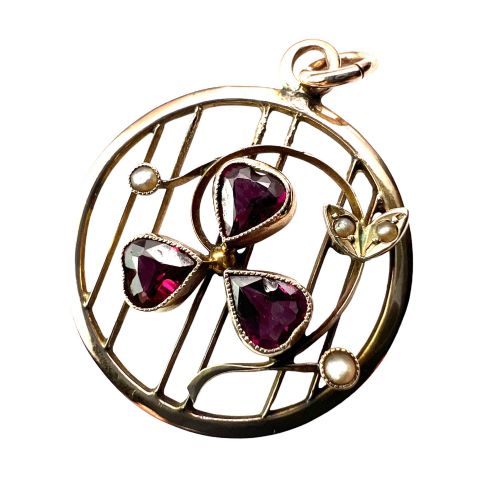
Goldsmiths utilised 9ct, 15ct and 18ct yellow and rose gold, often pairing deep red garnets with contrasting materials like seed pearls, diamonds and cultured pearls. Silver gilt also appears in continental European pieces, providing a secure mount for stones.
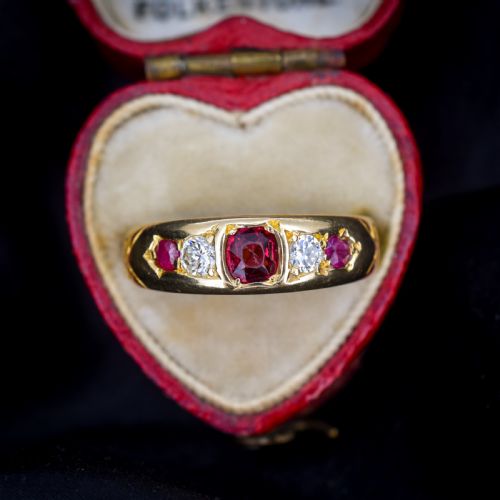
Techniques range from delicate filigree work and cluster settings to heavy cast bands and claw-set solitaire stones. Many items incorporate multi-gem arrangements where diamonds or sapphires accent the central garnet.
Listings feature 9ct, 15ct, and 18ct gold alongside silver gilt, spanning the Victorian era through the 1960s.
What varies in quality
Quality rests on the depth of colour in the garnet, the weight and purity of the gold mount, and the crispness of the surrounding metalwork. Superior items display well-matched stones with strong saturation and secure, even claw or bezel settings.
Hand-finished details such as fine seed pearl alignment, intact filigree and clear hallmarks elevate an item above mass-produced mid-century alternatives. The overall structural integrity of clasps, pins and ring shanks dictates the lasting durability of each piece.
The Vintage Gold Garnet Jewellery Glossary
- Almandine garnet
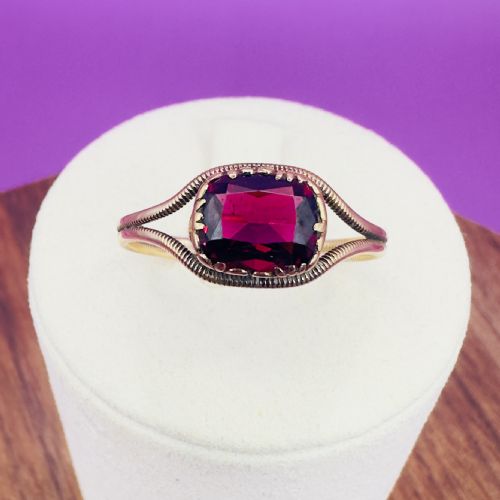
- A deep red to brownish-red variety of garnet that dominates antique and vintage cluster rings and bracelets.
- Cabochon
- A gemstone shaped and polished with a smooth, rounded surface rather than faceted edges.
- Seed pearl
- A very small, naturally occurring or cultured pearl often clustered around a central garnet in Victorian and Edwardian brooches and pendants.
- Silver gilt
- Sterling silver that has been coated with a thin layer of gold, common in Austro-Hungarian antique pieces.
- Trilogy ring
- A ring featuring three stones set side by side, which often represent the past, present and future.
Vintage Gold Garnet Jewellery: Frequently Asked Questions
How do I date my garnet jewellery?
Dating relies on hallmarks, metal purities, and setting styles. Victorian and Edwardian pieces often utilise 15ct gold or rose gold with intricate seed pearl accents, whereas mid-century examples from the 1950s and 1960s frequently employ 9ct yellow gold and bolder cocktail ring silhouettes.
Assay office marks and stamped date letters provide precise years for British items. Comparing the stone cut and overall construction to known period styles confirms the era of manufacture.
Are all red garnets the same?
Garnets vary widely in shade and geological composition. Almandine garnets show a deep, rich red, while other varieties include green tsavorites and bright orange stones.
The intensity of the colour and the clarity of the crystal determine the visual impact of the jewellery. Different eras favoured specific tones, from the dark Victorian almandines to brighter mid-century cuts.
How should I wear an antique garnet ring?
Antique garnet rings suit daily wear provided you take sensible precautions. Because gold and garnets can suffer damage from hard knocks, remove rings during heavy manual tasks or sports.
Store pieces individually in soft pouches to prevent stones from scratching each other. Regular checks by a jeweller ensure the claw settings remain tight and secure.