


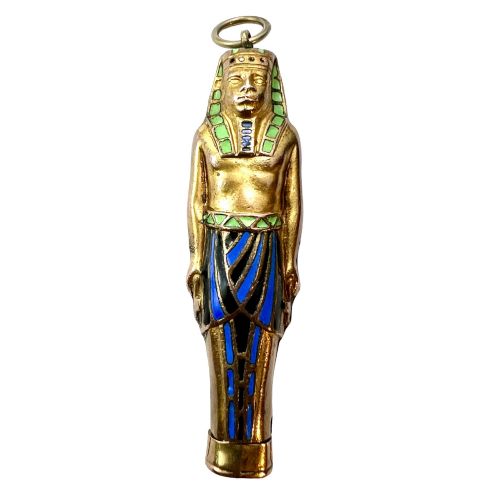


Vintage Gold Fob Pendant
A vintage gold fob pendant brings together heavy metalwork and hardstone seals, serving as a tactile piece of pocket watch history.
Vintage Gold Fob Pendant
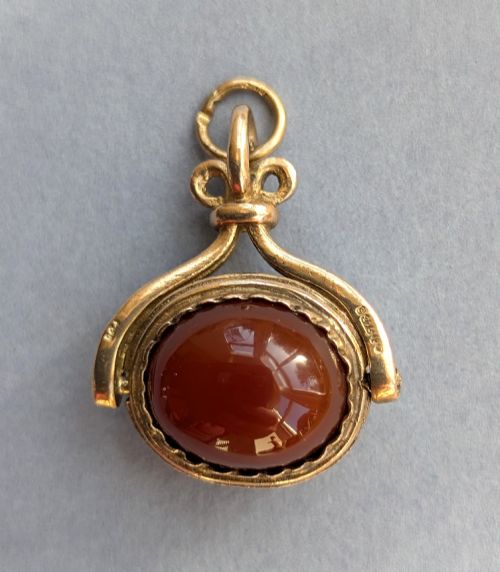
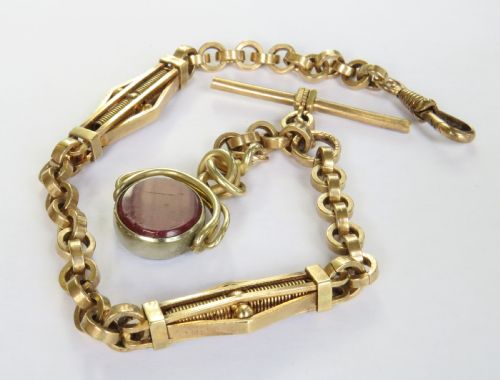
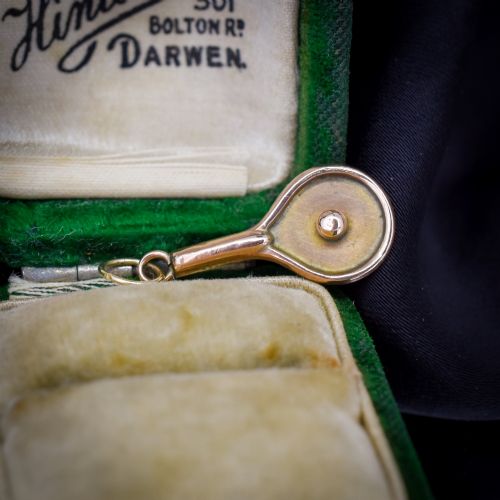
A vintage gold fob pendant represents a category of small decorative objects originally designed to hang from a pocket watch chain. Buyers seeking a vintage gold fob pendant encounter swivel designs, stationary seals, and figural charms shaped like animals or everyday items.
The selections span distinct periods including Georgian, Victorian, Edwardian, and the 1920s. Common configurations pair a solid metal frame with polished stones or rotating panels meant for stamping wax.
Materials and construction methods
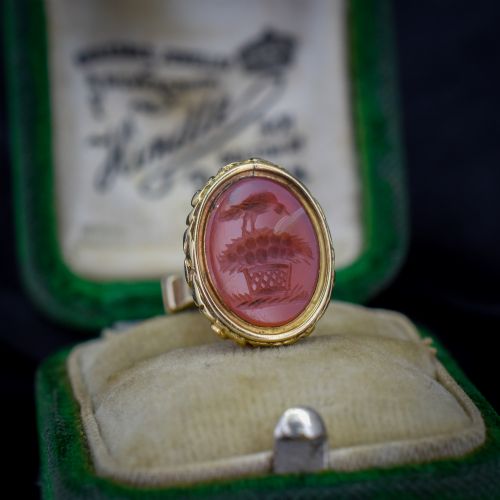
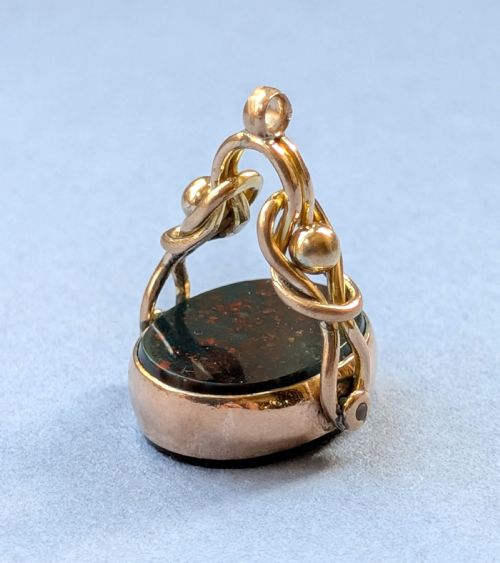
Craftsmen utilised various grades of gold, notably nine carat, ten carat, eighteen carat, and rolled rose gold, alongside gilt metal for structural mounts. These metals surround natural stones including carnelian, bloodstone, sardonyx, citrine, amethyst, and shell.
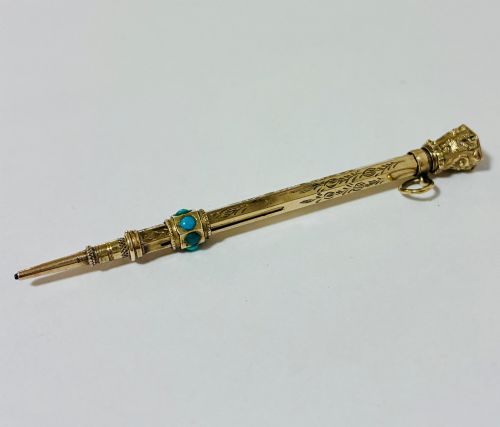
Techniques involve precision bezel settings to hold hardstones securely within swivel frames or stationary mounts. Decorative elements frequently incorporate hand engraving, enamel work, and miniature mechanical components such as spinning axes and sliding mechanisms.
Vintage Gold Fob Pendant Retail Price Guide 2026
Typical asking prices for vintage gold fob pendant among the pieces listed under this phrase on Sellingantiques today, from the lower quarter to the upper quarter. They describe what is for sale here now, not the wider market.
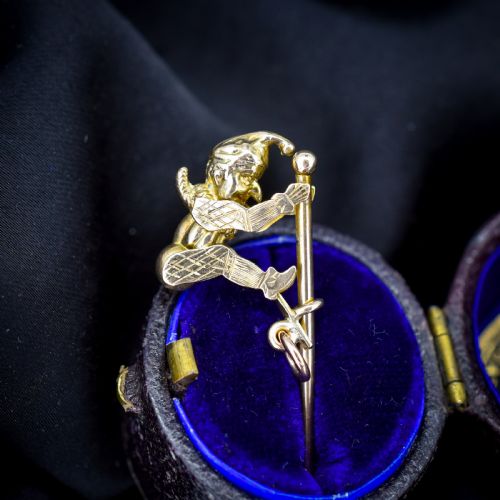
A tiny sliding Mr Punch figure hides inside one Victorian pendant, ready to spring out when activated.
Factors of quality and execution
Quality rests upon the crispness of the hand engraving and the depth of relief work on figural pieces like animals or pharaohs. Superior examples display tight joins, smooth rotation on swivel fobs, and clean bezels that hold the stone without excess solder.
The choice of material also dictates distinction, with solid yellow and rose gold carrying greater substance than gilt alternatives. Premium stones exhibit clean polishes, deep natural colour in carnelian and bloodstone, and unblemished enamel.
The Vintage Gold Fob Pendant Glossary
- Fob seal
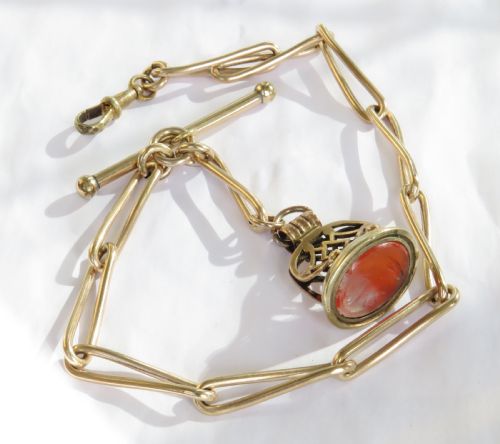
- A small pendant featuring an intaglio carved stone or metal base used to press into hot wax for sealing letters. It typically hangs from a watch chain.
- Swivel fob
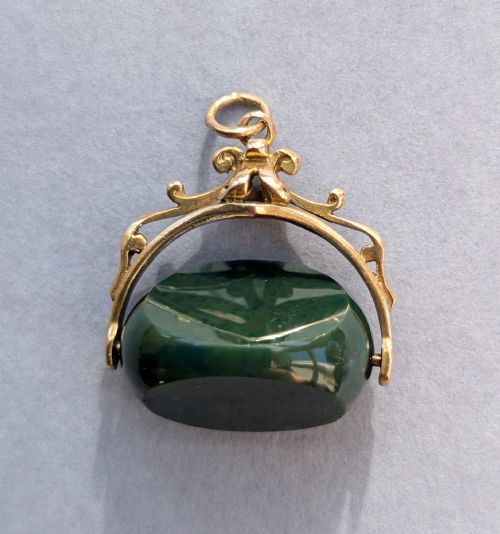
- A pendant mounted on a central axis that turns to present two different faces, often combining a stone panel and an engraved metal matrix.
- Carnelian
- A reddish-orange variety of chalcedony commonly set into watch fobs and seals for its durability and suitability for intaglio carving.
- Bloodstone
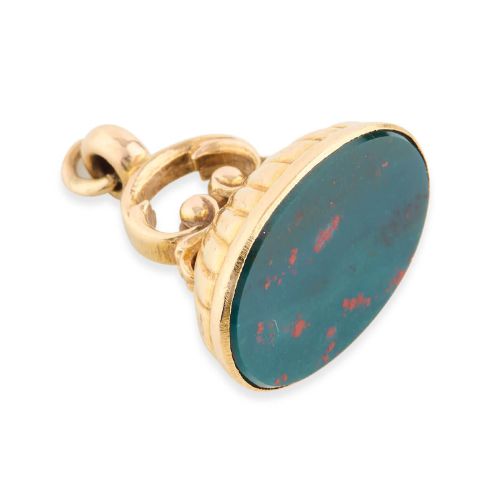
- A dark green jasper flecked with red spots of iron oxide, frequently utilised in nineteenth-century fob pendants.
- Albert chain
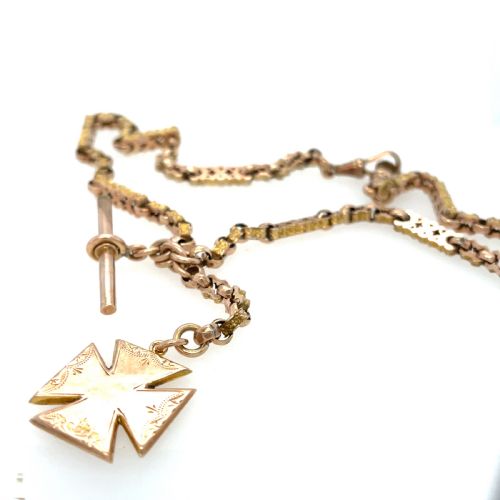
- A heavy chain attached to a pocket watch, designed to pass through a waistcoat buttonhole and display charms and fobs at the drop.
Vintage Gold Fob Pendant: Frequently Asked Questions
What is a fob pendant?
A fob pendant is a small decorative ornament that originally hung from the end of a pocket watch chain. These pieces often took the form of seals, lockets, or small charms.
Over time, they transitioned from functional timekeeping accessories to standalone items of jewellery worn on modern chains.
How do I wear a fob pendant?
Fob pendants suit medium to heavy neck chains, allowing the piece to sit flat against clothing. Their substantial weight makes them ideal for everyday wear on sturdy gold links.
They also pair well with charm bracelets, provided the jump ring is securely fastened to withstand daily movement.
What stones are found in fobs?
Common stones include carnelian, bloodstone, sardonyx, amethyst, and citrine. These hardstones were chosen for their durability and attractive colours.
Many of these stones feature flat faces carved with initials or family crests for stamping sealing wax.
How do I date a gold fob?
Dating relies on stylistic clues, hallmarks, and structural design markers associated with Georgian, Victorian, Edwardian, and Art Deco periods. Engraved dates and specific motifs like sliding mechanisms or Egyptian revival themes also help establish age.
Consulting the metal purity marks and construction techniques provides a clearer timeline of origin.