

Vintage Gold Chairs
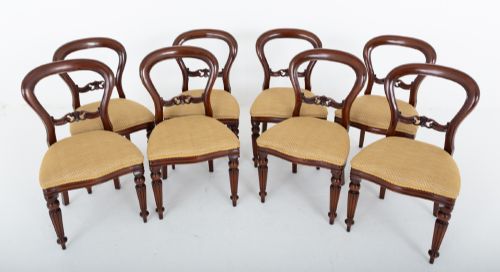
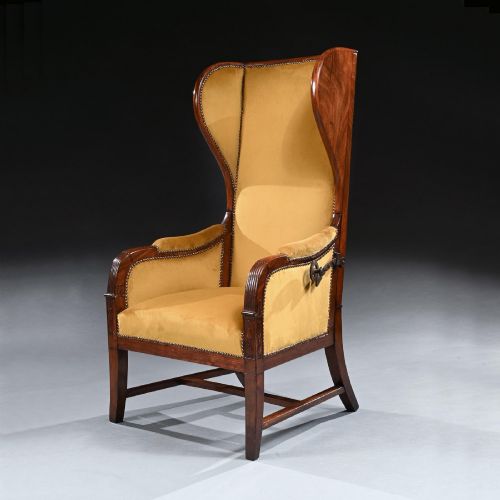
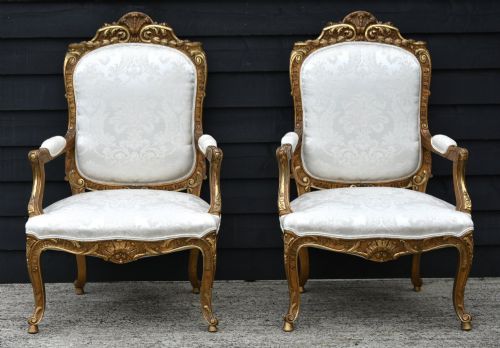
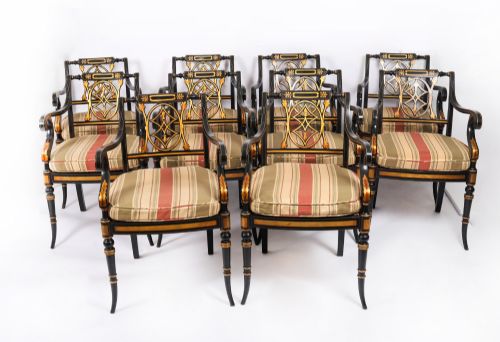
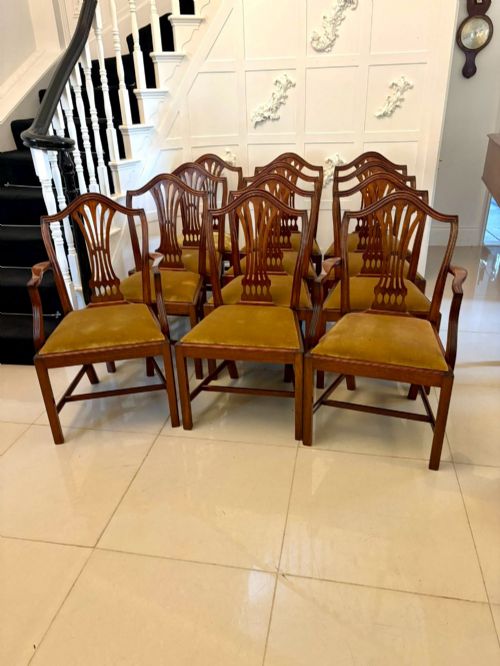
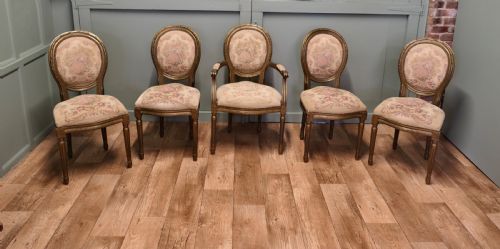
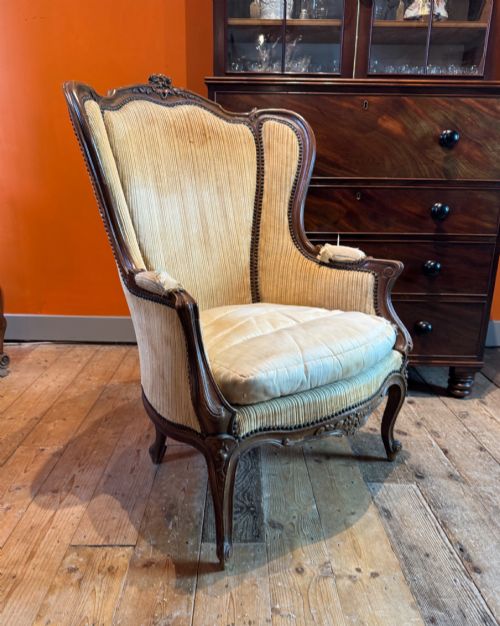
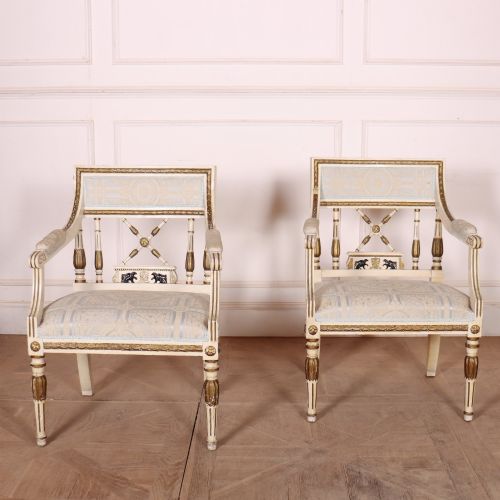
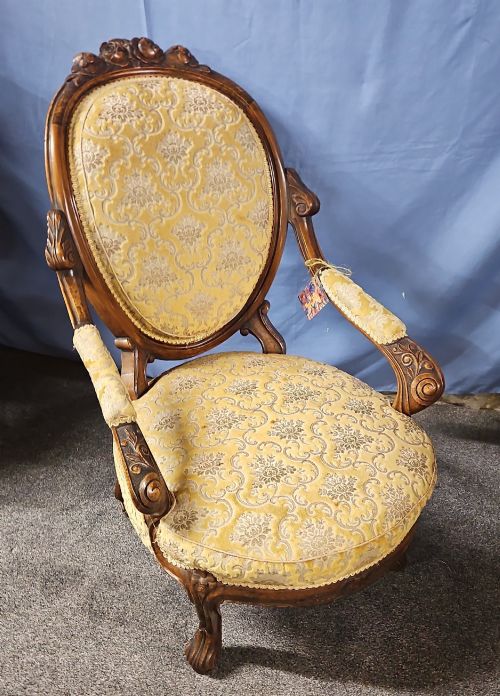
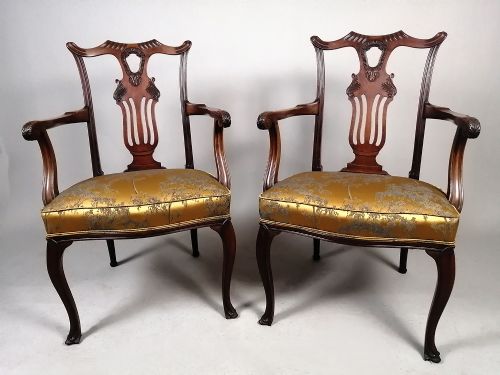
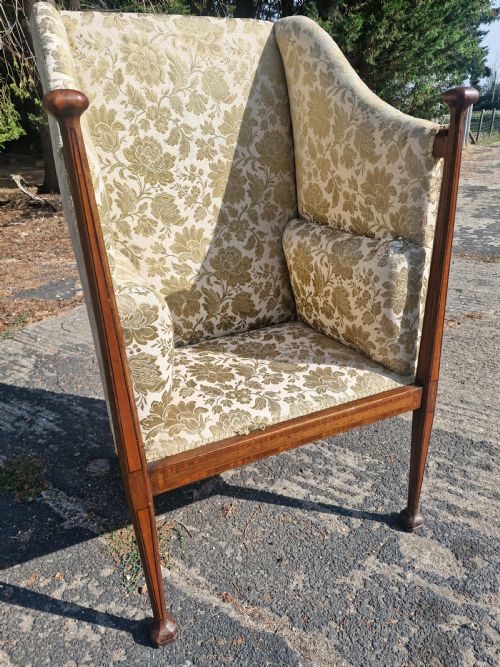
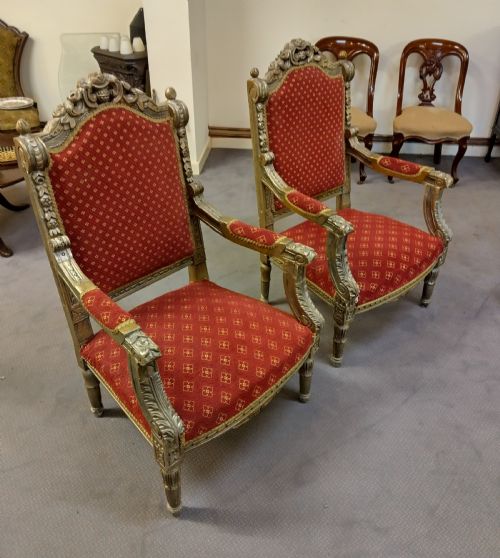
These vintage gold chairs encompass gilded French salon suites, English mahogany dining seats and nineteenth-century armchairs finished in bright metal or leaf.
Vintage Gold Chairs
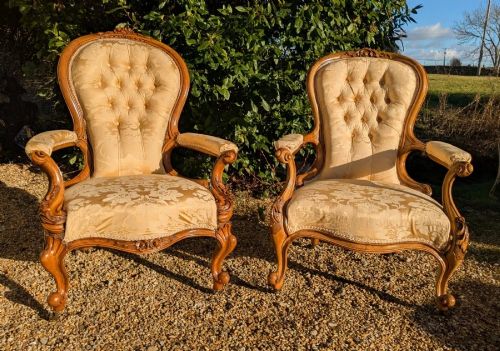
Vintage gold chairs encompass seating forms ranging from nineteenth-century French armchairs and giltwood bergères to early twentieth-century salon chairs and dining seats. Buyers searching for vintage gold chairs frequently encounter gilt finishes on carved wood frames alongside polished brass and mahogany structures dating from the Victorian, Edwardian and Regency periods.
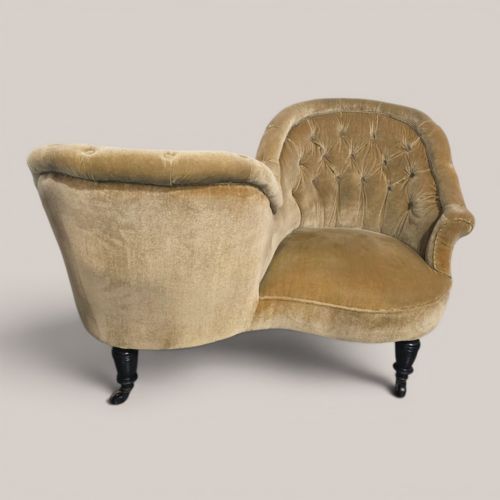
The selection includes pairs of open armchairs, single side chairs, conversational sofas and larger salon suites styled after Louis XVI, Rococo Revival and Napoleon III aesthetics. Most pieces originate from French, English or Continental workshops active across the nineteenth and early twentieth centuries.
How they were made
Frames are constructed from solid timbers such as mahogany, walnut, oak and rosewood, which receive carved details before undergoing gilding with gold leaf or application of gilt finishes. Many pieces utilise traditional joinery methods, including mortise and tenon joints, to support upholstered elements.
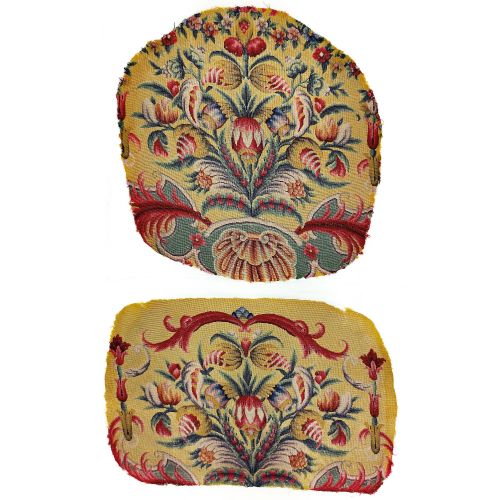
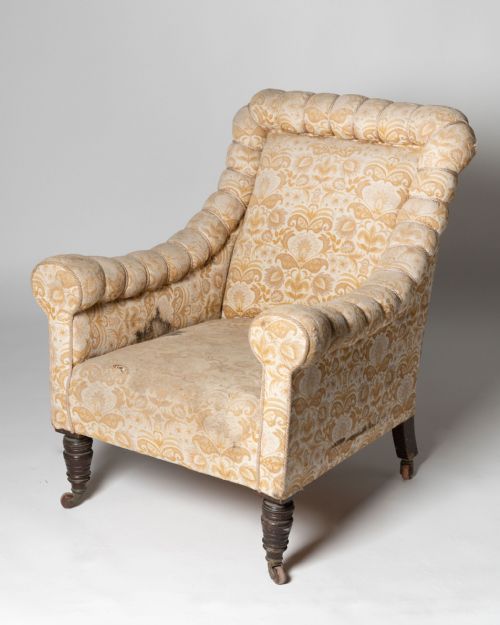
Upholstery relies on traditional stuffing materials housed beneath textiles like velvet, damask, silk and patterned fabric, often secured with buttoning or decorative trim. Brass components are cast and polished to create bright metallic frames or hardware accents on specific salon seating.
Vintage Gold Chairs Retail Price Guide 2026
Typical asking prices for vintage gold chairs among the pieces listed under this phrase on Sellingantiques today, from the lower quarter to the upper quarter. They describe what is for sale here now, not the wider market.
Listings feature periods spanning the Victorian, Edwardian, and Regency eras alongside French styles like Louis XVI and Napoleon III.
What varies in quality
The standard of carving on the wooden frame determines the distinction between ordinary production and high craftsmanship, with crisp, deep relief work indicating superior output. Hand-applied gold leaf demonstrates better ageing characteristics compared to flat painted metallic finishes.
The integrity of the internal joinery and the retention of original upholstery supporting structures separate robust daily-use items from fragile decorative examples. Coherence in the design revival style, such as accurate Louis XVI proportions, signals superior workshop origin.
The Vintage Gold Chairs Glossary
- Giltwood
- Wood that has been coated with gold leaf or a metallic powder finish. This technique appears extensively on French and Continental salon furniture.
- Fauteuil
- An open-arm armchair with upholstered back and seat, typically featuring exposed wooden framing. These French seats often display carved gilt decoration.
- Bergère
- An enclosed upholstered armchair with wooden sides and a built-in upholstered back. The style gained popularity during the eighteenth century and saw frequent revival periods.
- Napoleon III
- A nineteenth-century French design period associated with eclectic revivals and ornate decorative treatments. Pieces from this era often feature rich gilding and plush upholstery.
- Spoonback
- An upholstered chair back shaped to resemble the bowl of a spoon, providing ergonomic support. This form is common in Victorian walnut seating.
Vintage Gold Chairs: Frequently Asked Questions
How do I clean a giltwood frame?
Dust giltwood surfaces gently with a soft dry cloth to prevent abrasion to the delicate metallic leaf. Avoid liquid cleaners and chemical polishes that can lift or dull the gold finish.
For stubborn marks, consult a professional restorer rather than attempting solvent removal at home. Preserving the original gilding maintains the integrity and visual depth of the piece.
Are these chairs suitable for daily seating?
Many nineteenth-century and early twentieth-century chairs remain robust enough for regular use, provided the internal frame and joinery are sound. Lighter salon chairs function best in low-traffic areas or as occasional seating.
Dining chairs and sturdy armchairs withstand everyday service if their structural joints and webbing receive proper maintenance. Assessing the weight capacity and frame rigidity helps determine practical placement in a modern home.
Can I reupholster an antique gold chair?
Reupholstering antique seating is a common practice that breathes new life into worn fabric while preserving the historic wooden frame. Traditional materials and techniques should be utilised to respect the original construction methods.
Selecting a textile appropriate to the period, such as velvet, damask or patterned silk, ensures historical sympathy. Professional upholsterers can secure the fabric without compromising delicate gilt carvings.