


Vintage Glass Pendant Necklace
These vintage glass pendant necklace pieces bring together centuries of craftsmanship, offering striking colour and detail that collectors prize.
Vintage Glass Pendant Necklace
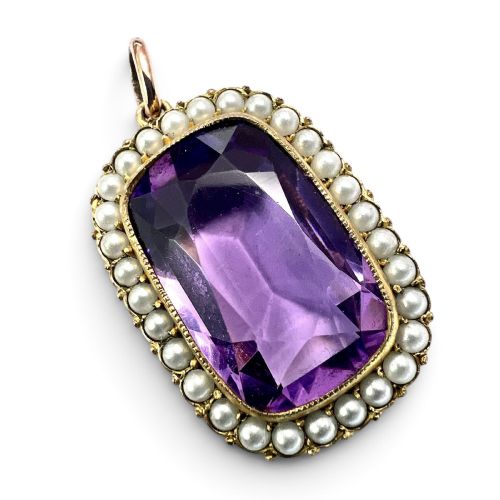
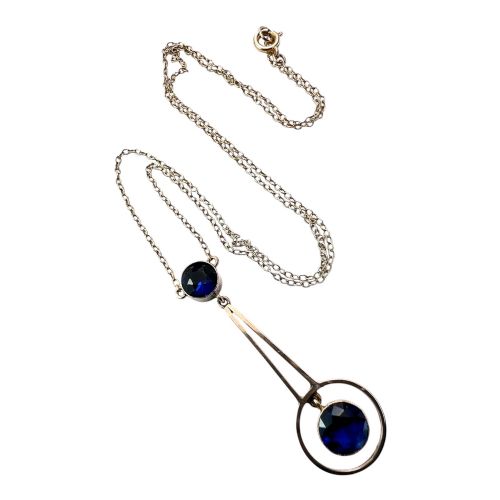
When you search for a vintage glass pendant necklace, you encounter pieces spanning from the Georgian and Victorian eras through to the Art Deco and 1940s Retro Modern periods. These items combine suspended glass elements with precious or base metals, creating wearable ornaments of distinct character.
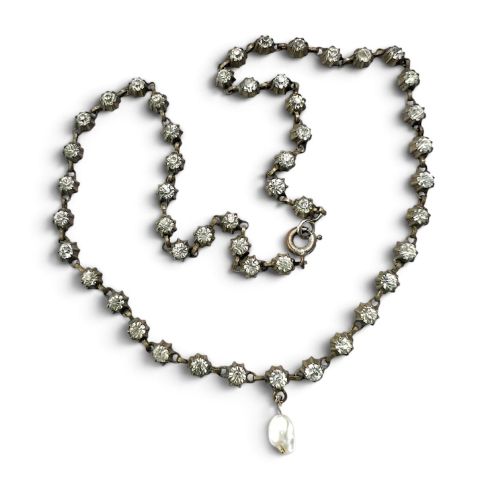
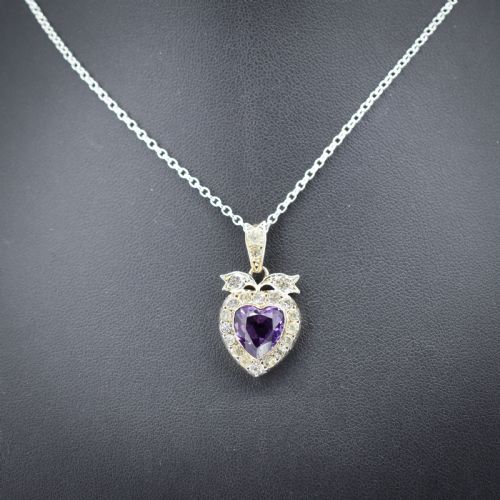
The most common examples on this page date from the 1920s and 1930s, reflecting the bold geometric and naturalistic motifs of the Art Deco movement. You will also find earlier Victorian and Edwardian iterations featuring paste glass and intricate drop chains.
What varies in quality
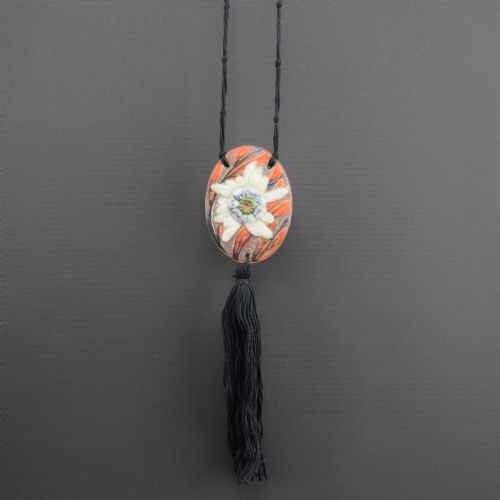
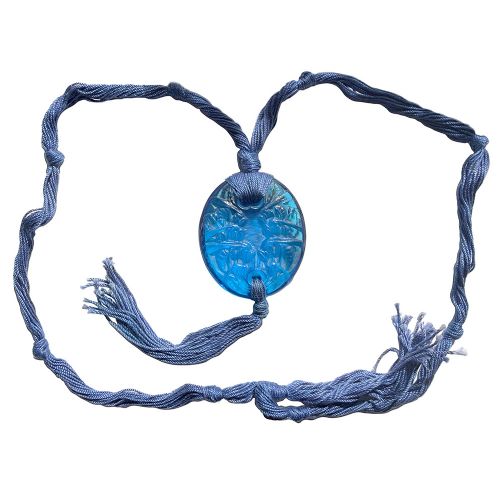
The distinction between standard pieces and exceptional work lies in the precision of the glass formation and the complexity of the metal setting. Pieces created by renowned glass artists demonstrate superior command of colour and texture within the pate de verre or moulded medium.
The choice of surrounding materials also defines the tier of the piece, with solid gold and platinum settings housing hand-cut crystal or fine paste stones elevating the work above simpler chrome or base metal mountings.
Listings span multiple eras from Georgian through to the 1940s, featuring silver, gold, platinum, and diverse glass techniques.
Argy Rousseau·R Lalique·Gabriel Argy Rousseau·Amalric Walter
The Vintage Glass Pendant Necklace Glossary
- Paste glass
- Hand-cut glass utilised to imitate precious gemstones. It was faceted and polished by hand in earlier periods to catch the light.
- Pate de verre
- A glass-casting method where finely crushed glass is packed into a mould and fused in a kiln. This technique produces rich colours and a characteristic frosted texture.
- Lavalier
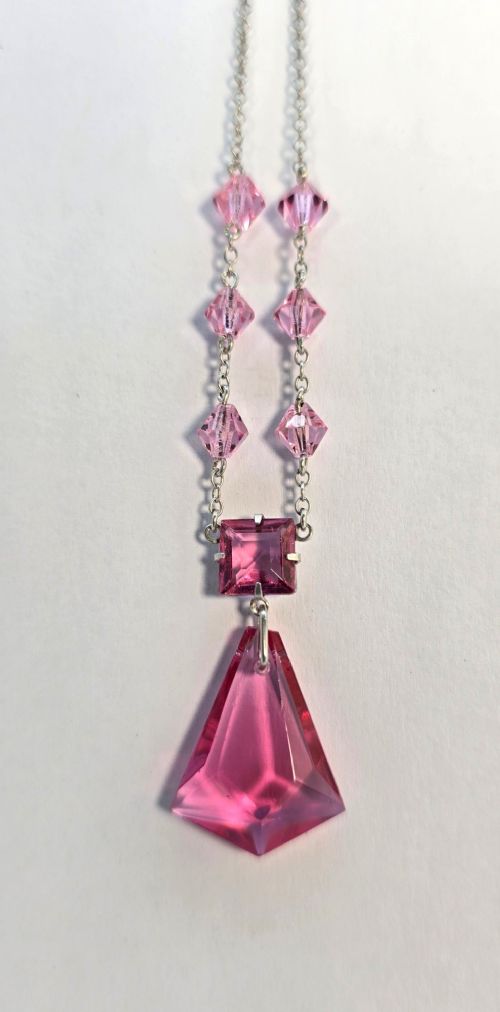
- A pendant necklace featuring a central drop suspended from a smaller motif or chain. It gained popularity during the Edwardian period.
- Plique-a-jour
- An enamelling technique where enamel is applied without a backing, allowing light to shine through the transparent or translucent cells like a stained glass window.
- Marcasite
- Small faceted pyrite stones set closely together in silver mounts to provide a shimmering, metallic sparkle akin to cut steel.
Vintage Glass Pendant Necklace: Frequently Asked Questions
How do I date a glass pendant necklace?
Dating relies on examining the metal settings, the cutting style of the glass, and the overall design motifs. Art Deco pieces display geometric lines from the 1920s, whereas Victorian examples utilise closed-back foils and organic floral drops.
Fittings such as the clasp type and chain construction also provide reliable clues to the decade of manufacture.
What is paste glass in antique jewellery?
Paste is a heavy, high-refractive flint glass that artisans moulded and hand-cut to imitate diamonds, amethysts, and emeralds. It differs from modern synthetic stones through its warm lustre and evidence of hand-polishing.
Georgian and Victorian jewellers prized paste for its ability to hold intricate facets and rich hues.
How should I care for vintage glass pendants?
Protect delicate glass and pate de verre elements by storing them individually in soft pouches away from hard surfaces. Avoid chemical cleaners and ultrasonic baths, which can damage fragile enamel, foil-backed paste, or delicate metal settings.
A gentle wipe with a soft, dry cloth suffices for routine maintenance after wear.
What is pate de verre?
Pate de verre translates as glass paste, a kiln-casting process that creates dense, tactile objects with subtle colour gradations. Artists layer powdered glass with a binder inside a mould before firing.
This method allows for organic, sculptural forms that standard blowing or pressing cannot achieve.