


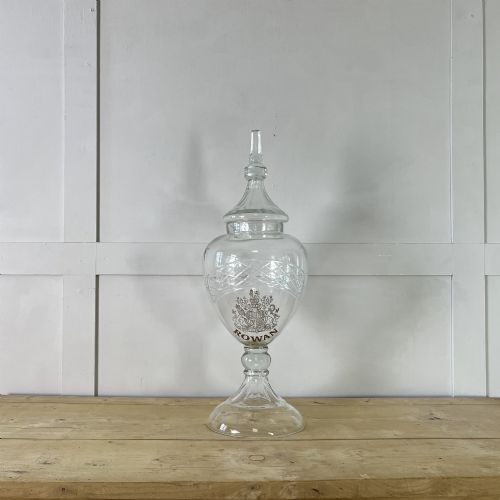


Vintage Glass Display Bottles
These vintage glass display bottles bring the rich, tactile presence of nineteenth-century chemists and maritime workshops directly onto your shelves.
Vintage Glass Display Bottles
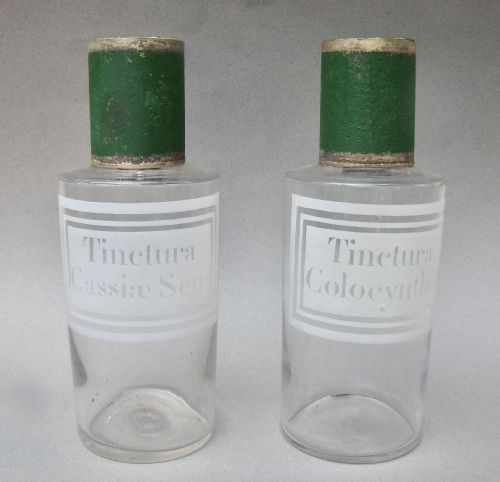
When you search for vintage glass display bottles, you encounter a distinct cross-section of nineteenth- and early twentieth-century utility ware, including apothecary vessels, shop display perfume sets, and maritime folk art. These containers served practical functions in chemists, shop windows, and sailors' quarters before finding a second life as decorative objects.
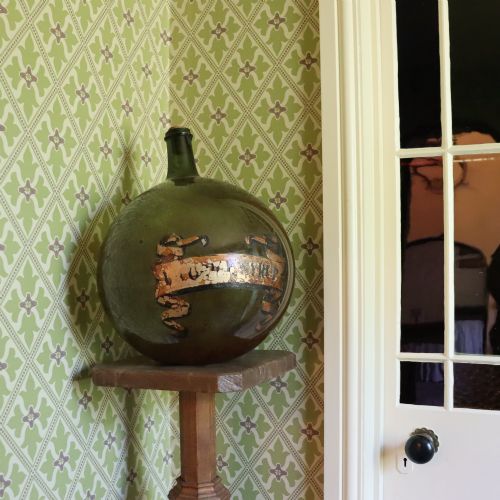
The pieces on this page most frequently take the form of apothecary jars and carboys alongside folk art ships enclosed in glass. You will also find decanters, perfume bottles with silver tops, and large advertising wine bottles spanning the Victorian, Edwardian, and later periods.
Originating from British, French, and Welsh workshops, these items reflect both commercial utility and domestic craft. A buyer selects them for their strong silhouettes, heavy glass handles, and the authentic labels or stoppers that survive from their working lives.
Judging quality in glass display pieces
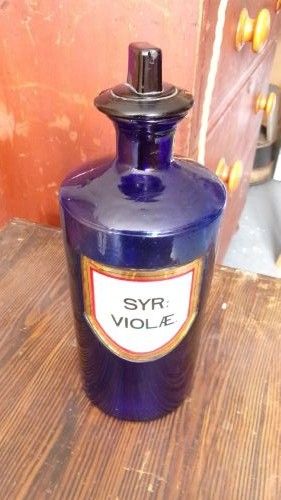
Quality rests upon the weight and clarity of the glass, the presence of original matching stoppers such as lollipop forms, and the crispness of any cut patterns. Carboys and apothecary jars with exceptional scale and deep colouration command greater attention.
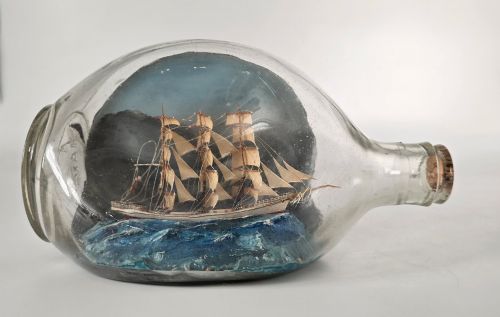
In maritime folk art, the intricacy of the rigging and the condition of the internal wooden components distinguish superior model ships from simpler efforts. Complete sets, such as matched shop display perfume bottles with silver tops, retain more integrity than isolated units.
Vintage Glass Display Bottles Retail Price Guide 2026
Typical asking prices for vintage glass display bottles among the pieces listed under this phrase on Sellingantiques today, from the lower quarter to the upper quarter. They describe what is for sale here now, not the wider market.
Sailors constructed intricate three-masted wooden sailing ships entirely inside narrow glass bottles using folded masts and long threads.
The Vintage Glass Display Bottles Glossary
- Carboy
- A large glass bottle with a rounded body, traditionally used in laboratories and apothecary shops for holding liquids.
- Tantalus
- A decorative frame holding decanters under a locking bar, designed to prevent unauthorized access to the contents.
- Lollipop stopper
- A flat, circular glass top fitting snugly into the neck of a chemist bottle or apothecary jar.
- Folk art
- Utilitarian or decorative objects made by self-taught individuals, often incorporating nautical themes like ships in bottles.
Vintage Glass Display Bottles: Frequently Asked Questions
What were apothecary jars used for?
Apothecary jars held dry drugs, herbs, and chemical preparations in nineteenth-century chemists and dispensaries. Their heavy glass construction and tight-fitting lids protected contents from moisture and air.
Today, collectors display these vessels for their striking form, embossed lettering, and rich coloured glass, placing them on windowsills or open shelving.
How do you date a ship in a bottle?
Dating a ship in a bottle involves examining the hull construction, the materials used for rigging such as thread or paper, and the style of the glass vessel itself. Early nineteenth-century examples often display simpler folk construction.
Provenance notes or titled paper slips left inside the bottle, like the Sunray, also provide clear chronological anchors for these maritime pieces.
What is a decanter tantalus?
A decanter tantalus is a secure wooden or metal stand holding cut glass decanters in place beneath a locking bar. The mechanism allowed hosts to display fine spirits while physically barring guests from pouring drinks without the key.
Edwardian examples often feature polished wood frames and matched crystal decanters designed for formal dining room sideboards.