
Vintage Glass Display Bookcase
A vintage glass display bookcase holds books behind glazed doors while exhibiting collections in plain sight, combining the function of a library with a cabinet of curiosities.
Vintage Glass Display Bookcase
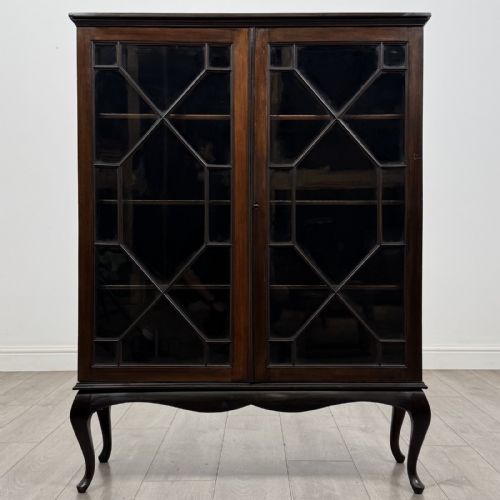
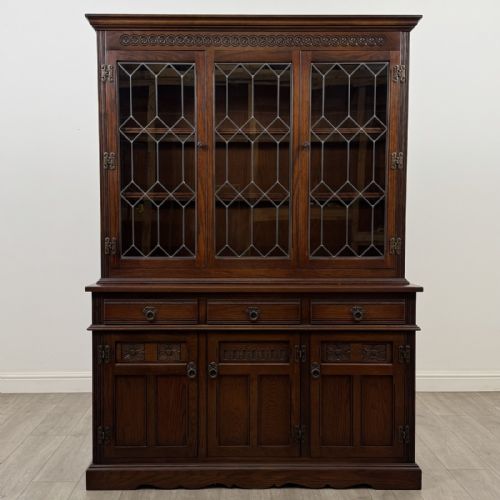
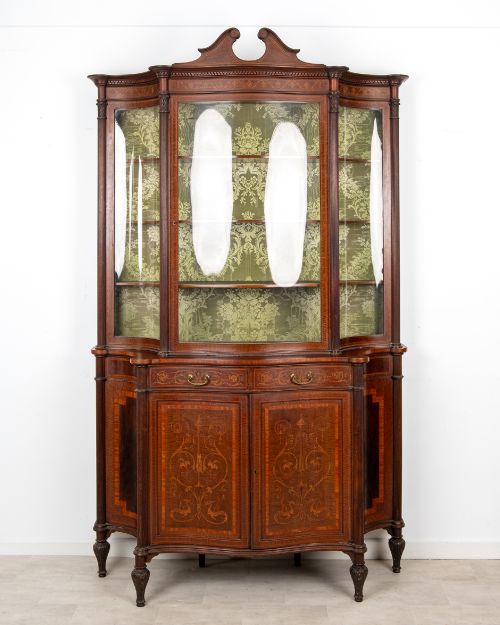
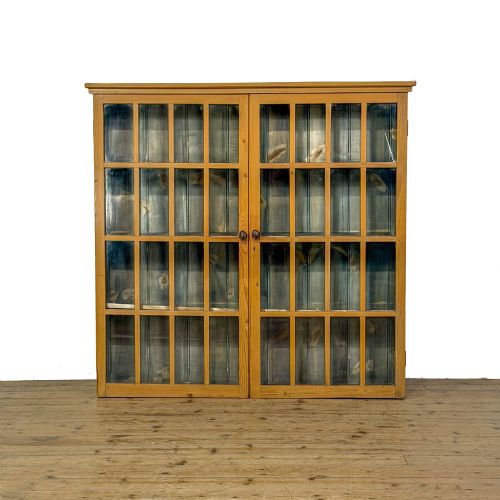
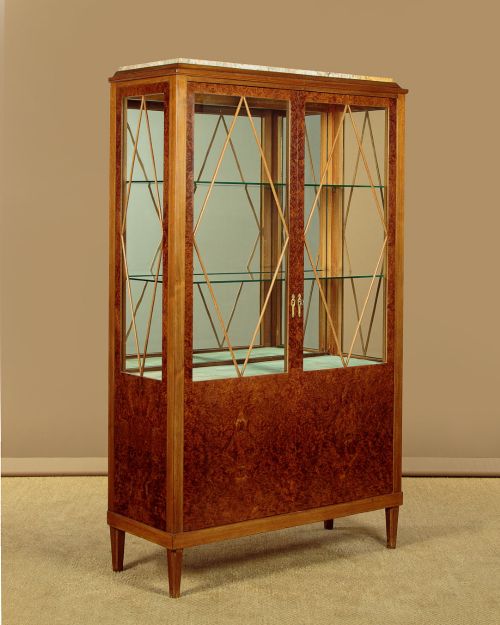
A vintage glass display bookcase serves dual purposes by combining book storage with the exhibition of decorative objects. These pieces appear in forms ranging from Edwardian oak cabinets to Art Deco walnut designs and Georgian vitrines.
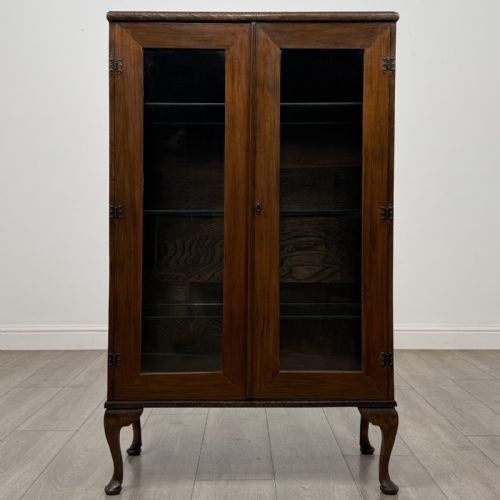
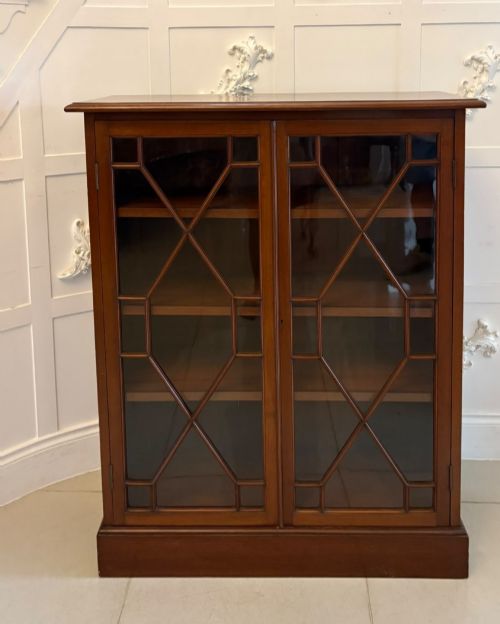
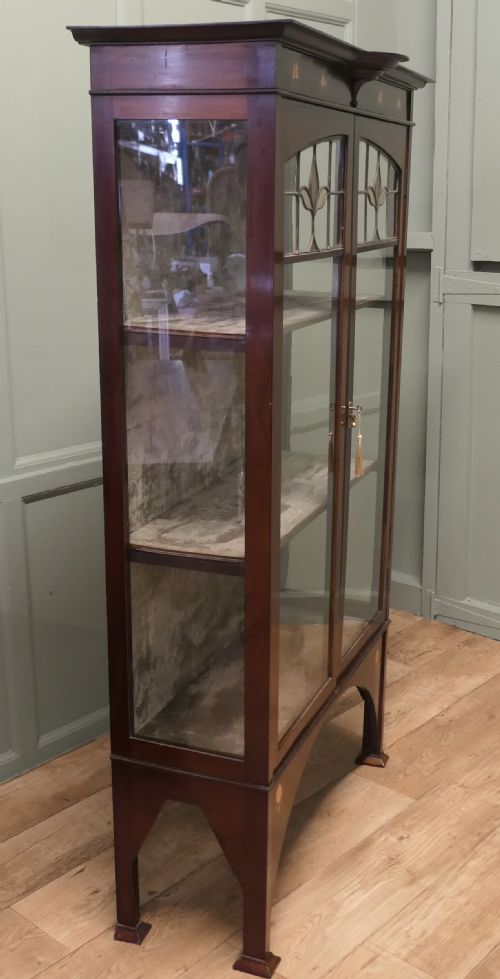
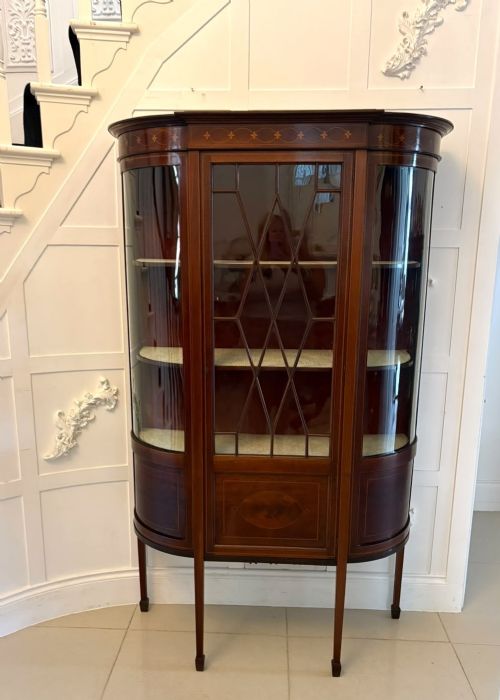
Most examples found here date from the Edwardian period through to the 1930s, constructed in woods like mahogany, oak, and walnut. Buyers frequently encounter glazed cabinets and sectional barrister bookcases designed for domestic interiors.
How they were made
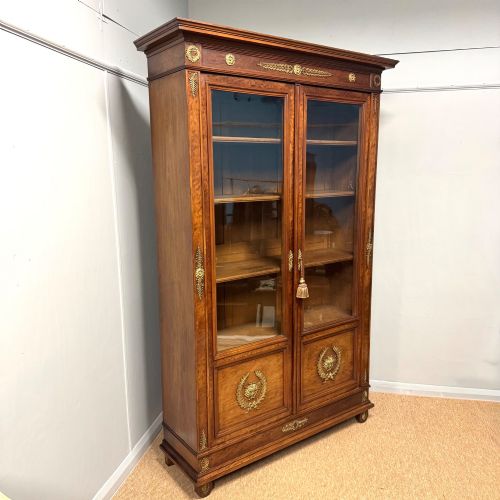
Cabinet makers utilised timber frames in mahogany, oak, satinwood, and walnut, often applying inlaid decoration or painted details to enhance the exterior. Glazing required precise carpentry to house glass panes securely within wooden doors.
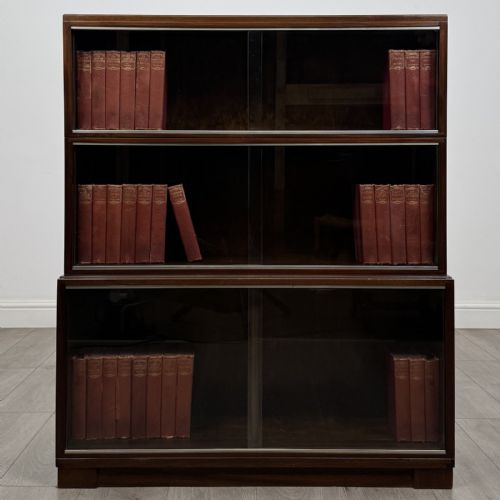
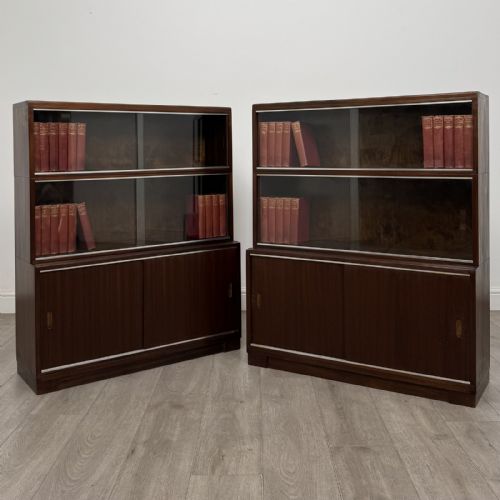
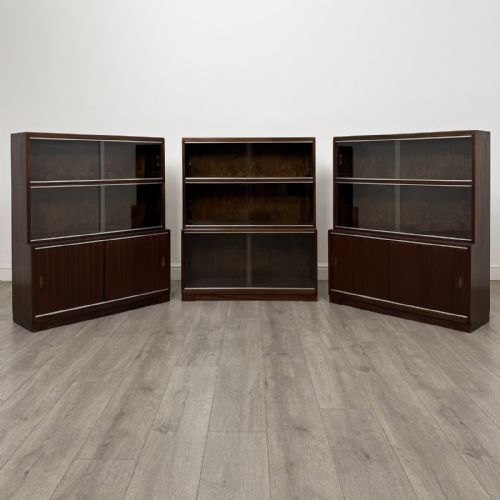
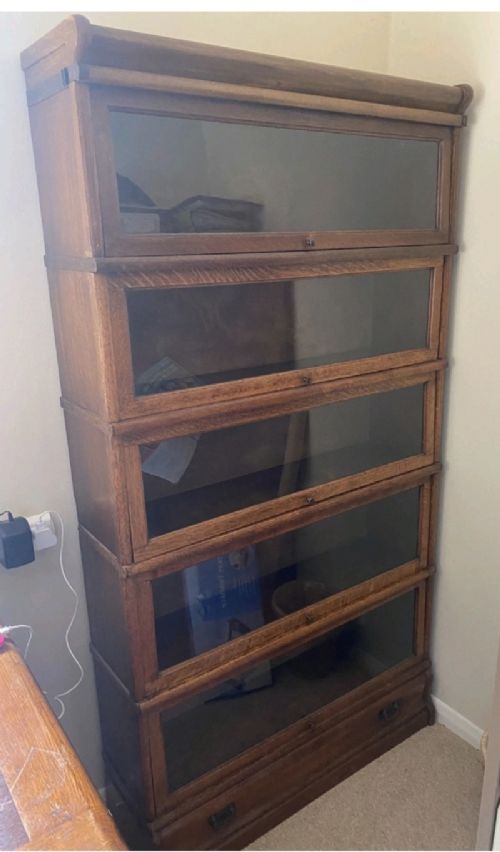
Lead and brass frequently provided structural support and decorative accents for door panes and hardware. Sectional designs allowed modular stacking, while standard cabinets relied on sturdy timber joinery and fitted shelving.
Several modular units bear patent stamps allowing barristers to stack their legal volumes infinitely upward like tiny architectural skyscrapers.
What varies in quality
The choice of timber underpins the distinction between standard production and exceptional examples, with figured walnut, satinwood, and fine mahogany demonstrating superior selection by the maker. Original painted decoration and refined inlay work elevate specific pieces above plain utilitarian storage.
Construction methods determine durability, visible in the precision of the glazing bars and the integration of brass hardware. Maker attribution, such as work originating from established firms, separates standard cabinetmaking from distinguished workshops.
Globe Wernicke·Maple & Co.
The Vintage Glass Display Bookcase Glossary
- Vitrine
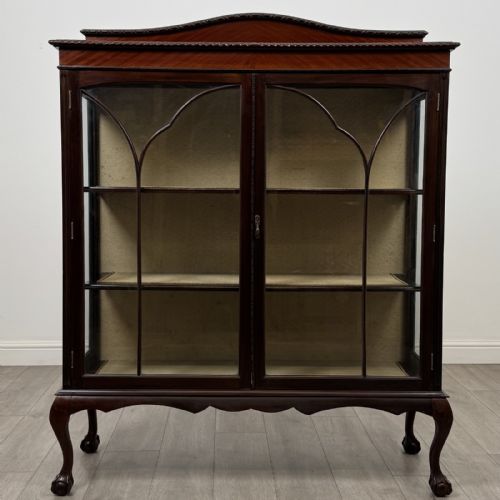
- A glass-sided cabinet designed specifically for displaying fine objects and porcelain. These pieces often feature glazed doors on multiple sides to maximise visibility.
- Astral glazed
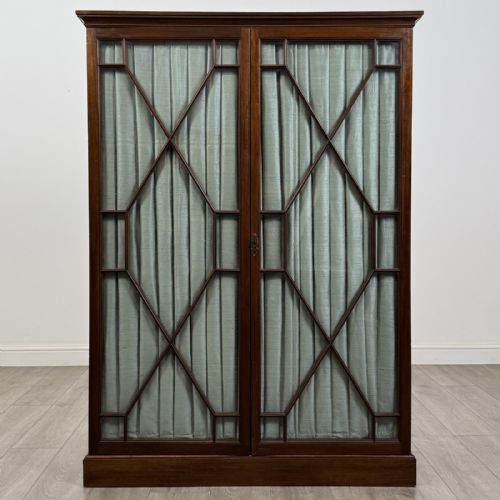
- A term describing glass doors divided into small panes by wooden bars called astragals. This technique creates a delicate grid pattern across the front of a bookcase.
- Barrister bookcase
- A modular bookcase featuring stacking sections with glazed doors that lift and slide inward. This design originated to protect law books in professional offices.
- Breakfront
- A cabinet structure where the central section projects forward from the flanking wings. This architectural arrangement adds depth and proportion to large bookcases.
- Linenfold
- A carved wood panel motif resembling folded linen fabric. Cabinet makers frequently used this relief carving on Edwardian oak doors.
Vintage Glass Display Bookcase: Frequently Asked Questions
How do I clean the glass safely?
Use a soft microfiber cloth and a mild glass cleaner sprayed onto the cloth rather than directly onto the wood. This prevents moisture from damaging antique timber frames and older glass.
Avoid ammonia-based solutions that can degrade historic finishes or weaken aged glazing putties over time.
Can I adjust the internal shelving?
Many Edwardian and later cabinets feature fixed wooden shelves integrated into the structural carcass for stability. Sectional models allow rearrangement of modular units rather than individual shelf heights.
Altering fixed interiors requires professional carpentry to maintain the weight-bearing integrity of the glazed case.
How do I identify Art Deco pieces?
Art Deco examples from the 1920s and 1930s typically showcase streamlined geometric forms, circular shapes, and rich figured walnut veneers. They often omit traditional revival ornamentation in favour of clean, modern silhouettes.
The hardware and glass treatment reflect the industrial design priorities of the interwar period.
Where should I place a heavy bookcase?
Position the piece against a stable, load-bearing wall away from direct sunlight and fluctuating heat sources that can warp timber. Ensure the floor is level so the glazed doors hang true and open without binding.
Use wall attachment brackets if the cabinet height and weight present a tipping hazard in busy rooms.