




Vintage Glass Bottle Box
A vintage glass bottle box secures precious decanters and toiletries behind fine timber and lockable hardware, offering both decorative presence and portable order.
Vintage Glass Bottle Box
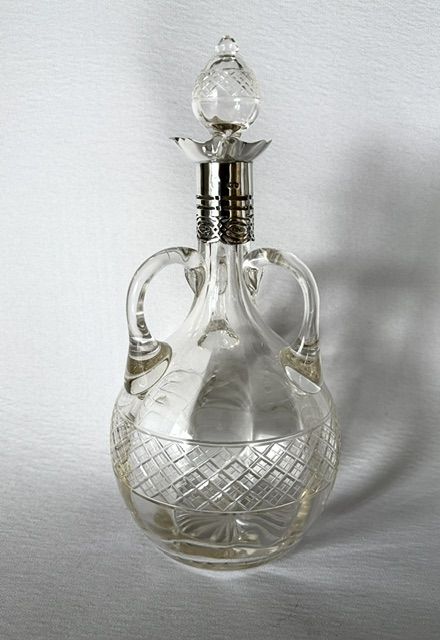
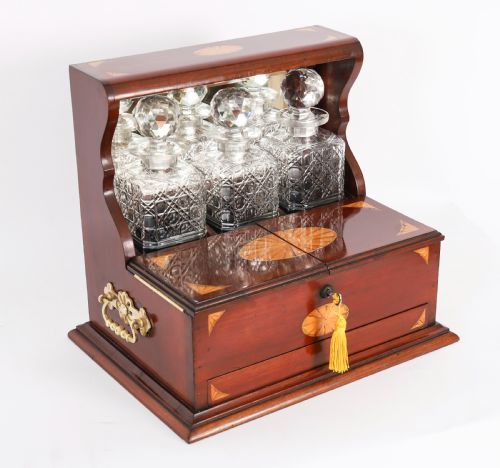
When searching for a vintage glass bottle box, buyers encounter an array of fitted wooden containers designed to hold fragile glassware securely during travel or display. The examples on this page span several distinct forms, primarily comprising apothecary chests, locking tantaluses, and velvet-lined dressing cases.
The materials reflect the high standards of their respective eras, utilising rich timbers such as mahogany, satinwood, and oak paired with cut glass and precious metals. Interiors often feature bespoke compartments tailored precisely to hold bottles, stoppers, and small jars without movement.
Origins stretch from the Georgian and Regency periods through the Victorian and Edwardian decades into the Art Deco era of the 1930s. Most pieces combine functional utility with refined craftsmanship, serving as handsome storage solutions for the home.
How they were made
Carpenters constructed the primary carcasses from dense hardwoods like mahogany and oak, frequently employing veneer, inlay, and marquetry stringing to decorative effect. Solid brass mounts, campaign handles, and lock mechanisms were integrated to withstand the rigours of travel and daily handling.
Glass elements range from heavy cut crystal decanters to moulded perfume bottles and vanity jars, sometimes accented with sterling silver lids, guilloche enamel, or tortoiseshell. Interiors frequently utilised fitted wooden partitions lined with paper, velvet, or silk to cushion the glass contents.
Vintage Glass Bottle Box Retail Price Guide 2026
Typical asking prices for vintage glass bottle box among the pieces listed under this phrase on Sellingantiques today, from the lower quarter to the upper quarter. They describe what is for sale here now, not the wider market.
Listings feature woods including mahogany, satinwood, and oak paired with cut glass, brass, sterling silver, and velvet across the 18th, 19th, and early 20th centuries.
What varies in quality
Quality rests upon the precision of the internal joinery and the completeness of the original glass fittings. Boxes that retain their matching matched sets of bottles, stoppers, and keys command greater attention from collectors than those with later replacements.
The choice of exterior timber and the subtlety of brass hardware or inlay also dictate standard. Finely figured mahogany, crisp marquetry, and heavier gauge silver mounts separate standard utilitarian containers from exceptional examples.
Goldsmith's and Silversmith's Co.·Rene Lalique
The Vintage Glass Bottle Box Glossary
- Tantalus
- A locking wooden frame that holds decanters securely while displaying their contents while preventing unauthorized access to the liquor inside. These typically require a key to release the bottles.
- Apothecary box
- A compact fitted chest designed to transport medicinal bottles, scales, and powders safely. Early 19th-century examples often feature hidden drawers and secret compartments.
- Guilloche enamel
- A decorative technique where a precise pattern is mechanically engraved beneath a translucent layer of coloured enamel. This finish frequently appears on silver-lidded vanity jars and perfume bottles.
- Marquetry stringing
- A fine inlay technique utilising thin strips of contrasting wood to outline panels and geometric borders on box lids. It highlights the natural grain of the primary timber.
- Campaign set
- Portable furniture and container units fitted with flush brass handles and corner brackets made for travel. Officers and travellers utilised these robust sets during long journeys.
Vintage Glass Bottle Box: Frequently Asked Questions
What fits inside an apothecary box?
These fitted cases contain original glass medicine bottles, small drawers for powders, and sometimes scales or mortars.
They were built for travelling physicians or domestic medical storage.
How does a tantalus lock work?
A metal retaining bar passes over the glass stoppers, securing the decanters inside a wooden frame.
Turning a key lifts or swings the bar to release the bottles.
Are the glass bottles usually original?
Many boxes retain their matched cut crystal decanters or vanity jars, though replacements occur due to breakage.
Checking the fit within the wooden partitions helps indicate originality.
Where were dressing cases used?
Victorian and Regency examples sat on dressing tables or travelled in carriages to hold personal grooming items.
They organised perfumes, powders, and silver-lidded jars in velvet-lined slots.