

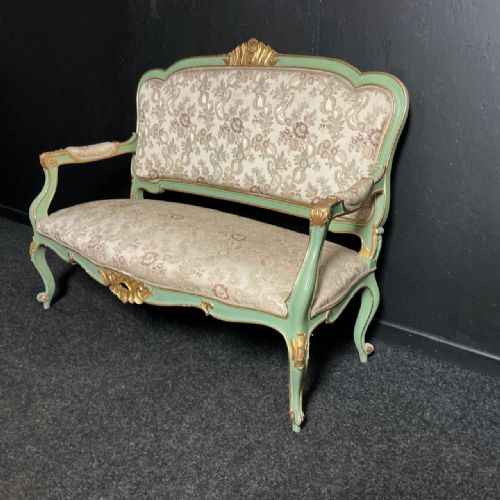


Vintage Gilt Settee
A vintage gilt settee brings the opulent scale and carved flourish of French and English reception rooms directly into a modern drawing room.
Vintage Gilt Settee
A vintage gilt settee is a multi-seat upholstered or caned seating form embellished with gold leaf, paint, or giltwood, originating from periods spanning the early nineteenth century through to the mid-twentieth century. These pieces encompass regional variations including French designs, English interpretations, and continental european pieces reflecting classical revival movements.
The selection on this page is dominated by nineteenth century craftsmanship, alongside twentieth century examples from the nineteen-sixties, nineteen-thirty, and nineteen-ten. Forms range from compact two-seat couches and caned bergère sofas to large three-seater settees and wing settees.
Stylistically, buyers encounter Louis XV and Louis XVI designs, Rococo revival curves, Regency proportions, and Edwardian neoclassical revivals. The construction balances structural timber frames with decorative surface treatments, serving both as functional seating and focal furniture.
How they were made
Makers built the structural frames of a vintage gilt settee using solid timbers such as wood, ebonised wood, and giltwood. These frames received intricate hand-carved details, reflecting the prevailing aesthetic of the period.
Surfaces were finished with applied gold leaf, gilding, or paint to achieve the characteristic metallic lustre. Selected pieces incorporated canework panels into the backrests or seats, demonstrating traditional weaving techniques alongside upholstered elements covered in fabric.
Vintage Gilt Settee Retail Price Guide 2026
Typical asking prices for vintage gilt settee among the pieces listed under this phrase on Sellingantiques today, from the lower quarter to the upper quarter. They describe what is for sale here now, not the wider market.
Several examples incorporate canework designed to keep eighteenth-century sitters cool during long, formal drawing room assemblies.
What varies in quality
The refinement of the hand-carved woodwork dictates the overall distinction of a piece, separating fluidly sculpted frames from simpler, stiffer mouldings. Crispness in the execution of classical motifs indicates superior artisan skill during construction.
The application and preservation of the metallic finish also define the standard, where genuine gold leaf and skilled gilding age with a softer patina than flat modern paints. Furthermore, the structural integrity of the timber frame and the retention of original canework contribute significantly to the standing of the furniture.
The Vintage Gilt Settee Glossary
- Giltwood
- Timber that has been coated with a thin layer of gold leaf or metallic powder. This treatment was widely utilised across formal European seating to impart a sense of luxury and reflect candlelight.
- Cane
- Material woven from stripped rattan or bamboo used to form resilient panels for seats and backs. Canework introduced lightness and texture to heavy wooden frames.
- Louis XVI Style
- Design aesthetic characterised by straight lines, neoclassical symmetry, fluted columns, and geometric restraint. It emerged in opposition to the preceding curved Rococo forms.
- Ebonised Wood
- Timber treated with chemical finishes or dark stains to simulate expensive ebony. This dark contrast frequently highlighted gilt highlights on nineteenth-century frames.
- Canapé
- French term for a decorative settee or sofa featuring an upholstered or caned back and seat. These pieces typically accommodated multiple sitters in formal reception spaces.
Vintage Gilt Settee: Frequently Asked Questions
How do I clean a gilt frame?
Dust the carved wooden surfaces gently using a soft, dry brush to prevent accumulation without disturbing the delicate metallic leaf. Avoid liquid cleaners and harsh chemical solvents entirely, as these substances strip the historic surface.
Test any maintenance approach on an inconspicuous underside area first. Professional conservation is recommended if the gilding shows flaking.
Can I reupholster a vintage settee?
Many pieces accept new upholstery readily, allowing modern buyers to match existing interior colour schemes while retaining the antique frame. Traditional stuffing materials and webbing can be replaced by a skilled restorer to restore proper support.
Check that the decorative wooden edge remains accessible so the fabric does not obscure hand-carved details. Preserving original textile remnants beneath new covers maintains historical record.
Are these settees comfortable for daily use?
These seating forms were designed for formal posture and shorter periods of reception rather than lounging. Spring suspension and cushioning vary depending on whether the piece has been recently restored or retains its historic interior.
Adding supportive scatter cushions can improve day-to-day comfort without altering the silhouette. Consider seat depth and back angle carefully before placing the furniture in a busy living room.
How do I date a gilt settee?
Examine the timber construction methods, joinery marks, and tool traces visible on the underside or interior frame. Stylistic cues such as straight neoclassical legs versus curved rococo cabriole legs point directly to specific revival periods.
Compare the quality of the gesso and gold leaf preparation against known period standards. Wear patterns on high-contact zones also offer clues regarding the age of the piece.